Atlantis Homebuyers buys inherited NC homes for cash, often before probate has fully closed. You get a same-day offer and a close in as little as 7 days, with no repairs and no clean-out. Take what matters to you and leave the rest. We're family-owned, BBB-accredited, and have handled inherited sales since 2018.
Inheriting a house you don't live near, or one you grew up in but moved away from, is mostly a logistics problem. The property has to be cleaned out, it usually needs work, the legal side of probate has to be navigated, and most of that has to happen from a distance while siblings or co-heirs disagree about timing or price. We handle this scenario from every angle: out-of-state heirs, multiple beneficiaries, probate not yet closed, hoarder interiors. The closing is set up to take almost all of that off the seller's plate.
What are the most common inherited property scenarios?
Most inherited home situations we close fall into one of these patterns:
Out-of-state heirs. You inherited a house in Raleigh, Durham, or Fayetteville and you live in another state. The property is sitting empty, you're paying taxes and insurance, and you don't want to fly back and forth to manage repairs and showings.
Multiple heirs disagreeing. Three siblings, four cousins, an estranged stepparent, and everyone has an opinion about what the house is worth and how to sell. We can pay individual heirs at closing per the executor's instructions and remove the conflict over showings, repairs, and pricing.
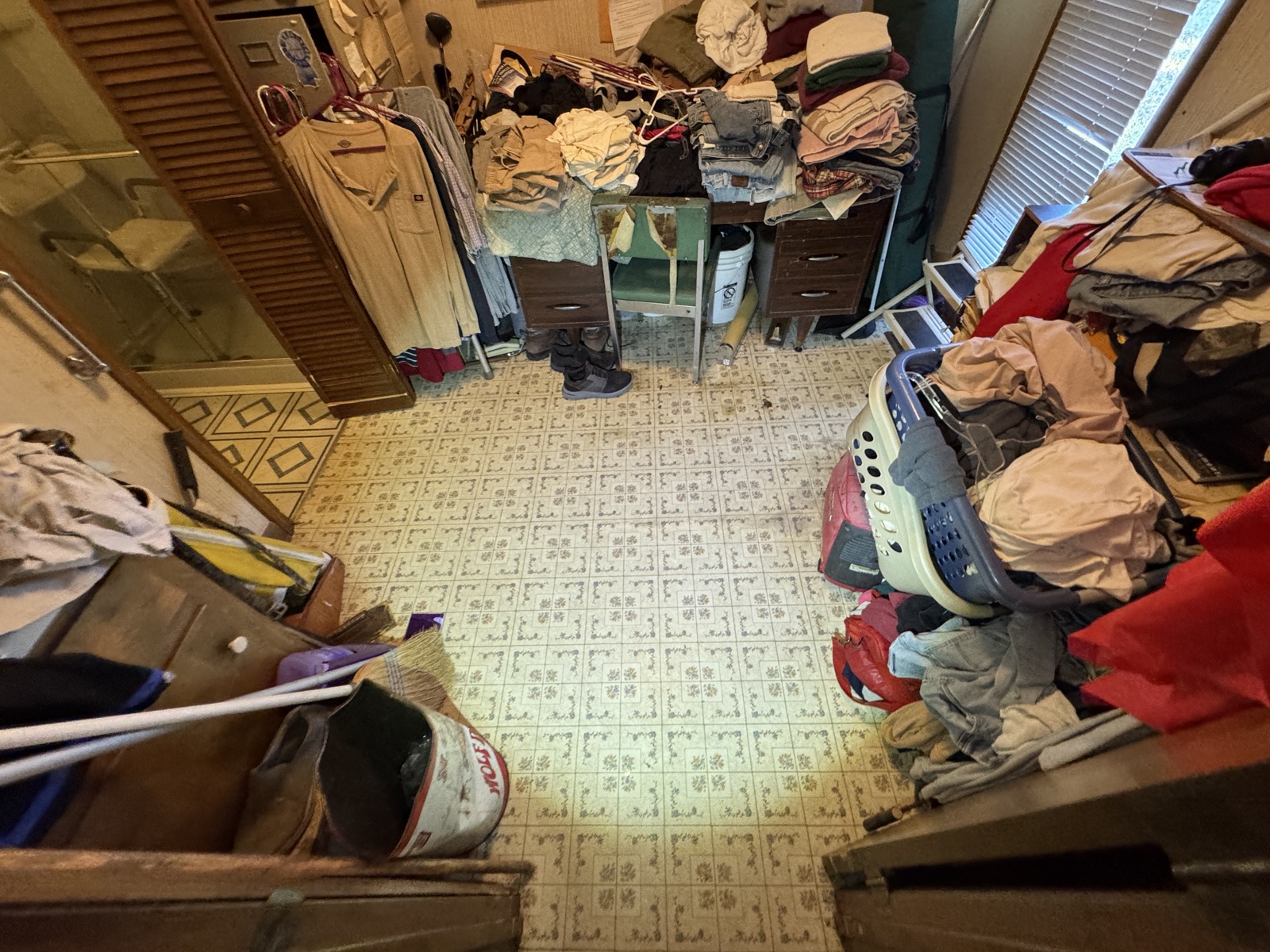
Hoarder or as-is condition. The house is full of decades of belongings. A traditional sale would require a full clean-out and most likely cosmetic repairs before listing. We buy with everything still inside. Take what's meaningful to you and leave the rest.
Probate still in progress. The estate hasn't been formally settled, but the executor wants the property sold. We can sign a contract pending probate clearance and close the day the court order comes through.
About AJ Jamal, Founder of Atlantis Homebuyers
AJ Jamal introduces Atlantis Homebuyers, a North Carolina cash home buyer serving the Triangle, Triad, Sandhills, and surrounding counties since 2018.
What does it really cost to hold an inherited property you don't want?
An inherited home doesn't sit still while you decide what to do with it. The bills keep arriving, the property keeps aging, and the longer it sits, the more it costs to eventually unload. Most heirs underestimate this stack of expenses going in.
Monthly carrying costs on a typical NC inherited property:
Property tax: $200 to $500 per month depending on the county and the assessed value
Homeowner's insurance: $80 to $200 per month, often more once the carrier learns the property is vacant. Most policies have a vacancy clause that limits or voids coverage after 30, 60, or 90 days, after which you typically need a vacant-home policy at 50 to 100 percent more
Utilities kept on for showings or basic preservation: $100 to $250 per month
Lawn care, HVAC checks, occasional inspections: $100 to $300 per month
Mortgage if still active in the deceased's name: whatever the payment is, plus the risk of the lender calling the loan due once they learn the borrower passed
That's roughly $480 to $1,250 per month on a property generating zero income. On a year-long timeline, $5,800 to $15,000 of cash leaves your pocket before you've sold a thing.
Then there's the part that doesn't show up on a bank statement. Empty houses deteriorate. Without HVAC running consistently, humidity builds and mildew sets in. Without water moving through the lines, seals dry out and pipes leak when the house wakes up. Without a person inside, small problems become big ones because nobody's there to notice. And every month the property sits, the more retail buyers will assume something's wrong with it when it does eventually list.
The other quiet cost is family alignment. The first month after a death, most co-heirs agree they want to sell. By month six, opinions have shifted. Someone wants to keep it as a rental, someone else wants their share of the cash now, and the original consensus is gone. Selling sooner protects the agreement that already exists.
Why does a traditional sale often not fit an inherited home?
Listing an inherited property usually means: clean-out (often weeks of work), cosmetic repairs (paint, flooring, sometimes systems), staging, agent commissions (5-6%), 30-90 days on market, then 30-45 more days to close. Plus carrying costs the entire time, including taxes, insurance, utilities, and sometimes a mortgage that's still in the deceased's name. For an out-of-state heir, that's months of project management on top of grief.
An as-is cash sale collapses that timeline. We make a written offer in 24-48 hours after seeing the property (or photos plus county records, since we don't always need access). You pick the closing date, typically 7-30 days. You leave whatever you want to leave. Closing happens at a Triangle title company, often by mail if you're out of state.
How does a cash sale compare to listing an inherited home?
When heirs ask "why isn't your offer the same as Zillow's estimate?" the answer is in everything Zillow's number leaves out. A Zillow estimate is for a comparable home in normal condition with normal financing on a normal sale timeline. An inherited property usually fits none of those.
On a $300,000 NC inherited home that needs cleanout and basic prep before a traditional listing, the costs that come out of net proceeds typically stack up like this:
Estate cleanout and haul-away service: $5,000 to $15,000+ for a full house, more for hoarder situations
Pre-listing repairs and updates: $5,000 to $20,000 (paint, flooring, HVAC servicing, lawn restoration, kitchen refresh on dated homes)
Agent commissions: $15,000 to $18,000 (5 to 6 percent, split between listing and buyer's agents)
Seller closing costs: $3,000 to $9,000 (attorney fees, transfer tax, title insurance, recording fees, prorated property taxes)
Carrying costs while listed: $4,500 to $15,000 (a typical listing cycle on an estate property runs 3 to 5 months from prep through closing, especially when multi-heir scheduling is involved)
Inspection-driven concessions after the buyer's report: $3,000 to $10,000+ (dated wiring, end-of-life HVAC, settling cracks, anything an empty house surfaces)
Total: $35,500 to $87,000+ out of pocket before any heir sees a check
Then divide whatever's left across the heirs. Every dollar of cost on the listing side reduces every heir's share proportionally.
A cash sale to us skips every line. We pay all closing costs. You take what's meaningful and leave the rest. We close in days, not months. When you compare actual net proceeds in your bank account, the gap between a cash offer and a fully-listed retail sale on an estate property is usually much smaller than heirs expect, and the cash version arrives weeks earlier with one signature instead of dozens. See our full cost-of-selling breakdown for the line-by-line math on a $300k home.
Probate, trusts, and title: how do we handle the legal side?
Most inherited properties pass through one of three legal vehicles in NC: a probated will, a trust, or intestate succession (no will). We've closed all three. Our title company coordinates with the estate attorney to confirm authority to sell, usually a Letters Testamentary or Letters of Administration for probate, the trust certification for trusts, an heirship affidavit for some intestate cases. None of this is your problem to solve. The title company handles it; you sign the deed when authorized.
If probate hasn't started yet, that's not a deal-breaker. We can sign a contract while the executor or administrator is being appointed, and close once the court issues authority. The contract simply waits on the legal side to catch up. Many of our inherited closings happen mid-probate, with the closing date timed to the day the court grants final authority.
For trust-held properties, the trustee signs the closing documents on behalf of the trust. For intestate properties (no will), NC's intestate succession statute (NCGS Chapter 29) determines the heirs in priority order: spouse, children, parents, siblings, and outward. The title company resolves all of this through a title search and an heirship affidavit before closing. We work through it on our end so you don't have to learn estate law to sell the property.
NC stepped-up basis: why do most heirs owe no federal tax?
The biggest tax surprise for heirs is usually the good kind. Inherited property gets what's called a "stepped-up basis" under federal tax law. Your cost basis in the home is not what your relative originally paid for it. It's the fair market value on the date of death.
What that means in practice: if your aunt bought her Raleigh house in 1985 for $90,000 and it was worth $325,000 the day she passed, your basis is $325,000. If you sell it for $325,000 a few months later, your federal capital gain is roughly zero. You typically owe no federal capital gains tax even though the property gained $235,000 in value over the original owner's lifetime.
A few details that matter for NC heirs:
NC has no state inheritance tax. North Carolina repealed its estate tax in 2013. You don't owe state-level inheritance or estate tax on the transfer regardless of the estate's size.
The basis step-up applies whether the property passed through probate, a trust, or transfer-on-death deed. The legal mechanism that moved title doesn't change the federal basis treatment.
Selling sooner usually means a smaller gap between basis and sale price, which means less federal gain to potentially owe on. Heirs who hold for years can see appreciation push the sale price above basis and owe gain on the difference.
Selling expenses (commissions, closing costs, our purchase price) all factor into the gain calculation, so even small gains often net out to zero owed.
We're not your CPA, and you should run your specific numbers with one. But this is one of the most common reasons we hear "we waited because we thought we'd owe a fortune in taxes" from heirs who eventually sell. For the vast majority of inherited NC properties, the federal tax bill on a near-term sale is small or zero.
Closing from out of state: how does mail-away signing work?
A large share of inherited NC properties belong to heirs who haven't lived in the state in years. Flying in to attend a closing isn't realistic. It also isn't necessary. NC title companies routinely handle out-of-state sellers via what's called mail-away signing.
Here's how it works in practice:
The title company in NC prepares your closing documents (deed, settlement statement, affidavits) and FedEx-overnights them to wherever you are.
You take the package to a notary. Most UPS Stores, banks, AAA offices, and mobile notaries handle this in under 30 minutes for $25 to $100.
The notary watches you sign each document, stamps and seals each signature, and you ship the signed package back via the prepaid FedEx label.
Once the title company receives the signed documents and our wire arrives in escrow, the deed records at the Wake County (or appropriate NC county) Register of Deeds.
The title company wires the proceeds to your bank account the same business day the deed records.
You never set foot in NC. You don't take time off work to fly back. You don't coordinate with siblings to be in the same room. Each heir can sign their own documents at their own notary, on their own schedule, in whatever state they live in. The title company collates the signatures and records the deed once everything's complete.
For estates with multiple heirs scattered across the country, mail-away closing is what makes a fast sale practically possible. We handle the coordination on our end so you don't have to.
What do most inherited-home sellers wish they'd known earlier?
When we buy an inherited home, most sellers tell us afterward that they wish they'd called sooner. They spent 6-12 months trying to manage the property from a distance before realizing it wasn't going to clean itself up and the open market wasn't going to absorb it. If the house has been sitting empty more than 60 days, or if family conflict is delaying decisions, the cash sale path usually saves money in the end (no carrying costs, no commissions, no surprise repair quotes mid-listing).
What to Bring to a First Conversation
Most heirs reaching out for the first time worry they don't have enough information to even start the conversation. You almost certainly do. Here's what's actually useful when we talk:
Required to start:
Property address
Your relationship to the deceased and your role in the estate (executor, heir, family representative)
Helpful but not required:
Date of death (matters for probate timing and basis calculations)
Whether probate is open and what county (Wake, Durham, Cumberland, etc.)
Whether there's a will and who has Letters Testamentary or Letters of Administration
Names of co-heirs if there are multiple beneficiaries
Whether there's an active mortgage and the approximate balance
The most recent county tax bill (we can look this up, but having it speeds things up)
Photos of the inside if you have them (we can also schedule a visit)
What you don't need:
You don't need probate finalized
You don't need to have repaired anything
You don't need agreement from every co-heir to start the conversation
You don't need to clean out the house first
Most of our first conversations with heirs run 15 to 20 minutes. We talk through the situation, you tell us what's complicated, and we tell you what your options actually look like. There's no obligation, and we don't share your information with anyone else. Call (984) 205-6984 or send the address through the form. We'll come back to you within hours.
Service Areas
We Buy Inherited Property Homes Across NC
Local cash buyer for inherited property situations across the Triangle and Central NC.
Do I have to wait for probate to close before selling?
No. If the executor or administrator has Letters Testamentary or Letters of Administration, we can sign a contract immediately and close once the court grants final authority to sell. Many of our inherited closings happen during open probate.
What if the heirs disagree about whether to sell?
We can only close when whoever has legal authority to sell agrees, typically the executor or all heirs collectively, depending on the estate's structure. If you're an heir trying to convince other heirs, we can provide a written offer to anchor the discussion. If you're the executor with authority, you can sign on the estate's behalf.
Do I need to clean out the house before selling?
No. We buy inherited homes with everything still inside. Take photos, take heirlooms, take whatever you want, leave the rest. We handle all clean-out after closing at our cost.
Will I owe taxes on the sale?
Inherited property gets a 'stepped-up basis' for federal capital gains, which usually means little to no capital gains tax owed if you sell soon after the inheritance. We're not your CPA, but most of our inherited-property sellers owe nothing federal. Talk to a tax professional about your specific situation.
Can multiple heirs each receive a separate check at closing?
Yes. The closing attorney can disburse proceeds to multiple heirs per the estate's instructions. Each heir signs their own portion of the documentation, no one has to gather everyone in one place.