





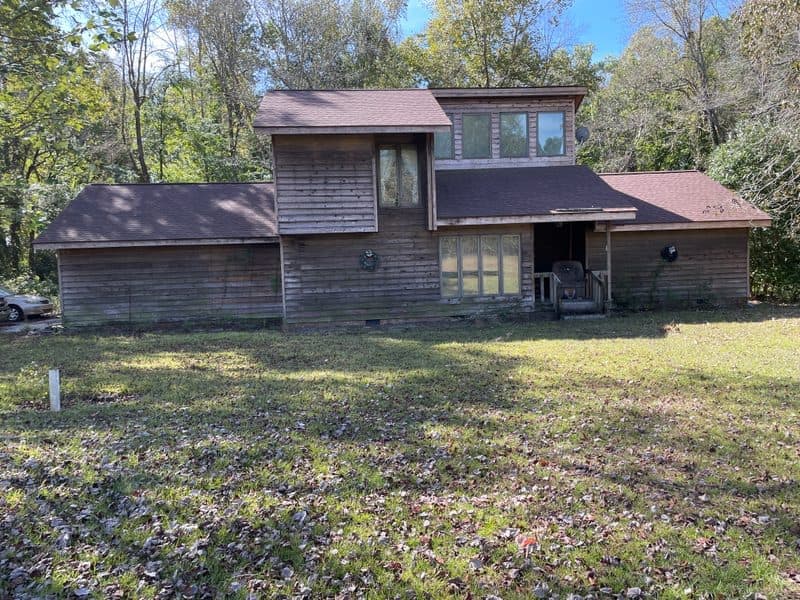
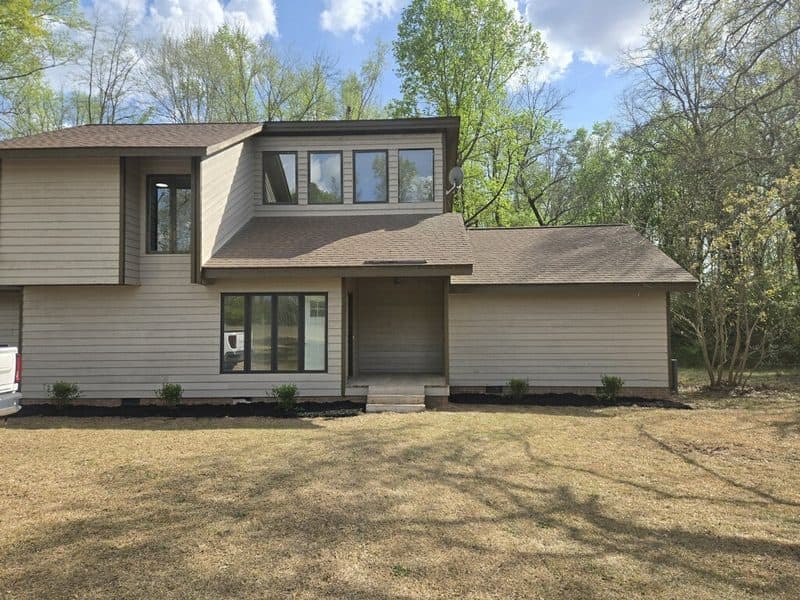
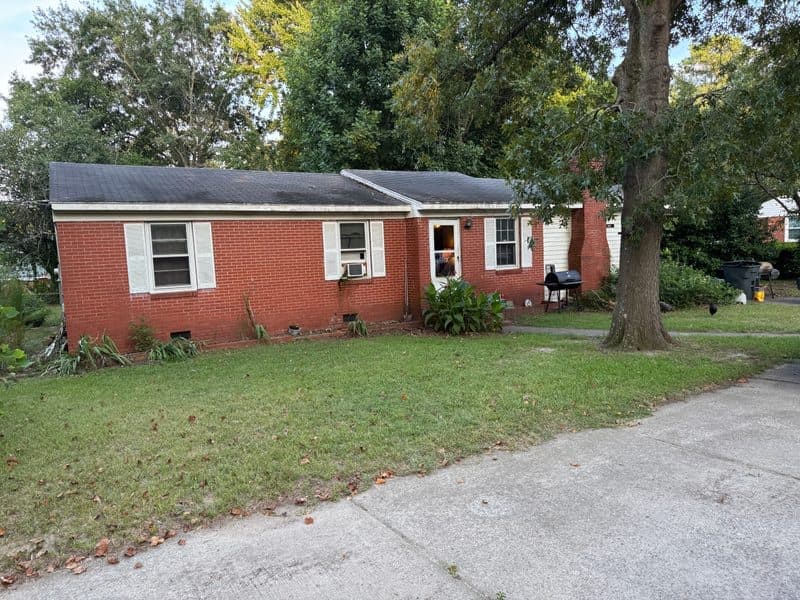
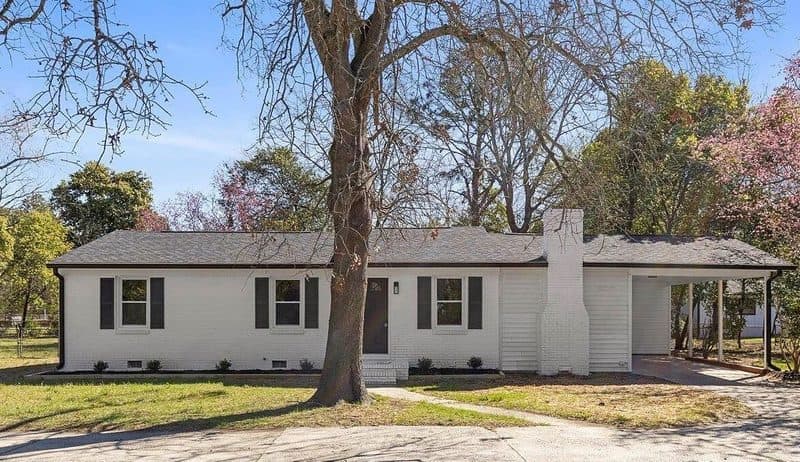
When sellers in Mebane search for “cash home buyers,” they’re usually filtering for one specific thing: certainty. Either the property won’t finance cleanly, the timeline doesn’t leave room for a financed buyer’s 45-day inspection-and-appraisal cycle, or a Triangle or Triad job change is pulling the seller out on a hard report-by date.
Mebane’s particular blend of pre-1900 historic core, pre-1950 stock along Mebane Oaks Road, and 1985-1995 polybutylene-era subdivisions out toward the Orange County line creates a higher-than-average rate of financed-buyer fall- throughs for a Triad-Triangle commuter town this size. That’s why the cash market matters here more than in younger, post-2005 NC submarkets where the housing stock finances cleanly.
At Atlantis Homebuyers we handle cash sales on Mebane properties on both the Alamance and Orange County sides of the line, and the “cash” label gets used loosely enough in this market that it pays to know what should be true before you sign anything. The page below walks through what a real cash sale should look like in Mebane, how to verify it, how Mebane’s three-county title reality and insurance- underwriting patterns shape the close, and how the math actually compares to a financed offer once fall-through risk and carrying costs are priced in.
What “Cash” Should Actually Mean in Mebane
A real cash sale in Mebane means a buyer purchases the property using liquid funds with no financing or appraisal contingency, no inspection re-trade, and a written contract under the actual entity name with verifiable proof of funds. That’s the baseline. Several other approaches get marketed in Mebane as “cash” offers and behave differently in ways worth understanding before you sign.
Lead-generation sites collect contact information through “instant offer” forms and resell the lead to whichever investor pays for it. The number you see on the form isn’t an actual offer; it functions as a placeholder to capture you. You’ll then field calls from multiple investors, often out of state, none of whom have inspected your specific Mebane property.
National algorithmic programs (Opendoor, Offerpad, and similar) extend cash-style offers but build in 5 percent or higher service fees on top of the discounted purchase number, then re-trade the offer after a 14 to 21 day inspection period. On Mebane’s older downtown stock or 1990s polybutylene-era subdivisions, the post- inspection walkback list rarely lands smaller than $15,000 to $25,000.
Sale-leaseback operators structure the transaction so you sell the home and stay in place as a renter. Marketing positions it as a cash sale, but the long-term economics often favor the operator’s rent-collection cycle over the seller’s equity position.
Cash-advance lenders disguised as buyers present quick-close advances against equity as if they’re cash purchase offers, but you keep the deed. It’s a loan secured by your equity, not a sale.
We’re a real cash buyer. The contract is in our entity name, the closing wire originates from us, and we don’t resell your information to other investors.
Proof of Funds: What to Ask For
Real proof of funds for a Mebane cash sale has four characteristics. Confirm all four before you sign anything.
1. It’s a recent bank or brokerage statement, not a pre-approval letter. Pre-approvals come from lenders and only mean a buyer has been deemed creditworthy for a loan. Pre-approvals don’t establish that liquid funds exist to close without financing. Real proof of funds is a statement showing an actual available balance from a financial institution.
2. The entity name on the proof of funds matches the contract entity exactly. If the contract is signed by “Atlantis Homebuyers, LLC” but the proof of funds shows a different LLC, an individual name, or a holding-company variant, that’s a flag worth a question. The cash to close should sit in an account controlled by the actual purchaser.
3. The available balance equals or exceeds the contract price. A statement showing $30,000 available against a $250,000 contract isn’t proof of funds for that contract. The balance has to cover purchase price plus closing costs.
4. The statement is dated within the last 30 days. Older statements don’t establish current liquidity. Funds move; older proofs don’t reflect the buyer’s actual current position.
Beyond the four core characteristics, ask for the title company’s contact information so you can call directly and confirm earnest money has been deposited. Ask for references from prior Mebane closings (we provide). Search the entity name on the NC Secretary of State business-registration portal to confirm a current registered LLC and check the registered agent. Those checks take ten minutes total and filter out most non-cash “cash” offers in Mebane.
How Mebane’s Three-County Title Reality Affects the Cash Close
Mebane sits at the meeting point of three counties: most of the city is in Alamance County, a meaningful share crosses into Orange County, and a thin sliver of Mebane’s growth corridor extends toward the Durham County line. Sellers occasionally don’t know which county their property actually sits in until they pull the deed.
The county a Mebane property is in determines four things that matter for closing speed:
Which Register of Deeds holds title records. Alamance County records sit in Graham at the Alamance County Register of Deeds. Orange County records sit in Hillsborough. Durham County records sit in Durham. Title work pulls from whichever Register of Deeds applies to the parcel.
Which county tax records establish lien priority. Property tax bills, county tax-foreclosure history, and county- assessed fines on the property all sit in the records of whichever county the parcel is in. Crossing the county line during closing changes which records the title company has to pull.
Which title company can close most efficiently. Most Alamance County title companies handle Alamance closings as a primary line of business and can step into Orange or Durham where needed. Some Orange County title companies cover Mebane Orange-side parcels primarily. Picking a title company that’s wrong for the parcel’s county can add days to the close.
Whether municipal liens with the City of Mebane pull cleanly. The City of Mebane’s lien register applies regardless of which county the parcel is in, but it has to be checked separately from county records. Title searches that pull only county records miss city minimum-housing fines.
We coordinate the right path on every Mebane cash close: which title company, which Register of Deeds, which lien searches, all sequenced for the parcel’s actual county. Sellers don’t need to work through the jurisdictional layer; we handle it.
Mebane’s Polybutylene Belt: Why 1985-1995 Subdivisions Kill Financed Deals
Mebane has an unusually high concentration of 1985-1995 polybutylene-plumbed subdivisions for its size. The city’s residential growth phase aligned almost exactly with polybutylene’s residential plumbing peak years, and many subdivisions developed along the I-40/I-85 corridor and out toward the Orange County line during that window were built with polybutylene supply lines.
Polybutylene is gray plastic supply pipe widely installed between roughly 1978 and 1995 before reliability problems with the material’s interaction with chlorinated water led to a class-action settlement and industry abandonment. The failure mode is degradation from the inside out, often producing pinhole leaks at fittings and joints before progressing to larger ruptures.
The financed-buyer problem is insurance, not plumbing. Most major homeowner insurance carriers (State Farm, Allstate, Nationwide, Liberty Mutual, Travelers) decline to bind a homeowner policy on a Mebane property with active polybutylene supply lines. Without a homeowner policy bound at closing, the lender can’t fund the loan. Mortgage underwriting universally requires hazard insurance as a closing condition. No insurance, no loan, no closing.
Repipe is a real fix but it’s expensive: $4,000 to $15,000 typical depending on the home’s size, layout, and access. Sellers facing this problem often discover it on the second or third financed deal, after enough lender-required disclosures or buyer-side inspections to catch the gray pipe. Each fall-through means re-listing, re-marketing, and another 30 to 45 days of carrying costs.
Cash buyers don’t run the homeowner-insurance gate. We price the repipe cost into the offer up front, close in 14 days, and handle the remediation post-closing. Polybutylene isn’t a deal-breaker on a cash sale in Mebane; it just changes the offer math.
Insurance Underwriting in Mebane: Why Policy-Bind Failures End Financed Deals
Mebane’s combination of pre-1900 historic core, pre-1950 stock, and 1990s polybutylene subdivisions produces an unusually high rate of homeowner-insurance underwriting issues compared to younger NC submarkets. Each insurance flag translates directly into a financed-deal failure because lenders won’t fund without bound coverage at closing.
Four insurance-underwriting flags surface most often on Mebane properties:
Active knob-and-tube wiring on pre-1950 homes. Standard carriers require K&T removal before binding most policies. Some specialty carriers will write K&T policies at significantly higher premiums; standard carriers won’t.
Active polybutylene plumbing in 1985-1995 subdivisions. Standard carriers decline to bind; repipe is the practical path to insurability before a financed sale can close.
Roof age over 20 years on any tier. Roofs aged out by underwriter standards trigger “replace before binding” requirements or significantly elevated premiums. On Mebane homes with deferred- maintenance original roofs, this is a routine flag.
Older oil tanks (above-ground or buried) on pre-1980 stock. Environmental contamination liability concerns cause many carriers to decline. Buried tank removal runs $1,500 to $5,000 plus soil testing.
For a financed Mebane sale, the buyer’s insurance shop runs underwriting parallel to the lender’s loan processing. Any of these flags pause the process until resolved. Cash buyers operate outside the homeowner-insurance gate entirely, which is why cash closes don’t fail on these issues.
Honest 7-Day Closing Math in Mebane
A 7-day cash close in Mebane is real but conditional on five things lining up. Most Mebane cash closes take 14 to 30 days; a 7-day close happens when the situation is clean and the seller’s deadline genuinely requires it.
1. Clean title. No open probate gap, no unreleased mortgages on the title, no judgment liens against prior owners, no boundary disputes. The title search has to come back clear or with only routine cleanup needed (a release of an old mortgage that was paid off but not formally released, for example).
2. No surprise municipal lien at the City of Mebane or county level. Both have to be checked. The City of Mebane records minimum- housing fines as municipal liens; Alamance, Orange, or Durham County records property tax liens, judgment liens, and other county-level encumbrances.
3. Active title company with bandwidth. A 7-day close requires a title company that can prioritize the file. Most Alamance and Orange County title companies maintain 7 to 10 day standard turnaround; pushing to 7 days means coordinating the file ahead.
4. Single-signer or coordinated multi-signer path. A solo seller in Mebane with full authority to sign closes faster than a multi-heir inherited property where five heirs are scattered across three states and need notarized signatures from each. We can structure mail-away closings for multi-state heirs, but the coordination adds days to the timeline.
5. Wire confirmation at closing. The closing date is when the deed records and the wire goes to the seller. Wires generally clear the same business day if initiated by mid-morning.
Tell us your deadline at first contact. We’ll tell you same business day what’s possible.
What We Provide on Every Mebane Cash Sale
Atlantis Homebuyers, LLC operates as a local NC cash buyer, BBB Accredited, family-owned by AJ and Isabel since 2018. Every Mebane cash sale we close runs through the same set of seller-protective standards regardless of property tier or timeline pressure:
Written proof of funds dated within 30 days, in our entity name on the contract. Bank or brokerage statement showing available liquid balance covering the full purchase price plus closing costs. We provide it on request before you sign anything.
Specific Alamance, Orange, or Durham County title company named in the contract depending on which county your Mebane parcel sits in. We coordinate the right title company for the county; you can call them directly to confirm the file is open and earnest money is on deposit.
Contract terms that match what we told you on the call. No inspection contingency, no financing contingency, no appraisal contingency, no buyer-election closing date. Earnest money specified, closing date specified, no re-trade rights reserved.
References from prior Mebane closings. We’ve closed on Mebane properties on both the Alamance and Orange County sides of the line since 2018. We’ll share two or three prior-seller references on request.
NC Secretary of State registration in good standing. Atlantis Homebuyers, LLC is registered with the NC Secretary of State, with a local NC registered agent. The entity name on our contract matches the entity on our proof of funds matches the closing wire that arrives in your account.
Earnest money deposited with the title company within 1-3 business days of contract execution. Earnest money goes into escrow at the title company, not into our pocket. The deposit confirms that the contract is moving forward.
AJ or Isabel personally walks every Mebane property before offer. The number we put on the contract is the number you get at closing. No call-center operators, no algorithmic offer engines, no out-of-state lead-resellers handing your address off to multiple investors.
Quick path to a Mebane same-day offer: Call (984) 205-6984 or submit your Mebane property address. We come back same business day with a written cash number.
Comparison: Financed Offer Adjusted for Fall-Through vs. True Cash
Mebane sellers comparing a financed offer to a cash offer often look at the headline numbers and conclude the financed offer is higher. The realistic comparison adjusts for fall-through probability and carrying costs.
Mebane example: 1925 home near downtown, $295,000 retail comparable value (the Mebane market has appreciated rapidly with Triangle-Triad commuter demand).
Financed buyer’s headline: $290,000. Buyer is FHA-financed with 3.5 percent down. Lender requires FHA appraisal and inspection. Home has knob-and-tube wiring in original sections, peeling lead paint on exterior trim, original roof at year 24, galvanized supply plumbing.
What actually happens at closing on this property profile: Lender appraisal flags roof age and wiring. FHA inspection identifies lead paint and K&T as cure items. Buyer’s insurance shop declines to bind without K&T removal. The buyer has the option to walk, renegotiate, or wait for repairs.
Realistic outcomes, weighted: 40 percent probability the deal collapses and the seller re-lists, adding 60 to 90 days of carrying costs ($3,000 to $7,000) plus re-listing effort. 35 percent probability the buyer renegotiates downward by $20,000 to $35,000 to absorb cure costs and closes at $255,000 to $270,000. 25 percent probability the deal closes at original price after a 60+ day cure cycle (lead-paint mitigation, K&T removal, roof replacement).
Expected net on the financed path, before commissions and fees: roughly $230,000 to $250,000 once fall-through risk and carrying costs are weighted in. Subtract 5 to 6 percent agent commissions ($14,750 to $17,700) and 1 to 2 percent seller closing costs ($2,950 to $5,900) on the closed scenarios. Net to seller is closer to $210,000 to $230,000.
Cash offer at $258,000 closes in 14 days with no commissions, no fees, no carrying costs. Net to seller: $258,000.
Sellers who run this math often find the gap between headline financed and cash is meaningfully smaller than first appears. See our NC selling-cost breakdown for full numbers across financing scenarios.
Common Cash-Sale Scenarios in Mebane
Patterns that drive cash sales on Mebane properties:
Inherited Mebane home with out-of-state heirs. Older home near downtown with decades of belongings, multi-heir signature coordination needed. Mail-away closing through a Mebane-area title company is standard. See our inherited property hub.
Triangle or Triad job relocation with hard report-by date. RTP, Durham, Chapel Hill, Raleigh, Greensboro, or Winston-Salem job change. Relocation timelines in the 30 to 45 day range don’t accommodate financed-buyer cycles.
Tired-landlord rental with student or short-term tenants. Mebane has steady rental demand from Tanger Outlets seasonal staff, Burlington-area employer commuters, and Triangle-Triad professionals. End-stage rental challenges are common after a 5+ year run. See our landlord situation hub.
EIFS or polybutylene listing fall-through. 1990s subdivisions out toward the Orange County line concentrate both. After the second or third financed deal collapses, sellers often switch to cash.
Pre-foreclosure with hard auction date. Alamance, Orange, or Durham County trustee sale dates create non-negotiable deadlines. Cash closes around those.
Open Mebane code violation case. Compounding fines on a property the seller can’t afford to bring into compliance. Cash sale resolves the case at closing through escrow disbursement to the City.
What to Bring to a First Conversation
- Property address, vacancy or occupancy status, and which county (Alamance, Orange, or Durham)
- Year built and condition headlines (older downtown home with K&T + lead paint, or 1990s suburban with EIFS / polybutylene / aging HVAC?)
- Open code cases at City of Mebane or county level
- Active mortgage and approximate payoff balance
- Whether the property is in probate or another title situation requiring multi-signer coordination
- Your timing constraint and what’s driving the sale
Ready for a Real Cash Offer on Your Mebane House?
Tell us about the property. We’ll send a written cash offer with verified proof of funds same business day.
Below are the questions Mebane cash sellers most often ask before signing.