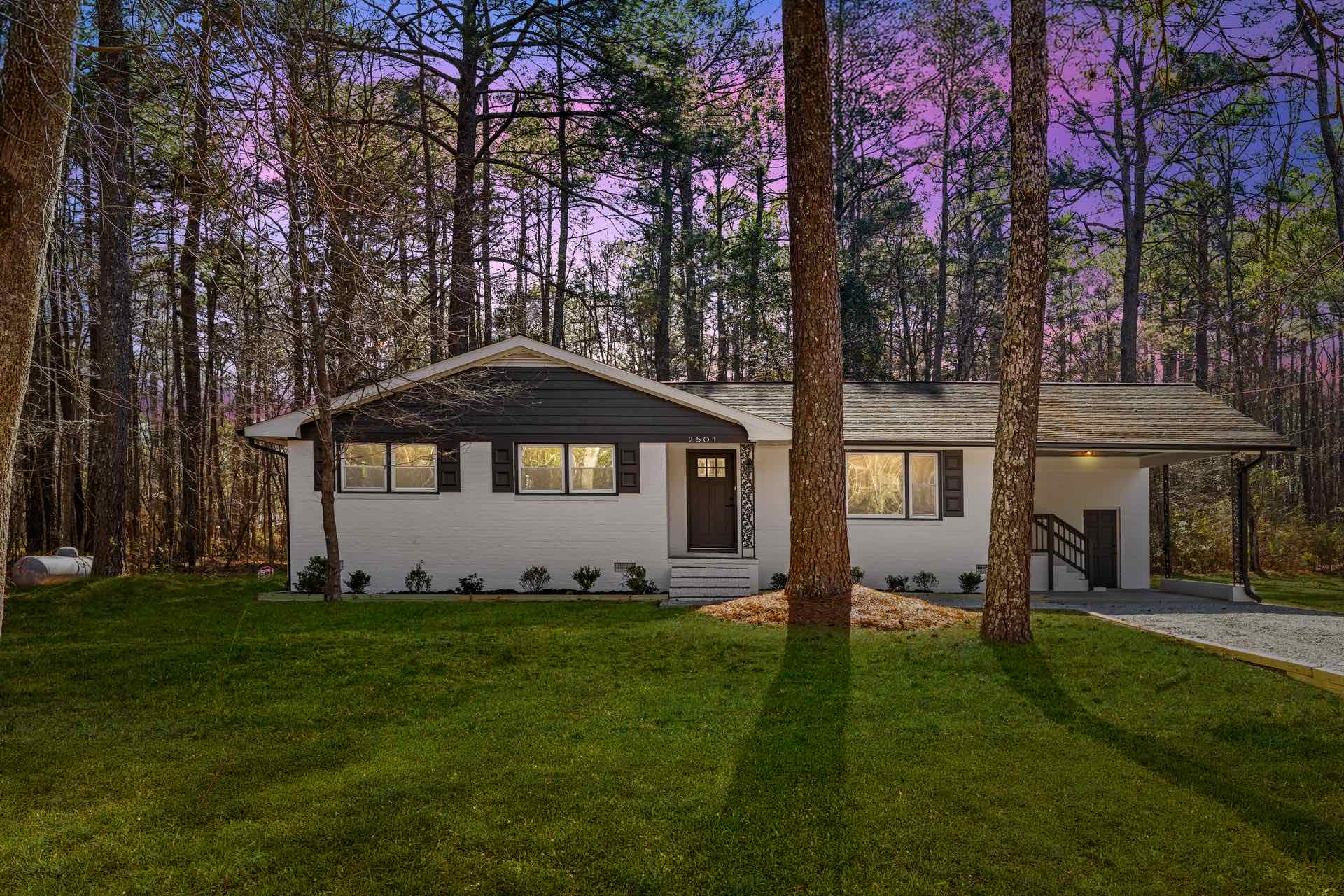






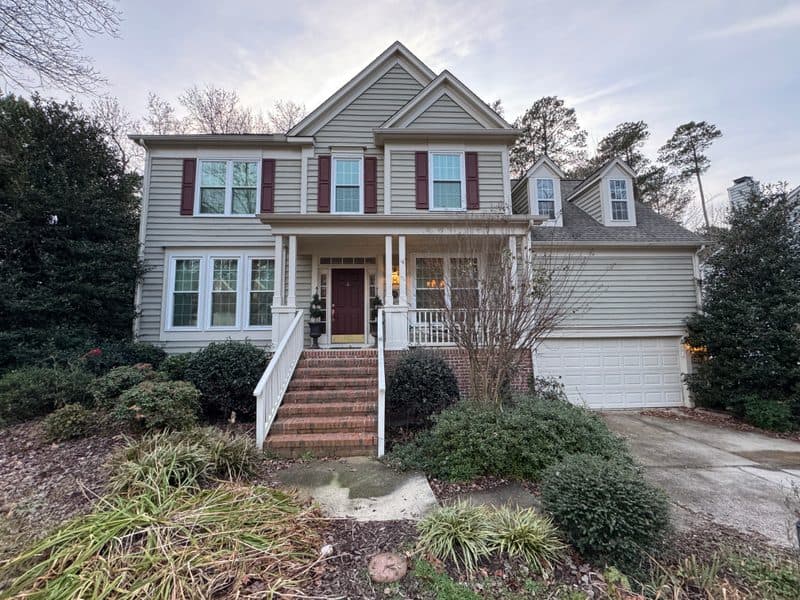
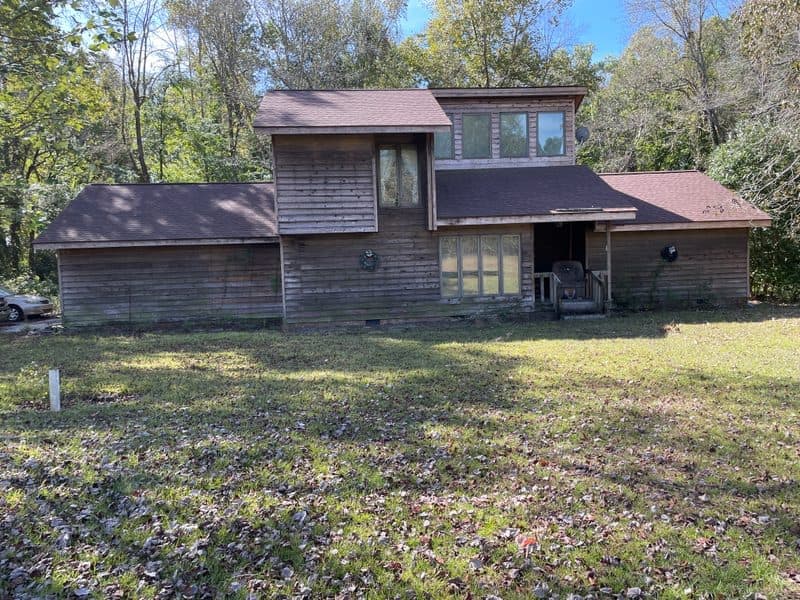
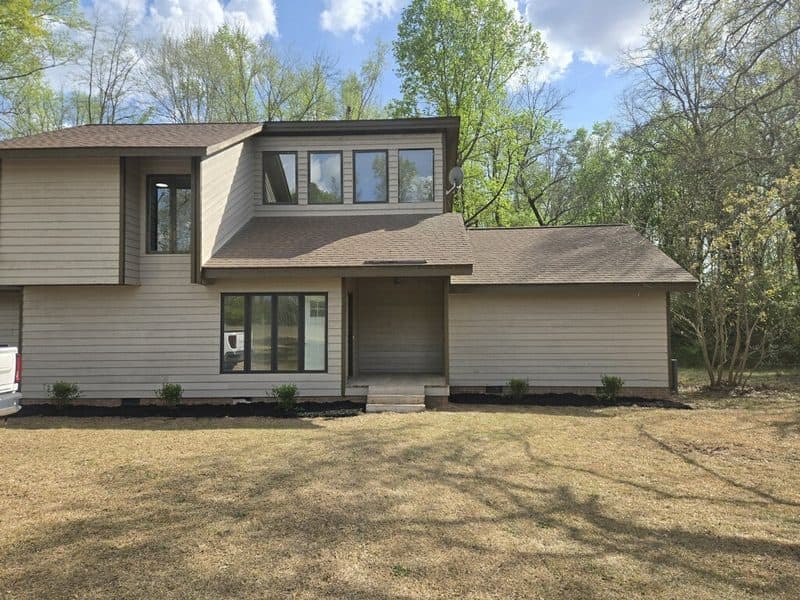
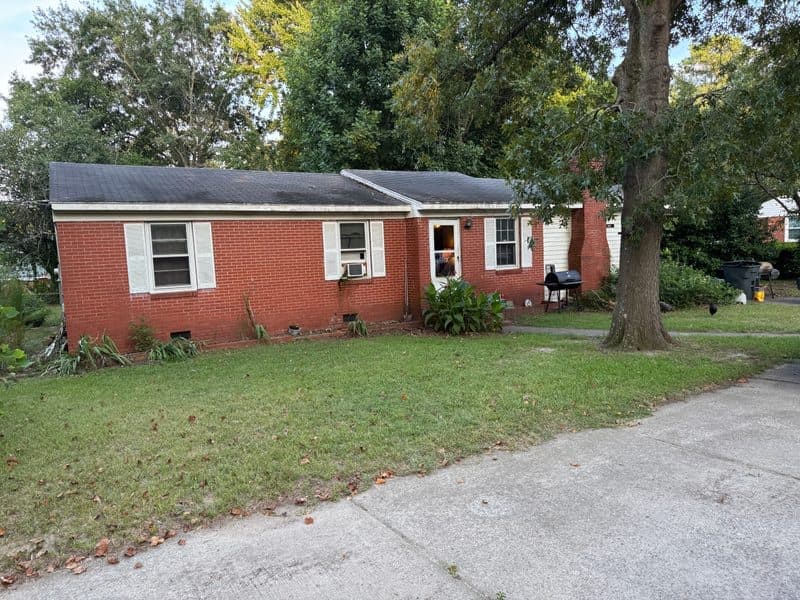
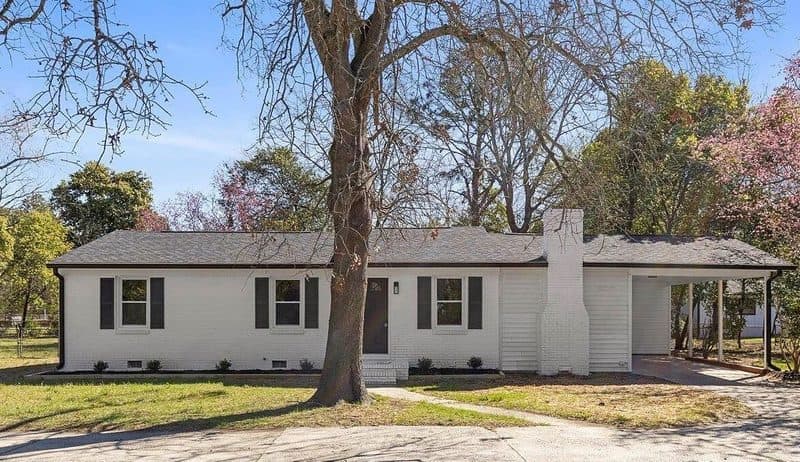
Wake Forest sellers searching for cash home buyers usually have one of three specific reasons. The property has condition issues that keep killing financed deals after inspection (older downtown condition catalog, 1990s suburban EIFS or polybutylene, septic age, watershed-restricted lot). The timeline doesn’t leave room for a financed buyer’s underwriting cycle plus septic permit review or HOA estoppel turnaround. Or a prior listed sale already fell through and the seller wants certainty over headline price on the next contract.
At Atlantis Homebuyers we’re a local NC cash buyer, BBB Accredited since 2018, and we close on Wake Forest’s mixed housing stock as a regular matter. The page below walks through what makes a Wake Forest cash sale structurally different, what real proof of funds looks like, what each closing layer adds to the timeline, and how the math actually compares once fall-through risk gets priced in.
What “Cash” Should Actually Mean in Wake Forest
A real cash sale in Wake Forest means a buyer with verified liquid funds, no financing or appraisal contingency, the buyer entity name matching the proof of funds, and a clear paperwork path through whichever closing layer applies to the specific property. Several other approaches get marketed in Wake Forest as “cash” or “fast offers” that operate differently in ways sellers benefit from knowing.
Lead-generation sites collect contact information and resell to investors who pay for the lead. The number you receive is an opening estimate from a buyer who hasn’t seen the property and may not exist as a serious purchaser. The site has no liability for whether anyone follows through.
National algorithmic programs(Opendoor, Offerpad) operate in Wake Forest. The opening number looks competitive, but the structure includes a 5-percent-plus service fee and a post-inspection walkback that re-trades the offer based on whatever defects the inspector catalogs. On Wake Forest’s mixed housing stock, the walkback patterns differ by property tier: septic age write-downs on outer-ring properties, EIFS or polybutylene write-downs on 1990s suburban builds, lead paint or knob-and-tube write-downs on older downtown homes.
Sale-leaseback operators pitch staying in the Wake Forest home as a renter after sale. Sometimes the right fit; often a high-cost form of borrowing dressed up as a sale, with long-term economics favoring the operator.
Cash-advance lenders disguised as buyers offer immediate money against equity but don’t actually purchase the property. You retain ownership, retain liability for taxes and any HOA dues, and owe the advance back plus fees.
Verifying that a Wake Forest buyer is offering real cash is a 10-minute exercise that protects the entire transaction.
Proof of Funds: What to Ask For (and What POF Is NOT)
Real proof of funds on a Wake Forest purchase has four specific characteristics. Anything missing one of them isn’t actually proof the buyer can close.
It’s a bank or brokerage statement showing available balance. A recent monthly statement, an in-app screenshot showing account holder name and balance, or a letter from the financial institution on letterhead. Not a pre-approval from a mortgage company; pre-approvals are the opposite of cash. Not a screenshot of a portfolio page without a clear available balance line.
The entity name matches the contract. If the offer comes from “XYZ Properties, LLC,” the proof of funds shows “XYZ Properties, LLC” as account holder. Not the managing member personally, not an affiliate, not a capital partner. Mismatches almost always mean the funds are committed elsewhere or the deal is contingent on something the buyer hasn’t disclosed.
The available balance equals or exceeds the contract price. Not the “total assets” figure, not committed capital, not line-of-credit availability. Available cash today.
It’s dated within the last 30 days. Older proof of funds is not proof of funds. Balances change.
We provide proof of funds matching all four conditions on every Wake Forest offer. If you’re comparing multiple offers, asking each buyer for current proof of funds is the fastest way to filter the real ones.
Why Some Wake Forest Homes Don’t Finance Cleanly
Wake Forest’s housing stock concentrates several specific condition and regulatory issues that financed-buyer underwriting either rejects outright or forces seller-paid pre-closing repair on. The cash advantage is structural, not aesthetic.
Failed or marginal septic on outer-ring properties. FHA and VA both require working septic at the time of closing. A failed perc test, a system flagged for replacement, or unrecorded permits all halt the loan until resolved. Falls Lake watershed protections add 30 to 90 days to system-replacement permitting, which rules out financed buyers on a normal sale clock.
EIFS, polybutylene, and aging HVAC on 1990s suburban builds. Heritage Wake Forest, Traditions, and similar post-1990 communities carry the same condition catalog as Cary’s 1990s and 2000s builds: synthetic stucco moisture intrusion (lender moisture-meter inspection required), polybutylene plumbing (insurer redline), LP and Masonite hardboard siding rot, builder-grade HVAC reaching end of life. Each one pauses or kills financed deals.
Pre-1978 condition issues on older downtown homes. Wake Forest Historic District and adjacent older neighborhoods carry knob-and-tube wiring (insurer redline), lead-based paint federal disclosure plus FHA/VA peeling-paint repair flags, galvanized supply plumbing, foundation settlement that inspectors flag as “structural concerns,” and asbestos siding on some 1920s through 1950s homes.
Town historic district architectural-review carryover. Properties in the historic district where the prior owner made exterior modifications without Town historic preservation review produce title-company friction at closing if the Town has an open case. Financed buyers’ lenders sometimes require resolution before the loan funds.
Falls Lake watershed impervious-surface caps. Existing patios, driveways, or accessory structures that appraisers flag as exceeding the watershed impervious-surface cap can complicate financed sales even when the structures predate the seller’s ownership.
Cash sales remove the lender from the equation. The repair list, permit timeline, and historic district matter all price into the offer up front and proceed through title work directly.
Honest 7 to 21 Day Closing Math in Wake Forest
Wake Forest cash closings run faster on properties without HOA layers, septic permit pulls, or historic district reviews, and slower when those layers stack. The honest range is 7 to 35 days depending on which combination of variables applies. Setting realistic expectations up front prevents missed dates.
7 to 10 days for older downtown Wake Forest properties without HOA, no septic complications, and no open historic district matters. Properties along S. White Street and adjacent older sections frequently close in this window.
10 to 14 days for the majority of newer suburban Wake Forest properties (Heritage Wake Forest, Traditions, Hasentree, Holding Village, etc.) with current HOA standing and on Town sewer service.
14 to 21 days for properties with one complicating layer: a slow-responding HOA, an open historic district matter, multi-heir signing coordination, or an open Town code case.
21 to 35 days for unincorporated outer-ring properties on septic where a perc test or Wake County Health Department permit pull is in scope. Falls Lake watershed protections add 30 to 90 days for full system-replacement permitting in worst-case scenarios.
We schedule the closing date against the realistic path for your specific property, not against an aspirational number.
Vetting a Real Cash Buyer in Wake Forest (Checklist)
A short pre-signing checklist for Wake Forest cash buyers:
- Written proof of funds dated within 30 days, in entity name signing the contract, with balance at or above contract price.
- Specific Wake County title company named in the contract with a phone number you can call to confirm the buyer is a known client.
- Plan for whichever paperwork layer applies. Real cash buyers in Wake Forest know which Wake County septic system types take which permit windows and which Wake Forest HOA management companies turn estoppels in 3 days vs 14.
- Contract terms matching what the buyer told you. Watch for assignment language you didn’t agree to and for inspection contingencies labeled “informational” that actually allow re-trade.
- References from prior Wake Forest closings. Real cash buyers have references; lookalikes don’t.
- NC Secretary of State registration. Active LLC or corporation, in good standing.
- Earnest money deposited with the title company, not directly with the buyer.
Alternative Paths Worth Considering Before a Cash Sale
Cash isn’t always the right fit for Wake Forest properties. Several alternatives deserve a real look first:
Renting. Wake Forest’s renter market (Capital Boulevard commuters, families on multi-year RTP contracts, families choosing Wake Forest schools) supports single-family rentals at rents that cover carrying costs in many neighborhoods. The trade is landlord obligations, vacancy risk between tenants, and HOA-rule compliance for tenant behavior in HOA-governed communities.
Cash-out refinance. Equity access without sale. Works on properties that would appraise cleanly and that don’t carry septic, EIFS, polybutylene, or older downtown underwriting issues.
Family or relationship sale. Selling to a relative or long-term contact at a negotiated price, title work through a Wake County attorney closing.
Traditional listing. If condition is solid and timing is flexible, a listed sale often nets more dollars than cash-as-is. The variable is whether the property will pass financed-buyer inspection without major re-trades. On clean newer Heritage Wake Forest builds with current HOA standing, often yes. On older downtown housing stock or septic-system properties, often no.
Cash makes sense when timing matters, when condition would derail a financed sale, when prior listings produced fall-throughs, or when certainty matters more than top-of-market price.
Comparison: Financed Offer Adjusted for Fall-Through vs True Cash
Wake Forest example: 1995 home in Heritage Wake Forest, $510,000 retail comp value, polybutylene plumbing partial replacement, original HVAC at year 28, no septic complications. A financed buyer offers $505,000. The buyer’s inspector flags the polybutylene and the aging HVAC; the buyer asks for a $20,000 credit. Seller agrees rather than start over. Final closing number is $485,000 plus 60 days of carrying costs while the negotiation played out (mortgage, insurance, taxes, HOA dues, utilities, roughly $4,500 per month so $9,000) plus agent commission of 5.5 percent ($27,775). Net to seller: roughly $448,000.
A cash offer at $458,000 on the same property closes in 14 days with no agent commission, no concessions, no carrying costs added. Net to seller: $458,000.
On Wake Forest properties with concentrated condition complications or septic issues, the cash net often beats the financed-net even when the cash sticker is lower. That’s the math worth running before deciding. See our NC selling-cost breakdown for full numbers.
Common Cash-Sale Scenarios in Wake Forest
Patterns we see often enough to be worth listing:
Failed septic on a watershed-protected lot. Failed perc test, replacement permit timeline rules out financed buyers, seller has no appetite for a 60 to 90 day permit cycle. Cash absorbs the system replacement.
Inherited older Wake Forest home. Out-of-state heirs, pre-1978 home with decades of belongings, ongoing carrying costs eating estate distribution. See the inherited property hub for closing logistics.
EIFS or polybutylene listing fall-through. Prior financed buyer walked after inspection; second financed buyer unwilling to take it on without major repair credits. Cash prices the issue accurately on the first pass.
Tired-landlord rental in a Wake Forest HOA. Long-distance Wake Forest rental, HOA dues plus tenant turnover plus exterior maintenance violations have eaten the margin. See the landlord situation hub for how the tenant transition runs.
Capital Boulevard commute fatigue. Job in Raleigh, daily commute that wore out the appeal, looking for a clean exit on a defined timeline.
Job relocation timeline. Hard report-by date in another state, financed timelines unreliable, cash hits the date.
Wake County tax revaluation impact. Recent revaluation produced a higher tax bill the household budget no longer supports.
What to Bring to a First Conversation
For a Wake Forest property the call goes faster with these specifics:
- Property address and HOA community name (or note if downtown historic, ETJ, or unincorporated outer ring)
- Year built and condition headlines (siding type, plumbing material, HVAC age, roof age, septic age and condition)
- HOA standing, dues current or behind, special assessments pending, open architectural-review or covenant matters
- Open Town of Wake Forest code cases or known Wake County health department septic flags
- Active mortgage and approximate payoff balance
- Timing constraint and whether there’s a hard deadline driving the sale
We come back with a real cash number same business day in most cases, with written proof of funds, and a realistic close-by date that accounts for whichever paperwork layers apply.
Ready for a Real Cash Offer on Your Wake Forest House?
Tell us about the property. We’ll send a written cash offer with verified proof of funds same business day. The HOA paperwork, the septic permit timeline, the historic district matter, all of it factors into the closing date we propose so the date we commit to is the date we can actually hit. No fees, no obligation, no surprises.
Below are the questions Wake Forest cash sellers most often ask before signing.