






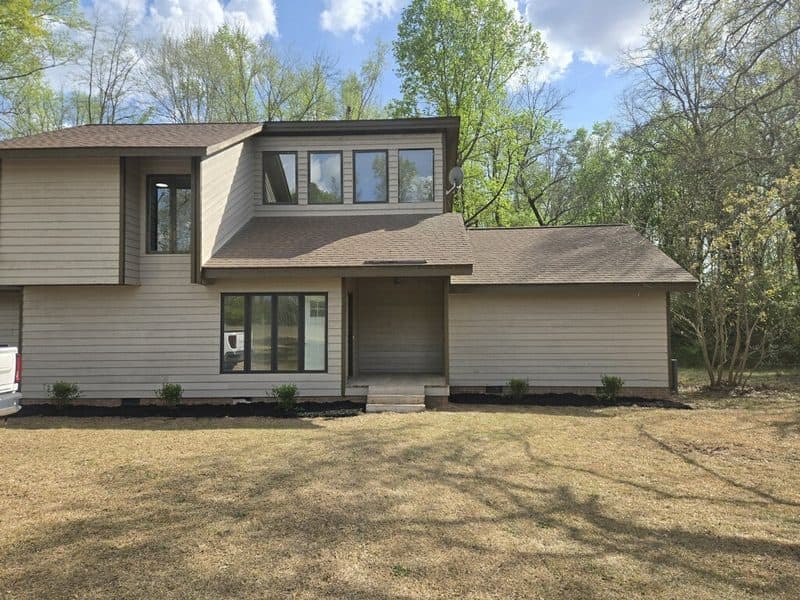
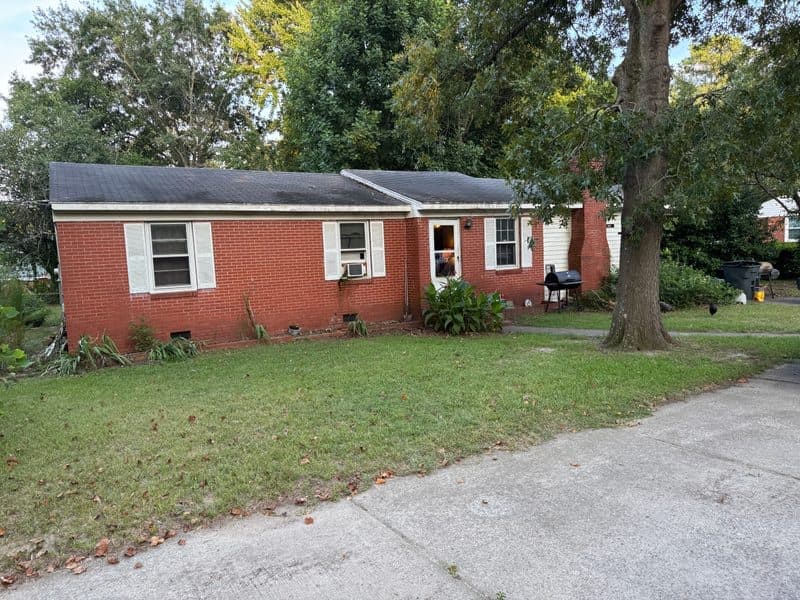
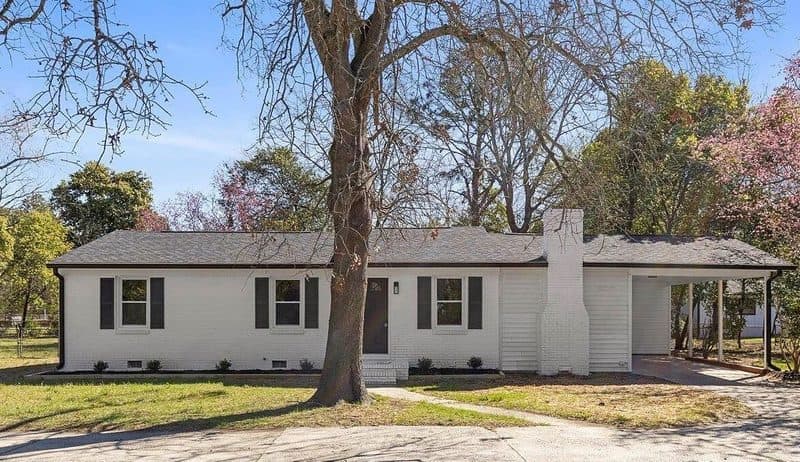
Selling a Cary house as-is means selling it in current condition with no repair obligation on the seller. The structure is most useful when the property has the kinds of issues that consistently kill financed deals on Cary’s 1990s and 2000s housing stock: EIFS moisture intrusion, polybutylene supply plumbing, LP or Masonite hardboard siding rot, improperly flashed HardiePlank, builder-grade HVAC reaching end of life, crawlspace moisture, an open Town of Cary tree-preservation case, or unresolved HOA architectural-review flags.
At Atlantis Homebuyers we close as-is sales across Cary as a regular matter. The page below walks through what NC’s Residential Property Disclosure Act actually requires of you, what the Cary-specific condition catalog typically looks like, and why cash-as-is structurally beats listed-as-is on properties with the condition issues that 1990s and 2000s Cary builds concentrate.
NCGS Chapter 47E Disclosure on Cary Properties
North Carolina’s Residential Property Disclosure Act (NCGS Chapter 47E) requires sellers of residential real property to deliver a written disclosure form to buyers before contract execution. The form lists property characteristics and asks the seller to answer Yes, No, or No Representation on each.
For Cary specifically, two practical patterns matter. First, post-1978 builds (which is essentially all of Cary’s master-planned communities) don’t carry federal Title X lead-based paint disclosure obligations the way pre-1978 homes do. The state 47E form still applies; the federal lead layer doesn’t. Second, the “No Representation” answer is fully legitimate for sellers who genuinely don’t know an answer, common on inherited Cary properties where the deceased owner managed the home for 25+ years and the heirs have no records.
Listed sales to financed buyers turn No Representation answers into friction. The buyer’s lender and inspector probe the questions the seller couldn’t confidently answer. Cash buyers don’t require confident answers because we’re not running the property through a lender. We accept No Representation responses on questions where the seller genuinely doesn’t know, and we price our offer based on what we find in our own due diligence.
The Cary 1990s and 2000s Condition Catalog
Cary’s housing stock is concentrated in the 1990 to 2010 build window, and the condition catalog reflects that vintage rather than the pre-1978 issues that dominate Durham’s older neighborhoods. The Cary catalog is shorter than the older-Durham one but the items are concentrated and lender underwriting catches them reliably.
EIFS (synthetic stucco) moisture intrusion. Common on Cary homes built between roughly 1990 and 2000 with full or partial stucco exteriors. EIFS systems installed without proper flashing trap moisture behind the cladding, producing sheathing rot, mold, and structural damage invisible from outside. Many lenders require moisture-meter inspection of EIFS homes; failed readings stop the loan. Remediation cost runs $15,000 (small areas) to $80,000 or more (full re-clad).
Polybutylene plumbing. Gray plastic supply pipes installed approximately 1985 to 1995 in many Cary homes. They fail catastrophically over time. Most homeowner insurers won’t bind a policy on active polybutylene, which kills financed sales since the buyer can’t bind insurance. Repipe to PEX or copper runs $4,000 to $15,000 depending on home size and access.
LP and Masonite hardboard siding. 1990s Cary homes often have hardboard composite siding that swells and rots when water gets behind it, especially at trim joints, around windows, and at any horizontal seam exposed to weather. Inspectors photograph the damage; financed buyers require pre-closing repair or full replacement. Spot repair runs $3,000–$10,000; full re-side runs $20,000–$50,000.
Improperly flashed HardiePlank. 2000s and 2010s Cary homes often have HardiePlank installed without proper window and door flashing. The siding itself is durable; the water intrusion behind isn’t. Damage shows up as soft sheathing, interior water marks, or visible bulging at seams.
Builder-grade HVAC at year 18–22. Original HVAC on 2000s Cary builds is now in the failure window. Inspectors flag age and condition; financed buyers’ lenders require working HVAC at closing.
Crawlspace moisture and active mold. Cary’s clay soil + seasonal water table produces crawlspace humidity problems on many properties. Visible mold or active moisture flags pause loans pending remediation. Encapsulation runs $5,000 to $20,000.
Defective Chinese drywall. Limited but present on some 2003–2008 Cary builds. Causes corrosion of copper wiring and AC coils, sulfur smell, blackened metal components. Disqualifies financed sales; requires full drywall replacement.
We buy with any combination of these in place. The repair work prices into our offer and we handle resolution post-closing.
Why Financed Cary Buyers Can’t Close on As-Is
Listed-as-is sales on Cary properties theoretically work but practically struggle. The buyer’s lender controls whether the loan funds, regardless of what the contract says about as-is. The buyer can sign an as-is contract and still watch the lender refuse to close because the property doesn’t meet underwriting standards.
The specific Cary patterns: FHA and VA both require working HVAC and operable plumbing at the time of closing, regardless of as-is contract language. Many lenders require moisture- meter inspection on EIFS homes and reject the loan when readings fail. Insurers won’t bind homeowner policies on active polybutylene; no insurance, no loan, no closing. Crawlspace mold flagged in inspection requires lender-approved remediation before funding.
For a financed Cary buyer, any of those issues triggers a seller-funded repair cycle that the as-is contract theoretically excused them from. The buyer either walks because the as-is structure didn’t actually exempt the repair, or the seller agrees to a credit or cash repair that eats into proceeds and slips the timeline.
Cash sales remove the lender from the equation. What the buyer agrees to is what the buyer has authority to do. The repair list prices into the offer; the closing happens; the new owner addresses the issues post-closing without a lender gate.
HOA Architectural-Review Issues and How They Fold Into Cash Closings
Most Cary properties sit in HOA communities with covenants governing architectural changes. Modifications made without approval, or approved with conditions never satisfied , surface in the HOA estoppel at closing. Common flagged items: unpermitted decks, fence styles outside covenant rules, exterior paint colors not on the approved palette, accessory structures (sheds, screened porches, outbuildings) added without architectural review, satellite dishes mounted in non-permitted locations, landscaping choices that violate HOA standards.
For listed sales, open architectural-review issues often require resolution before the HOA will issue a clean estoppel, which means the seller has to remove the offending feature, fund retroactive permitting and approval, or negotiate a consent agreement with the HOA, all of which slip the timeline.
Cash sales handle this differently. We close around open architectural-review items by accepting the property with the issue in place, then working with the HOA management company post-closing to bring the property into compliance. Sometimes that means removing the modification; sometimes it means submitting a retroactive application; sometimes it means negotiating a settlement. The seller doesn’t fund any of it; we do.
Town of Cary Code Enforcement and Tree Preservation
The Town of Cary enforces some of the strictest property and development ordinances in the Triangle, and unresolved violations attach as municipal liens recorded at the town level (separate from Wake County tax records).
Tree preservation ordinance. Cary protects mature trees on residential lots; removing protected trees without a permit produces fines that compound over time. Sellers who removed trees during a renovation or to clear space for an addition sometimes find the violation at closing. Fines can reach the low five figures on multiple protected trees.
Unified Development Ordinance (UDO) violations. Setback violations on additions, lot-coverage violations, parking restrictions, signage rules, accessory-structure rules. Common flagged items include sheds placed within setback lines, additions extending beyond rear setback, secondary structures larger than UDO allows.
Exterior maintenance violations. Peeling paint, broken windows, unsafe stairs, overgrown vegetation, accumulated debris. Cary’s code enforcement is proactive rather than complaint-driven on visible issues.
We pull both the Town of Cary municipal lien register and Wake County tax records as standard due diligence on every Cary property. Open cases price into the offer; resolution becomes our responsibility post-closing.
The “We’ll Cover Repairs Later” National-Program Walk-Back Trap
National algorithmic programs (Opendoor, Offerpad, similar) market themselves as as-is buyers in Cary. The pitch is simple: opening offer, scheduled inspection, signed contract, fast close. The structural reality is that the contract gives the program the right to re-trade the offer based on whatever defects their inspector catalogs. On 1990s and 2000s Cary builds, the defect list is long: EIFS write-down, polybutylene write-down, LP siding rot write-down, HVAC age write-down, crawlspace moisture write-down, builder-grade windows write-down.
The marketing is technically accurate (they buy as-is) but price discovery happens after the inspection rather than at the offer. Sellers who go in expecting the opening number and walk out at a closing number $20,000 to $40,000 lower aren’t getting cheated; they’re experiencing the program’s structural design.
Independent cash buyers price the offer up front based on what we expect to find and don’t re-trade. The number you sign at the contract is the number you receive at the closing table.
Cleanout for Inherited Cary Homes
Cary’s housing stock is newer than Durham’s, but inherited Cary homes still come with substantial cleanout in many cases. Owners who bought in the late 1980s or early 1990s and lived in the same property for 30+ years accumulate the same depth of belongings as longer-tenure owners in older neighborhoods.
Listed-sale prep on an inherited Cary home means coordinating an estate sale, donation pickups, junk-haul service, dumpster rental, and the family time to sort through everything. Heirs spread across multiple states usually struggle to coordinate this on listing-sale timelines, and the cleanout often becomes a months-long project before the property can be shown.
Cash-as-is removes the cleanout entirely. Take what’s meaningful and leave the rest. We handle full clean-out at our cost after closing. The property changes hands as-is, contents included. For heirs who thought they had three weekends of sorting ahead, this is often the actual relief rather than the speed of close.
Comparison: Pre-Listing Repair Quote vs. Cash As-Is Net
Cary numbers on a representative example: 1994 home in Lochmere, $620,000 fully-renovated retail comparable value. Pre-listing repair quotes to bring the property to financed- buyer-pass condition realistically include EIFS remediation ($25,000), polybutylene repipe ($8,000), siding repair on LP rot ($12,000), HVAC replacement ($14,000), crawlspace encapsulation ($10,000), and miscellaneous interior refresh ($15,000), total roughly $84,000.
Few Cary sellers have $84,000 in liquid pre-listing repair budget. Listing without the repairs means listing at a sub-retail price that attracts cash investors and rehab-loan buyers. The listing math then runs through agent commissions ($31,000 to $37,000), seller closing costs ($6,200 to $18,600), 2 to 4 months of carrying costs ($6,000 to $14,000 in Cary including HOA dues), and post-inspection concessions ($5,000 to $20,000 typical).
Cash-as-is on the same property prices the repair backlog plus our margin and closes in 14 to 21 days with no fees, no carrying costs added. The dollar gap between net-net listing proceeds and cash-as-is on Cary properties with concentrated condition issues is often surprisingly small. The trade is dollars on the high end for certainty and speed on the front end.
Common As-Is Scenarios in Cary
Patterns we see often enough to be worth listing:
EIFS or polybutylene listing fall-through. Prior buyer walked after inspection, listing has been on market 90+ days, seller has eaten months of carrying costs plus HOA dues. Cash-as-is restarts at a number that prices the inspection findings on the first pass.
Inherited Cary HOA property. Out-of-state heirs, ongoing dues piling on the estate, no one wants to manage or empty the property remotely. See the inherited property hub for closing logistics.
Failed home inspection on a financed sale. Inspection report is now part of the property’s history, the next financed buyer will see it, the seller is boxed in. Cash skips the cycle.
Open Town of Cary code or tree-preservation case. Compliance deadline missed, fines compounding, lien attached. We close around active cases. See the major repairs and as-is hub for related scenarios.
HOA architectural-review flag. Unpermitted deck, fence outside covenant, accessory structure without approval. The HOA won’t issue clean estoppel; financed sale stalls. Cash absorbs the resolution.
Crawlspace mold or active water intrusion. Lenders pause loans for active mold; cash doesn’t. See the damaged property hub for examples.
Tired-landlord rental with end-of-lease damage. Tenant moved out, the property needs substantial work, the landlord is done with both the property and the HOA relationship. See the landlord situation hub for related scenarios.
What to Bring to a First Conversation
For an as-is Cary property, the call goes faster with these specifics:
- Property address and HOA community name (tells us the management company and typical estoppel turnaround)
- Year built and condition headlines (siding type, plumbing material, HVAC age, roof age, crawlspace status, any known mold or moisture issues)
- Open code cases at Town of Cary or known Wake County health department flags
- HOA architectural-review status, any unpermitted modifications, any unresolved covenant matters
- Recent inspection reports if available, not required but they speed up the offer math
- Cleanout situation: vacant + cleared, vacant + furnished, occupied with belongings to remove
- Your timing constraint and what’s driving the sale
We come back with a cash-as-is number same business day in most cases. The number reflects the actual condition; we don’t re-trade based on what we find later.
Ready for an As-Is Cash Offer on Your Cary House?
Tell us about the property, condition and all. We’ll send a written cash-as-is offer same business day. The HOA paperwork, the EIFS or polybutylene write-down, the cleanout, the open code case, all of it factors into the offer up front. No repair list, no inspection re-trade, no surprise at closing.
Below are the questions Cary as-is sellers most often ask before signing.