





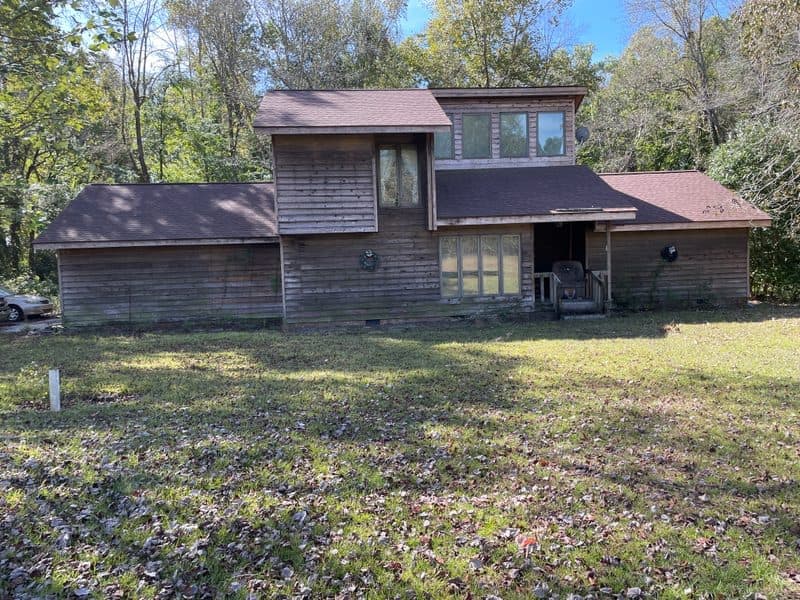
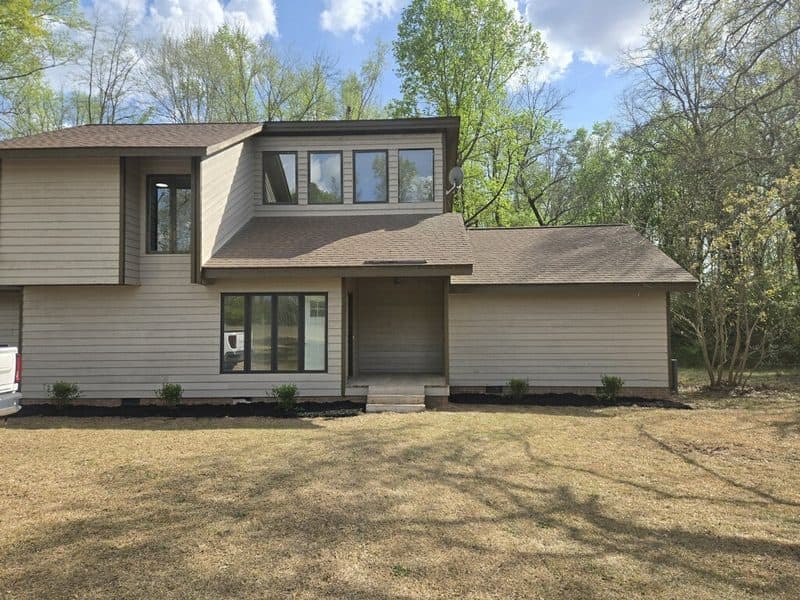
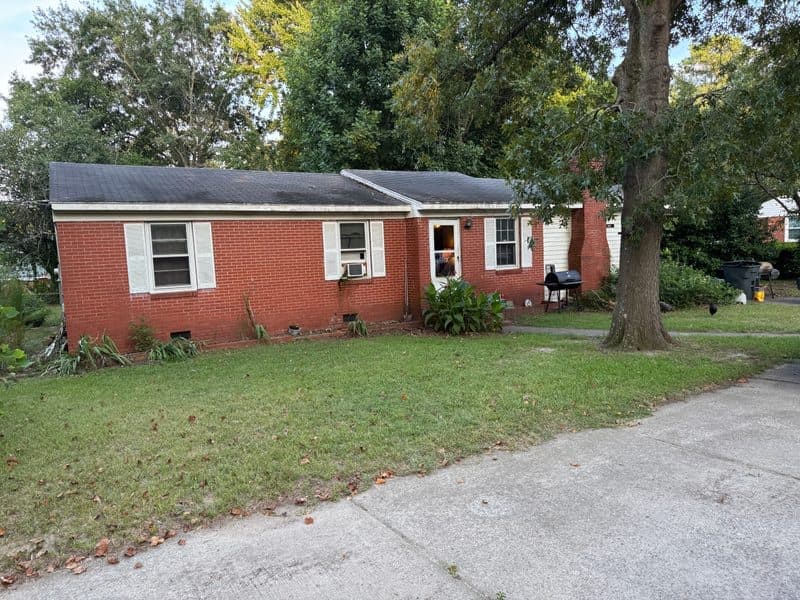
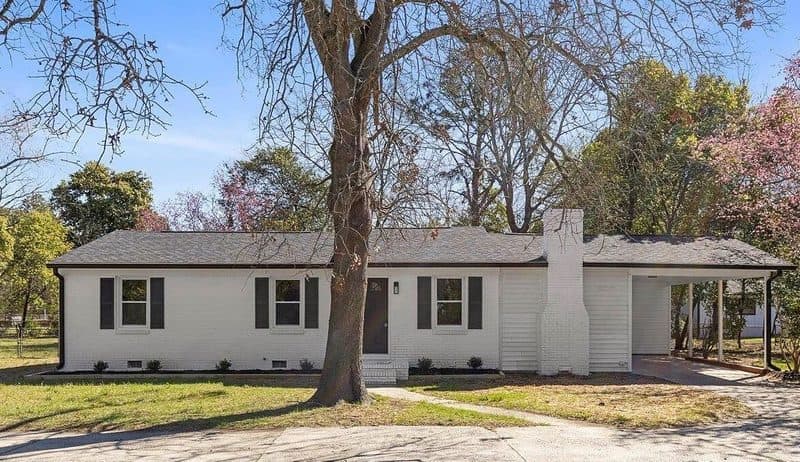
Selling a Durham house as-is means selling it in its current condition with no repair obligation on the seller. The structure matters most when the property has issues that would derail a traditional listing: knob-and-tube wiring an insurer won’t cover, lead paint that triggers FHA/VA repair flags, a failed septic, foundation settlement, fire or water damage, an open code case at the City of Durham, decades of belongings inside an inherited home, or a roof at year 25 with no budget to replace it.
At Atlantis Homebuyers we close as-is sales across Durham County as a regular matter. The page below walks through what NC’s Residential Property Disclosure Act actually requires of you, what the older-Durham condition catalog typically looks like at closing, and why cash-as-is structurally beats listed-as-is on older Durham housing stock.
NCGS Chapter 47E Disclosure on Pre-1978 Durham Homes
North Carolina’s Residential Property Disclosure Act (NCGS Chapter 47E) requires sellers of residential real property to deliver a written disclosure form to buyers before contract execution. The form lists property characteristics and asks the seller to answer Yes, No, or No Representation on each.
The “No Representation” answer is the part most Durham sellers don’t know about. It’s a legitimate response when the seller genuinely doesn’t know the answer, never lived in the home, or has no records to confirm a system’s condition. Common scenarios where No Representation is the right answer: an heir selling a parent’s home they never lived in, a landlord selling a long-term rental they didn’t personally occupy, an investor selling a property they bought as-is years earlier without prior records.
Listed sales to financed buyers turn No Representation answers into friction. The buyer’s lender wants confident answers for underwriting; the buyer’s inspector probes the questions the seller couldn’t answer; appraisal conditions multiply. Cash buyers don’t need confident answers because we’re not running the property through an underwriter. We accept No Representation responses on questions where the seller genuinely doesn’t know, and we price our offer based on what we find in our own due diligence.
For pre-1978 Durham homes, which is most of Trinity Park, Old North Durham, Walltown, Watts-Hillandale, Cleveland-Holloway, and large parts of Forest Hills and Lakewood, federal lead-based paint disclosure (Title X) layers on top of the state 47E form. The seller signs a separate federal lead disclosure statement and provides any lead inspection records or marks “no records” if there are none. Lead paint doesn’t disqualify a sale; it’s a disclosure requirement that’s easy to satisfy.
The Durham Older-Home Condition Catalog
The condition issues we see repeat often enough on older Durham homes to be worth listing concretely. Each one is normal for the vintage; none of them disqualify the property from a cash sale.
Knob-and-tube electrical wiring is common in pre-1950 Durham homes, especially in the original portions of the house even when later additions were modern-wired. The visual signal is ceramic tube and knob insulators in the attic between joists; the practical signal is two-prong outlets. Most homeowner insurance underwriters won’t bind coverage with active K&T, which collapses any financed sale.
Galvanized supply plumbing shows up in early- 20th-century Durham homes as gray-painted iron pipes feeding sinks and tubs. The pipes corrode internally over decades, producing low water pressure and eventual catastrophic failure. Repipe to PEX or copper runs $8,000 and up depending on layout complexity.
Lead-based paint exists on virtually every pre-1978 Durham home that hasn’t been completely repainted with modern coatings, and even on those it lurks under newer paint layers. Federal Title X disclosure applies; FHA and VA peeling-paint repair flags apply on financed sales; cash sales skip the repair flag.
Asbestos siding is common on Trinity Park and Old North Durham homes built between roughly 1920 and 1960. It’s safe in place and dangerous only when disturbed during renovation. Insurance carriers and financed buyers price it as a future hazard; cash buyers price it as a remediation budget line.
Original boilers and octopus furnaces still operate in plenty of Durham basements decades past their design life. They work, they’re inefficient, and any HVAC replacement involves remediation of the original ductwork or steam-pipe system. The replacement cost is real but the system running today doesn’t fail closing.
Foundation settlement and sloping floors on rubble or early-block foundations are common across older Durham. Most settlement is decades old and stable, but inspectors flag the visual evidence (sloping floors, doors that don’t latch, drywall cracks at corners) as “structural concerns , recommend further evaluation,” which torpedoes financed deals even when the underlying condition is benign.
Failed or marginal septic systems in unincorporated Durham County can’t pass financed-buyer inspections without a Durham County Health Department permit and full system replacement, a 60- to 90-day process minimum. Cash sales close around the failed system; the new system goes in post-closing.
Roof age past 25 years. Most carriers cap roof age at 20–25 years for new homeowner policies. A 25-year Durham roof passing visual inspection still kills financed deals because the buyer can’t bind insurance.
We buy with any combination of these in place. The repair work gets priced into our offer and we handle resolution post-closing.
Why VA and FHA Buyers Can’t Close on As-Is Older Durham Homes
VA Minimum Property Requirements and FHA 203b standards both impose specific condition criteria the property must meet for the loan to close. Older Durham housing stock structurally struggles with several of those criteria:
Peeling lead-based paint on pre-1978 homes triggers required scraping and repainting, paid by the seller, before loan funding. Active knob-and-tube wiring blocks insurance binding, which blocks loan funding. Roof condition with less than 3 to 5 years of remaining useful life requires replacement before closing on FHA; VA inspectors apply similar judgment. Working HVAC at the time of inspection means a dead furnace or AC unit gets the loan paused. Working septic for unincorporated tracts means a failed perc test on a county-permitted system halts the deal.
For a financed Durham buyer, any of those flags trigger a seller-funded repair cycle. The buyer’s rate-lock window starts ticking. If the repair takes longer than the lock period, the loan rate resets, the buyer reconsiders, the deal renegotiates or collapses.
Listed-as-is sales on financed buyers theoretically work but practically don’t. The buyer’s lender controls whether the loan funds, regardless of what the contract says about as-is. The buyer can sign an as-is contract and still watch the lender refuse to close because the property doesn’t meet MPRs. Cash sales remove the lender from the equation entirely; what the buyer agrees to is what the buyer has authority to do.
City of Durham Minimum Housing Standards and Code Enforcement
The City of Durham enforces minimum housing standards through its Neighborhood Improvement Services department. Common flags on older Durham homes include peeling exterior paint, broken or missing windows, unsafe steps and railings, missing or unstable handrails, leaking roofs visible from the public right-of-way, overgrown vegetation in front yards, accumulated debris or inoperable vehicles on the property, and structural deficiencies visible from outside the home.
Violations get cited with a deadline. Missing the deadline converts the violation to a fine. Unpaid fines compound monthly and attach to the property as a municipal lien recorded at the city level. A title search that only pulls Durham County records misses city liens entirely.
We pull both the City of Durham municipal lien register and the Durham County tax lien records as standard due diligence on every Durham property we buy. Open cases get priced into the offer; resolution becomes our responsibility post-closing, usually by working directly with Neighborhood Improvement Services to bring the property into compliance after we own it. For sellers with open code cases, this is structurally cleaner than trying to resolve a violation while still owning the property.
Durham County Health Department: Septic and Well
For Durham properties on unincorporated land, areas like Bahama, Rougemont, the Bragtown perimeter, and tracts along Old Oxford Highway and Roxboro Road outside city limits, septic and well systems fall under Durham County Health Department permitting jurisdiction.
Septic system installation in Durham County typically runs in the $5,000 to $30,000 range depending on system type. Conventional gravity systems on suitable soils land at the lower end. Alternative systems for difficult soils (high water table, shallow bedrock, restricted setbacks) run substantially higher. Drip irrigation systems for the most constrained sites can exceed the high end. The permit process requires a percolation test ($400–$1,200), system design, and county permit ($1,500–$4,000) before installation.
Failed septic doesn’t fail an as-is cash sale. The inspection report lands as a budget line; the offer is priced accordingly; the new system goes in post-closing on our timeline. Wells follow a similar pattern, failed wells, low yield, bacterial contamination, or unrecorded permits all surface in due diligence and get priced rather than rejected.
The “We’ll Cover Repairs Later” National-Program Walk-Back Trap
National algorithmic programs (Opendoor, Offerpad, and similar) market themselves as as-is buyers in Durham. The pitch is straightforward: opening offer, scheduled inspection, signed contract, fast close. The structural reality is more complex.
After contract signing, the program sends an inspector who catalogs every defect on the property. The contract gives the program the right to re-trade the offer based on the cost they assign to each defect. On older Durham housing stock, the defect list is long: knob-and-tube wiring write-down, lead paint write-down, asbestos siding write-down, roof age write-down, original boiler write-down, foundation evaluation write-down, galvanized plumbing repipe write-down. Each line item is defensible individually; the cumulative re-trade is rarely smaller than $10,000 and frequently lands $25,000 or more on homes with multiple older-vintage characteristics.
Sellers who go into the program expecting the opening number and walk out with a closing number $20,000 lower aren’t getting cheated; they’re experiencing the structural design of the program. The marketing is accurate (they buy as-is) but the price discovery happens after the inspection, not at the offer. Independent cash buyers price the offer up front and don’t re-trade. The number you sign at the contract is the number you receive at closing.
Cleanout for Inherited Durham Homes
Inherited Durham homes, especially in the older neighborhoods where the prior generation often lived in the same property for 30 to 50 years, typically come with a substantial cleanout job. Furniture, family belongings, decades of paperwork, attic and basement accumulation, sometimes a garage or shed packed to the rafters.
Listed-sale prep on an inherited Durham home means coordinating an estate sale, donation pickups, junk-haul service, dumpster rental, and the family time to sort through what to keep. Heirs scattered across multiple states usually struggle to coordinate this on listing-sale timelines, and the cleanout often becomes a months-long process before the property can even be shown.
Cash-as-is removes the entire cleanout from the seller’s path. Take what’s meaningful, photos, documents, items with emotional or financial value, and leave the rest. We handle full clean-out at our cost after closing. The property changes hands as-is, contents included. Heirs who thought they had to spend three weekends sorting through a parent’s house often find this is the actual relief, not the speed of close.
Comparison: Pre-Listing Repair Quote vs. Cash As-Is Net
The right way to think about cash-as-is on an older Durham home is to compare the cash net against the listed-sale net after all the costs that older Durham housing stock specifically attracts.
Take a 1925 Trinity Park bungalow with a $400,000 fully-renovated retail comparable value. Pre-listing repair quotes to bring the property to financed-buyer-pass condition realistically run $50,000 to $150,000 depending on which combination of issues are present (knob-and-tube replacement, lead paint encapsulation or removal, roof replacement, foundation work, plumbing repipe, HVAC replacement, asbestos siding remediation). Few sellers have the liquidity to fund that pre-listing repair budget out of pocket.
Listing without the repairs means listing at a sub-retail price, attracting cash investors and rehab-loan buyers, and accepting that the financed-buyer pool is largely unavailable. The listing math then runs through agent commissions ($20,000–$24,000), seller closing costs ($4,000–$12,000), and 2 to 4 months of carrying costs ($4,000–$10,000) while the property sits.
Cash-as-is from us prices the same property at a number that accounts for the repair backlog plus our margin and risk, then closes in 14 to 30 days with no fees taken out and no carrying costs added. The dollar gap between net-net listing proceeds and cash-as-is on older Durham homes is often smaller than sellers expect. The trade is dollars on the high end for certainty and speed on the front end.
Common As-Is Scenarios in Durham
The patterns we see on Durham as-is sales repeat often enough to be worth listing:
Inherited older Durham home with substantial deferred maintenance. Most common scenario. Out-of-state heirs, 50-year-old housing stock, decades of belongings inside, a long list of repairs no one wants to fund. Cash-as-is closes the whole situation in 14–30 days. See the inherited property hub for closing logistics.
Failed home inspection on a financed sale. Buyer walked, the listing has been on the market 90+ days, the seller has eaten 3 months of carrying costs and an inspection report the next financed buyer will see. Cash-as-is restarts the process at a number that prices the inspection findings accurately.
Open City of Durham code violation case. Compliance deadline missed, fines compounding, lien attached or about to attach. We buy around active cases and resolve them post-closing. See the major repairs and as-is hub for related scenarios.
Fire, water, or storm damage. Insurance claim in process or settled, the property uninhabitable, the seller with no appetite to manage a rebuild. Cash-as-is takes the damaged property at a price that reflects the rebuild cost. See the damaged property hub for examples.
Tired-landlord rental with end-of-lease damage. Tenant moved out, the property needs substantial work, the landlord is done. Cash-as-is closes the chapter without funding another rehab cycle.
What to Bring to a First Conversation
For an as-is Durham property, the call goes faster when you can share these specifics up front:
- Property address and access situation (vacant, occupied, tenant in place, condemned)
- Approximate year built and any condition headlines you already know (electrical, plumbing, roof age, HVAC, foundation, septic, structural)
- Open code cases at City of Durham or known county health department flags
- Recent inspection reports (if any), not required, but they speed up the offer math
- Whether the property has lead-based paint records or is assumed pre-1978
- Cleanout situation: vacant + cleared, vacant + furnished, occupied with belongings to remove
- Your timing constraint and what’s driving the sale
We come back with a cash-as-is number same business day in most cases. The number reflects the actual condition; we don’t re-trade based on what we find later because we asked the right questions up front.
Ready for an As-Is Cash Offer?
Tell us about the property, condition and all. We’ll send a written cash-as-is offer same business day. No repair list, no inspection re-trade, no cleanout requirement, no surprise at closing. The offer at the contract is the offer at the wire.
Below are the questions Durham as-is sellers most often ask before signing.