


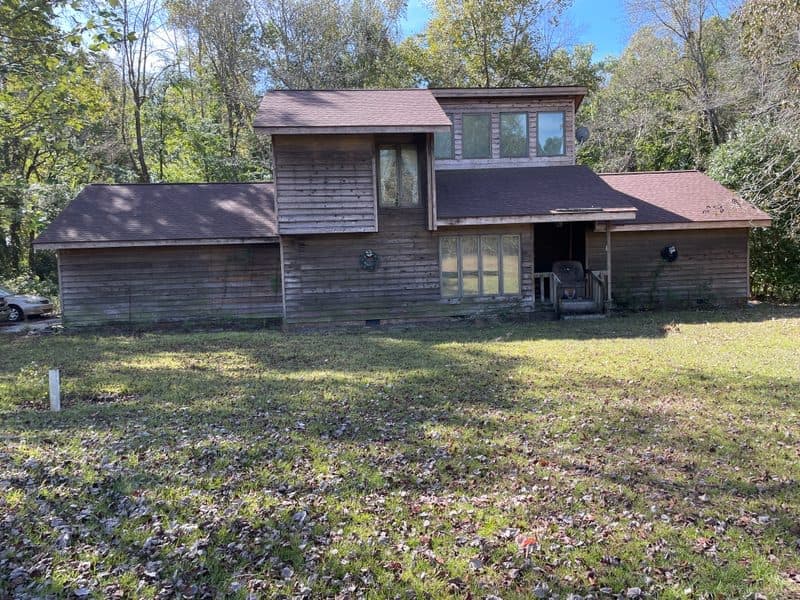
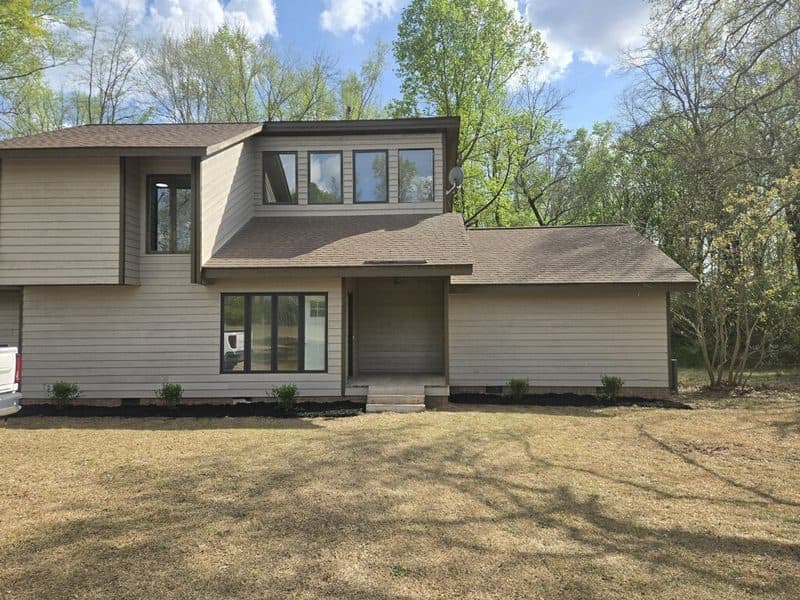
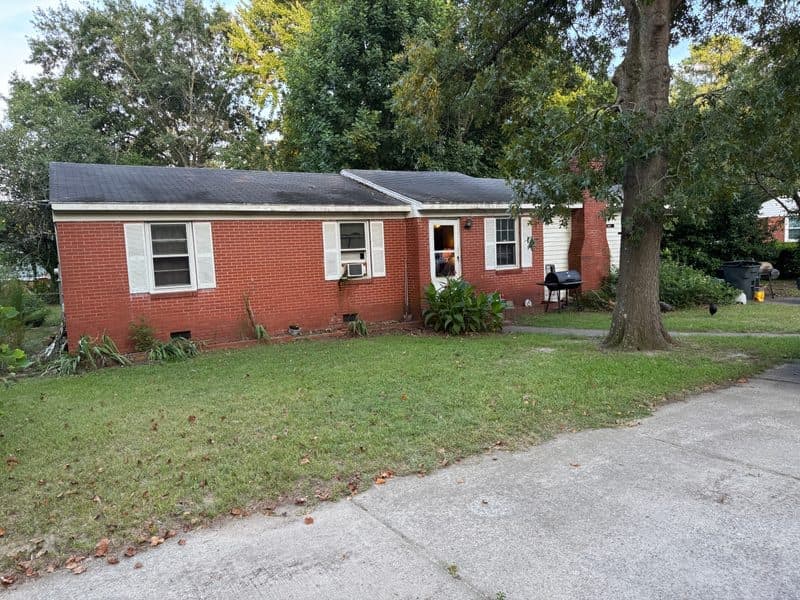
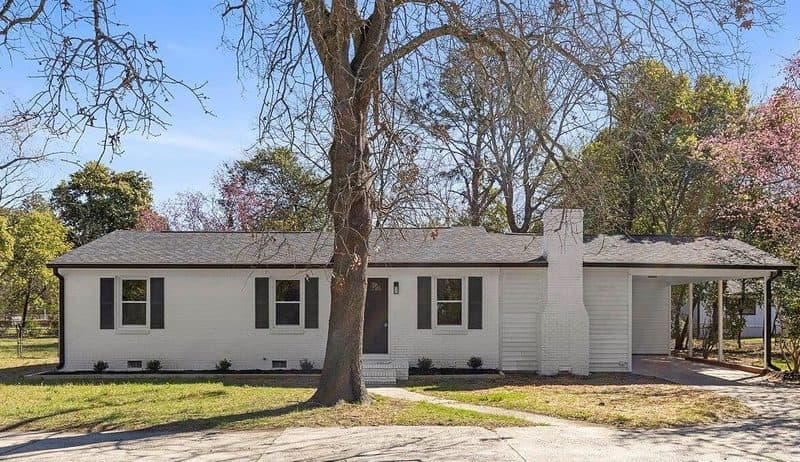
Some Fayetteville houses can’t be sold the normal way. Failed septic, foundation movement, end-of-life roof, post- tenant rental damage, hoarder interiors, fire or water damage, open code violations from the City of Fayetteville or Cumberland County, anything that triggers a buyer’s inspection-induced panic and kills a financed deal. Most listing agents will tell you to “get repairs done first.” If you could afford the repairs, you wouldn’t be in this situation.
We buy these houses as-is. No repair budget, no inspection- driven price drops, no “just need to update this one thing first” before listing. We’ve closed every category of as-is sale in the Fayetteville market, and the Fort Liberty rental rotation makes some of these conditions more common here than elsewhere.
What “Sell House As-Is” Actually Means in NC
Selling as-is means the buyer takes the house in its current condition. You don’t repair anything before closing. You don’t deal with inspection-driven concessions. The price you sign in the contract is the price you receive at closing, minus only the closing costs that would normally come out of seller proceeds (and we usually pay those too).
“As-is” doesn’t make the sale any less legal or formal. The standard NC residential purchase contract has language for as-is sales. The deed transfer, the title insurance, the recording at the Cumberland County Register of Deeds all work the same way. The only thing that changes is that you’re not on the hook to fix anything between contract signing and closing day.
Critically, an as-is sale to a cash buyer doesn’t include a buyer-financing contingency. That matters because financing contingencies are how most as-is deals fall apart in the Fort Liberty market. The buyer’s VA, FHA, or conventional lender does its own evaluation, finds the property doesn’t qualify, and pulls out. We don’t have a lender in the picture. The deal closes regardless of what VA underwriting would say about your house.
Why As-Is Properties Are Common in the Fayetteville Market
The Fayetteville market sees a higher density of as-is sales than most NC markets, and the reasons are structural.
- Military rotation creates rental wear. Many Fort Liberty homes have been used as rentals while owners were stationed elsewhere, sometimes for 6 to 12 years running. Long-tenured rentals accumulate damage in ways that owner-occupied homes don’t. When the owner finally moves to sell, the property has 5 to 10 years of deferred maintenance plus tenant turnover damage to deal with.
- Older Haymount and Massey Hill housing stock. Fayetteville’s historic core has homes from the 1900s through 1930s. Foundation cracks, roof age, electrical and plumbing systems past warranty are common. A retail listing surfaces all of these in inspection.
- Cumberland County rural-edge septic systems. Properties in Eastover, Vander, Hope Valley, Stedman, and outlying parts of the county aren’t on city sewer. Septic systems eventually fail. When they do, the Cumberland County health department becomes the gatekeeper for any financed sale. We’ll walk through this in detail later on this page.
- Storm and weather exposure. Hurricane systems reaching inland from the Atlantic occasionally cause wind, water, and tree damage. Insurance claims can stay open for months. Most retail buyers won’t take a property with an open weather claim.
- Inherited estate properties from long-term residents. Multi-generational Fayetteville families with elderly relatives in the Haymount and Massey Hill areas frequently leave behind hoarder situations or as-is housing stock when they pass.
All of these create a steady supply of properties that fit poorly with FHA, VA, or conventional buyers but fit fine with a cash buyer who handles condition issues post-closing.
NC Disclosure: How “No Representation” Protects As-Is Sellers
A common worry sellers have about as-is sales: “Don’t I have to legally disclose every problem the house has?” The honest answer is yes, and no.
Yes: North Carolina law (NCGS Chapter 47E) requires sellers of residential property to give the buyer a Residential Property Disclosure Statement before closing. There are limited exceptions (estate executors selling decedent property, foreclosure sales, certain transfers between family) but for most owner-sellers it applies.
No: the form itself has three answer choices for every question. Yes, No, and No Representation. “No Representation” is a fully legal answer choice and it’s what most as-is sellers use. It means you’re not making a claim one way or the other about the condition of that item. The buyer takes the property as-is and assumes the responsibility to inspect and evaluate.
Practical implications:
- You don’t have to investigate items you’re not sure about. If you don’t know whether the roof leaks, you mark “No Representation” rather than guessing.
- You should disclose what you actually know. If you’ve had buckets under leaks for two years, marking “No” on roof leaks is materially false and exposes you to post-closing liability.
- Marking “No Representation” doesn’t make us walk. We accept the disclosure with whatever level of representation you’re comfortable making. We’re underwriting based on our own walk- through and condition assessment, not on your form answers.
- Estate executors and certain other sellers are exempt from the disclosure requirement entirely. Your closing attorney confirms whether the exemption applies before contract.
The disclosure is one of the moments sellers feel most exposed in a typical retail sale. Selling as-is to us removes the pressure to characterize problems you don’t fully understand.
Why As-Is Listings Particularly Fail in a VA-Heavy Market
Most retail listings fail on as-is properties everywhere in NC, but Fayetteville sees a more intense version of the problem because of the high VA loan concentration. The Fort Liberty market has a meaningful share of buyers using VA loans, and VA appraisers check Minimum Property Requirements (MPRs) that are stricter than conventional or FHA in some dimensions.
The MPR categories that get as-is properties pulled from VA-financed deals:
- Roof condition. VA requires at least 2 years of remaining life. End-of-life roofs flag immediately.
- Heating system. Property must have a permanent, functioning heat source. Missing or non-working HVAC fails MPR.
- Foundation and structural. Visible cracks, settlement, or movement flag.
- Septic and well systems. Functioning at time of appraisal. Cumberland County rural-edge homes often fail this one.
- Lead-based paint hazards. Homes built before 1978 with peeling or chipping paint flag.
- Wood-destroying insect damage. Active termite or carpenter ant infestation flags.
- Safe and sanitary water supply. Properties with well water failing potability tests flag.
For a Fayetteville seller, this means the financed-buyer pool shrinks dramatically when the property has any of the above. The remaining buyers are cash investors or hard-money rehabbers, both pools much smaller than the financed-buyer pool. Selling directly to one of them (us) saves the listing time, the agent commissions, and the inspection-driven walk- backs that even cash retail buyers will attempt.
Conditions We Buy As-Is in Fayetteville
The list of property conditions that lock owners out of traditional sales is long. Here’s most of what we see in this market, and we’ve bought through every category:
Structural and major systems:
- Failed or aging roof (active leaks, structural sagging, full replacement needed)
- Foundation movement, settling, or active cracking, particularly in Haymount/Massey Hill 1900s-1930s stock
- Missing, broken, or end-of-life HVAC systems
- Failed or non-permitted septic systems flagged by Cumberland County health
- Failed or low-yield wells (rural Cumberland)
- Plumbing failures, including galvanized-pipe replacement and polybutylene
- Electrical issues including knob-and-tube, ungrounded, undersized panel, aluminum wiring
Damage and disrepair:
- Fire and smoke damage (partial or total loss)
- Water damage, mold, and post-flood properties
- Storm and wind damage from coastal weather systems reaching inland
- Termite, carpenter ant, or rodent damage
- Long-term neglect or vacancy decay
Military-rotation rental damage (specific to Fayetteville):
- Trashed or stripped rentals after problem tenants moved out
- 5-10 years of deferred maintenance during owner’s stationing elsewhere
- HVAC, plumbing, and roof systems past life-expectancy from continuous tenant use without owner inspection
- Cosmetic damage that a vacant turn-and-list cycle would require $10k-$25k+ to address before listing
City of Fayetteville and Cumberland County code and legal issues:
- Open code violations on file with City of Fayetteville code enforcement
- Condemnation orders or board-up notices
- Unpermitted additions, garage conversions, or accessory structures
- Property tax delinquency or open county liens
- Cumberland County health department septic-related liens
Interior conditions:
- Hoarder situations, even when the front door won’t fully open
- Unfinished renovations the previous owner started and abandoned
- Estate properties full of belongings the family doesn’t want to sort through
If your specific issue isn’t on this list, we’ve probably still seen it. Send us the address and a few photos. We’ll tell you on the call whether it fits.
The Two Failed Paths Most As-Is Sellers Try First
If you’ve already tried to list your house and it fell through, or you’ve talked to an agent and walked away from the conversation feeling stuck, you’re not imagining the problem. As-is properties on the retail market face a structural mismatch in a VA-heavy market. The two paths most as-is sellers try (and abandon) before reaching out to a cash buyer:
- Renovate before listing. Spend $20,000 to $60,000+ on the repairs that block financing. Roof, HVAC, foundation, septic, electrical, missing or damaged kitchen, open code violations. Then list at retail and pay 5-6 percent in agent commissions plus 1-3 percent in seller closing costs. Recoup what’s left after 30-60 days on market and another 30-45 days to close. The capital outlay alone is a hard stop for most sellers, and the timeline doesn’t fit a PCS deadline or a financial pressure situation.
- List as-is to bargain hunters. Cash investors and 203(k) renovation-loan buyers will look, but they make deeply discounted offers (assuming the worst about every system) and renegotiate further after their own inspection. Days on market on visibly distressed Fayetteville properties typically run 60 to 120 days. Some Fayetteville agents won’t even take the listing.
Selling to us bypasses the choice. We see the condition. We price it. We close on it. No 60 to 120 day listing cycle. No inspection-driven price drop. No financing fall-through. No repair-bid-out you have to coordinate while paying carrying costs on a house you’ve already moved out of (or haven’t lived in for years).
How an As-Is Cash Sale Compares to Renovate-Then-List in Fayetteville
When sellers ask “why isn’t your offer the same as the Zillow estimate?” the answer is in what a Zillow number doesn’t reflect. A Zillow estimate is for a comparable house in normal condition, with normal financing, in a normal listing cycle. None of those apply when you’re selling as-is in Fayetteville.
On a $225,000 Fayetteville home in renovate-before-listing condition, the costs to actually net the Zillow number stack up like this:
- Pre-listing repairs: $15,000–$45,000+ to bring it to financeable condition (roof, HVAC, foundation, septic, electrical, kitchen, code)
- Agent commissions: $11,250–$13,500 (5-6%, split between listing and buyer’s agents)
- Seller closing costs: $2,250–$6,750 (attorney fees, transfer tax, title insurance, recording, prorated property taxes)
- Carrying costs while repairs and listing complete: $5,000–$13,000 (mortgage, taxes, insurance, utilities; a renovate-then-list cycle on a Fayetteville distressed property typically runs 90-180 days end-to-end)
- Inspection-driven concessions after the buyer’s inspection: $2,000–$8,000+ (more common in VA appraisals)
- Total: $35,500–$86,250+ out of pocket before you receive a dollar of sale proceeds
A cash sale to us skips every line. We pay closing costs. We don’t bring repair concessions to the table. We close in days, not months. When you compare net proceeds and the timeline cost of a renovate-then-list cycle, the gap between a cash offer and a fully-renovated retail sale is usually much smaller than sellers expect. See our cost-of-selling breakdown for the math.
Cumberland County Septic and Health Department Specifics
A failed septic system in Cumberland County is one of the most common reasons a financed Fayetteville sale falls through. The mechanics of resolving it the traditional way are involved enough to be worth understanding.
If you list a property with a known or suspected septic issue:
- The buyer’s lender will require a passing septic inspection (VA, FHA, and most conventional all do)
- The Cumberland County health department conducts the inspection or accepts a state-certified contractor’s evaluation
- If it fails, you have to fund replacement before closing. Cost varies by soil conditions, lot constraints, and system type required (conventional, alternative, or drip irrigation):
- Perc test: $400-$1,200
- Health department permit: $1,500-$4,000+
- Conventional system installation: $5,000-$12,000
- Alternative or drip-irrigation system (when soil won’t support conventional): $15,000-$30,000+
- Total time from failure flag to passing re-inspection is typically 6 to 12 weeks
- During this time, you’re carrying the property and your buyer is at risk of walking
When you sell to us with a known or suspected septic issue, none of the above falls on you. We do our own assessment, price the offer accordingly, and handle the perc test, the permit, the contractor, and the install post-closing. We maintain ongoing relationships with Cumberland County health department and the county-approved contractors, so the work moves on a faster track than an individual seller can usually arrange.
The “We’ll Cover Repairs Later” Trap
Some buyers, particularly the algorithmic national programs, make as-is offers that look strong on the surface, then quietly walk back the price after inspection. The pattern: an attractive headline number gets you to sign. The contract reserves a 14 to 21-day inspection period. The inspector reports findings the algorithm didn’t account for. The buyer comes back with a request for credits or a price reduction “to cover the repair work post-closing.” If you say no, they walk. By then you’ve spent two or three weeks under contract not entertaining other offers.
In the Fort Liberty market, this pattern hits PCS sellers hardest because the inspection-period delay eats into the orders timeline. By the time the walk-back happens, the seller may not have time to find another buyer before the report date.
Our offer doesn’t work that way. We don’t renegotiate based on cosmetic findings or items we already accounted for in our walk-through. The only situations where we’d revisit price are major undisclosed issues we couldn’t have known about. Those are rare. For everything else, the contract price is the closing price.
What to Expect at As-Is Closing in Cumberland County
Closing in NC happens at a licensed title company or real estate attorney’s office. For an as-is cash sale in Cumberland County, the flow looks like this:
- The title company schedules closing for the date you picked (often 7 to 14 days from contract signing if title is clean, sometimes longer if there are open liens, unpaid taxes, septic-related health department issues, or estate matters to clear).
- They pull deed records, run a title search, and order title insurance. Any liens or unpaid taxes get coordinated for payoff out of your sale proceeds at closing.
- We wire the full purchase price to the title company’s escrow account before signing.
- On closing day you sign the deed and a few standard documents. Total signing time: 15 to 30 minutes. The Residential Property Disclosure Statement (with whatever level of representation you marked) goes into the file.
- As soon as the deed records (typically the same business day), the title company releases proceeds to your account by wire.
If you’re selling from a new duty station or another state, mail-away signing handles closing without travel. The title company FedEx-overnights documents to a notary near you, you sign, ship them back. The wire goes to your account the same business day the deed records.
Ready for an As-Is Cash Offer on Your Fayetteville House?
Tell us about the property. Send a few photos if you have them, the worse the condition, the more they help us price accurately. We’ll send a written cash offer same business day, no fees, no obligation, no inspection-driven walk-back later.
Below are the questions Fayetteville sellers most often ask about as-is sales.