






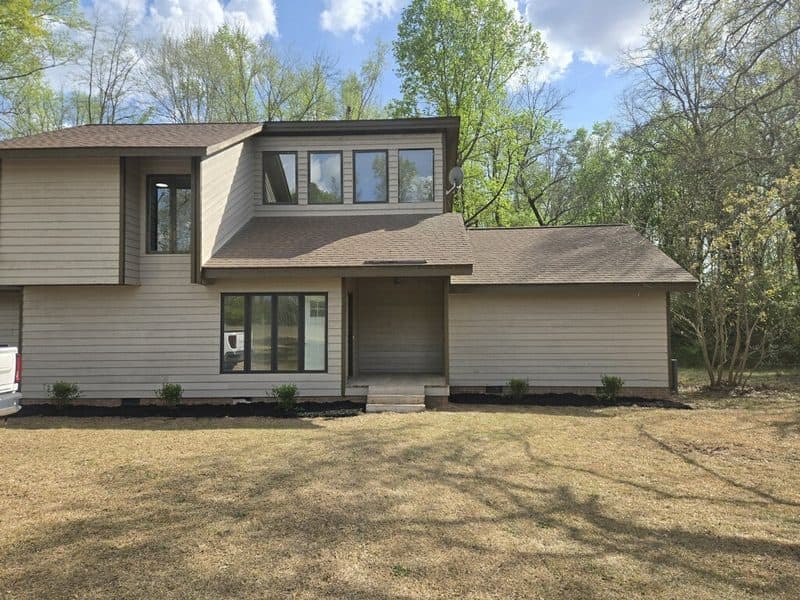
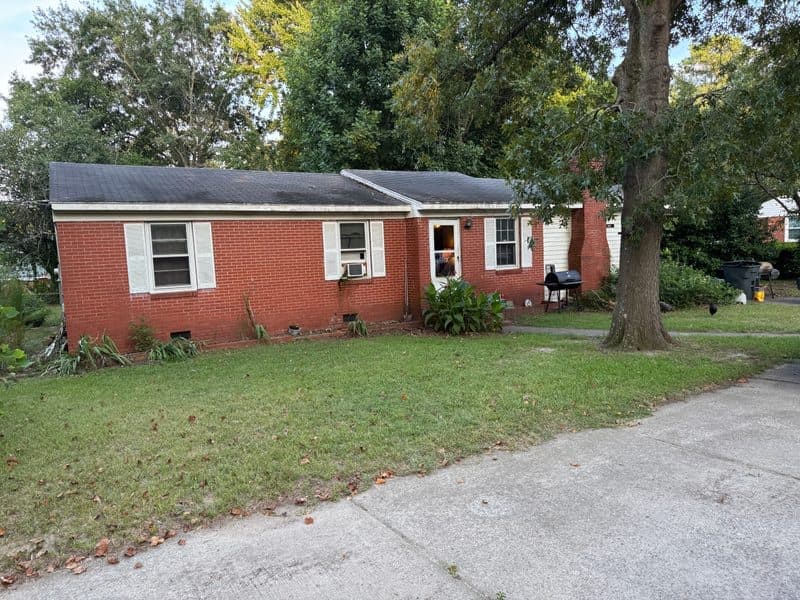
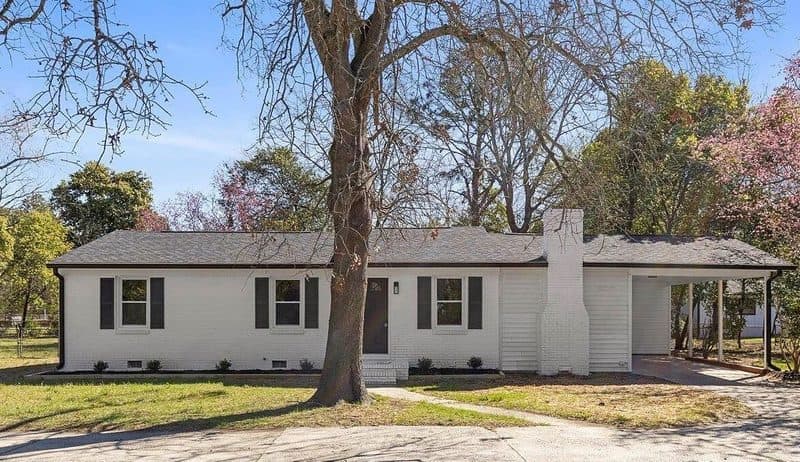
Selling a High Point house as-is means selling it in current condition with no repair obligation on the seller. The structure is most useful when the property has issues that consistently kill financed deals: knob-and-tube wiring on an older downtown or Emerywood home, lead paint on pre-1978 Westchester properties, EIFS moisture intrusion on a 1995 Sedgefield build, polybutylene plumbing on a Jamestown-edge property, an open code case with the City of High Point, decades of belongings inside an inherited home, or unusual wear from furniture-market-week corporate occupancy.
At Atlantis Homebuyers we close as-is sales across High Point as a regular matter. The page below walks through what NC’s Residential Property Disclosure Act actually requires of you, what the dual-tier High Point condition catalog looks like at closing, and why cash-as-is structurally beats listed-as-is on High Point’s mixed older + suburban housing stock.
NCGS Chapter 47E Disclosure on Pre-1978 High Point Homes
North Carolina’s Residential Property Disclosure Act (NCGS Chapter 47E) requires sellers of residential real property to deliver a written disclosure form to buyers before contract execution. The form lists property characteristics and asks the seller to answer Yes, No, or No Representation on each.
The “No Representation” answer is the part most High Point sellers don’t know about. It’s a legitimate response when the seller genuinely doesn’t know the answer, never lived in the home, or has no records to confirm a system’s condition. Common scenarios: an heir selling a parent’s downtown High Point home, a landlord selling a long-term rental near HPU, an investor selling a market-week corporate housing property they bought through a portfolio acquisition.
For pre-1978 High Point homes (which is most of downtown, Emerywood, Westchester) federal lead-based paint disclosure (Title X) layers on top of the state 47E form.
STR-Damage and Furniture-Market-Week Wear Patterns: A High Point-Specific As-Is Reality
High Point’s furniture-market-week corporate-housing economy and broader Airbnb / VRBO short-term-rental investor activity produce wear patterns on properties that don’t appear on long-term residential housing. Sellers exiting STR or corporate-housing operations face condition issues that financed-buyer inspectors flag heavily and that as-is cash sales handle as a regular matter.
Concentrated turnover wear on flooring, paint, and fixtures. Hundreds of guest-stay turnovers across multiple market cycles produce wear that looks worse than a comparable primary-residence home of the same age. Carpets compress and stain, hardwood scratches accumulate, paint scuffs in high-traffic areas, kitchen and bath fixtures show accelerated mineral buildup, door hardware loosens.
Furniture-package wear and replacement deferral. Market-week corporate housing typically includes a furniture package owned by the property operator. Beds, sofas, dining tables, kitchen ware, linens. Replacement deferrals during slow-income years produce visible wear at sale time.
HVAC overuse from concentrated short-stay periods. Multiple guests rotating through during market weeks tend to operate HVAC systems aggressively (frequent setpoint changes, sub-optimal filter maintenance, simultaneous high-load appliance use). Original-equipment HVAC on STR-converted properties often shows accelerated end-of-life timing.
Deferred-maintenance accumulation. Investors prioritizing booking calendar availability over upkeep cycles defer roof, exterior paint, system maintenance, and similar items to off-season windows. Multi-year deferral produces a substantial deferred-maintenance backlog at the sale exit point.
Cosmetic damage from short-stay guests. Wall scuffs, picture-hanging holes, minor furniture damage, appliance handle wear that doesn’t qualify for security deposit deduction but accumulates across hundreds of stays.
Financed-buyer inspections aggregate these wear patterns into a long defect list. Sellers facing this list either fund a pre-listing renovation cycle (often $20,000 to $60,000+) or switch to cash-as-is. We close with whatever combination of STR-cycle wear, deferred maintenance, and original-construction condition issues is in place.
The High Point Older-Home Condition Catalog
Knob-and-tube electrical wiring. Common in pre-1950 High Point homes. Most homeowner insurance carriers (State Farm, Allstate, Nationwide, Liberty Mutual, Travelers) won’t bind coverage with active K&T. Rewire to modern Romex runs $8,000 to $25,000 depending on home size, access, and how much plaster has to be opened.
Galvanized supply plumbing. Common in early-20th-century High Point homes. Galvanized degrades from the inside, narrowing pipe diameter and producing rusty water and pressure issues over decades. Repipe to PEX or copper runs $8,000 to $20,000 typical.
Lead-based paint. Exists on virtually every pre-1978 High Point home that hasn’t been completely repainted with full surface encapsulation. Federal Title X disclosure applies on the sale. FHA and VA peeling-paint repair flags apply on financed sales; EPA RRP-certified mitigation runs $4,000 to $15,000.
Original boilers and asbestos pipe insulation. Many Emerywood and Westchester homes built between 1920 and 1960 still run pre-1960 boilers feeding cast-iron radiators. Working but inefficient. Asbestos pipe insulation abatement runs $3,000 to $12,000; full HVAC replacement adds $8,000 to $20,000.
Asbestos siding. Common on Emerywood and Westchester homes from the 1930s through 1950s. Safe in place; spooks financed buyers and triggers inspection-driven price reductions. Removal runs $8,000 to $30,000 plus replacement-siding costs.
Foundation settlement. On rubble or early concrete-block stem walls common across older High Point. Inspectors flag visible settlement evidence as “structural concerns: recommend further evaluation,” which can stop financed deals on its own. Engineering report and remediation runs $5,000 to $35,000.
We buy in any condition. Repair work prices into the offer.
The 1990s and 2000s High Point Suburban Condition Catalog
EIFS (synthetic stucco) moisture intrusion. Common on 1990s High Point builds with full or partial stucco exteriors. Many lenders require moisture-meter inspection on EIFS homes; failed readings stop the loan outright. Remediation runs $15,000 to $80,000+ depending on extent.
Polybutylene plumbing. Gray plastic supply pipes installed approximately 1985 to 1995 in many Sedgefield and Jamestown-edge subdivisions. Insurers won’t bind on active polybutylene. Repipe runs $4,000 to $15,000.
LP and Masonite hardboard siding. Common on 1990s builds. Swelling and rot at trim joints and around windows. Replacement runs $8,000 to $25,000 typical for full re-side.
Builder-grade HVAC at year 18 to 22. Original HVAC on 2000s High Point builds is now in the failure window. Replacement runs $6,000 to $14,000 typical.
Crawlspace moisture and active mold. Guilford County’s clay soils produce crawlspace humidity issues on many properties. Active mold flags pause financed loans. Encapsulation plus dehumidification runs $5,000 to $18,000.
How Fast a High Point As-Is Sale Actually Closes
High Point as-is sellers usually have a specific driver: an inherited Emerywood or Westchester home with substantial deferred maintenance, a tired investor exiting a market-week corporate-housing operation between cycles, a Sedgefield polybutylene listing that just collapsed at inspection, a compounding code-violation case at the City of High Point. Each of these benefits from speed; cash-as-is moves faster than most sellers expect on first call.
The standard timeline: same-day cash offer at first contact, written contract within 24 to 48 hours, title work running 7 to 10 business days on a clean-title High Point property (14 to 21 days on LLC-held investor stock requiring operating- agreement review), closing 14 to 30 days from contract on the standard path.
Atlantis Homebuyers, LLC has been buying High Point properties since 2018, BBB Accredited, family-owned by AJ and Isabel. We work with established Guilford County title companies and regularly close on Emerywood, Westchester, downtown, Sedgefield, Jamestown-edge, and HPU-adjacent stock that financed buyers and national programs walk away from.
Same-day offer, no fees, no repairs, no cleanout required, furniture-package and operational inventory handled per your preference. Call (984) 205-6984 or submit your High Point address for a free same-day offer.
Why VA and FHA Buyers Can’t Close on As-Is High Point Homes
Listing a High Point property as-is theoretically allows financed buyers but practically doesn’t in many cases. The buyer’s lender controls whether the loan funds, regardless of what the contract says about as-is.
FHA and VA loans both pull from Minimum Property Requirements (MPRs) that High Point’s older stock and 1990s suburban tier regularly fail. The FHA MPR list includes safe and functioning electrical, no peeling lead paint on pre-1978 homes, functioning hot-water and heating systems, no health- and-safety hazards from active mold or water intrusion, sound roof condition, and no structural deficiency. VA layers habitability and safety review on top. Conventional loans require homeowner insurance to bind, which is where polybutylene and active K&T break the process.
For older High Point properties: peeling lead-based paint triggers required mitigation paid by the seller, active knob-and-tube blocks insurance binding, roof condition with less than 3 to 5 years of remaining life requires replacement, working HVAC at closing is required.
For 1990s and 2000s suburban: EIFS moisture failed readings block FHA and many conventional loans, polybutylene plumbing blocks insurance binding, builder-grade HVAC at end of life is a required pre-closing repair.
Cash sales remove the lender from the equation entirely. Condition prices into the offer up front.
City of High Point Code Enforcement
The City of High Point enforces minimum housing standards through proactive inspections plus complaint-driven cases. Common flags include peeling exterior paint (especially on lead-paint-era pre-1978 homes), broken or missing windows, unsafe steps and railings, missing handrails, leaking roofs visible from the public right-of-way, accumulated debris, overgrown vegetation, structural deficiencies visible from outside, and unsecured outbuildings.
Violations get cited with a deadline. Missing the deadline converts the violation to a fine. Unpaid fines compound monthly and attach to the property as a municipal lien recorded at the city level, separate from Guilford County tax records. A title search that pulls only Guilford County records misses city minimum-housing liens entirely. We pull both city and county lien records as standard due diligence on every High Point property. Open cases price into the offer; resolution becomes our responsibility post-closing.
The “We’ll Cover Repairs Later” National-Program Walk-Back Trap
National algorithmic programs (Opendoor, Offerpad, and similar large-platform buyers) market themselves as as-is buyers in High Point through messaging that frames the offer as cash with no repair list. The contract structure tells a different story.
These programs reserve the right to re-trade the offer based on a 14 to 21 day inspection period. On High Point’s mixed housing stock, the defect list runs differently depending on the property tier. Older downtown, Emerywood, and Westchester homes generate write-downs for knob-and-tube, lead paint, asbestos siding, foundation evaluation, galvanized plumbing repipe. 1990s and 2000s Sedgefield and Jamestown-edge builds generate write-downs for EIFS moisture, polybutylene, LP siding rot, aging HVAC. STR-converted properties generate additional write-downs for accelerated wear and deferred maintenance from rental cycles.
The post-inspection walkback list rarely lands smaller than $15,000 to $25,000 on High Point properties with these characteristics. Independent local cash buyers price the offer up front based on actual property condition and don’t re-trade after inspection. The number on the contract is the number at closing.
Furniture-Market-Week Corporate Housing As-Is Sales
High Point Market generates a unique property pool: corporate housing operated for spring (April) and fall (October) market weeks. Owners winding down these operations face two challenges that traditional listings struggle with: pricing the furniture-package inventory included with the property, and the unusual wear patterns from short-term occupancy that inspectors flag as deferred maintenance.
Cash-as-is handles furniture-market-week operations regardless of operational status. Whether the property is currently occupied by market-week guests, between markets, or fully wound down, we close with the operational status and inventory in place. The condition catalog and the unusual STR-style wear prices into the offer; we don’t require the seller to run a pre-listing renovation cycle.
Cleanout for Inherited High Point Homes
Inherited High Point homes (especially in downtown, Emerywood, and Westchester where the prior generation often lived in the same property for 30 to 50+ years) typically come with a substantial cleanout job. Furniture, family belongings, decades of paperwork, attic and basement accumulation, sometimes vehicles or yard equipment.
For an MLS listing, the seller has to handle cleanout first to make the property presentable. That can take weeks to months and run $3,000 to $10,000+ in dumpster fees, hauling, estate-sale logistics, donation coordination.
Cash-as-is removes the entire cleanout from the seller’s path. Take what’s meaningful and leave the rest. We handle full clean-out at our cost after closing.
Comparison: Pre-Listing Repair Quote vs. Cash As-Is Net
High Point example: 1928 Emerywood bungalow with a $245,000 fully-renovated retail comparable value. Property has knob-and-tube wiring in original sections, peeling lead paint on exterior trim, asbestos siding from 1940s renovation, roof at year 22, galvanized supply plumbing, foundation settlement noted in last inspection.
Pre-listing repair quote to bring property to financed-buyer-pass condition: $40,000 to $100,000 depending on combination addressed. Rewire $12,000 to $20,000. Lead paint mitigation $5,000 to $12,000. Asbestos siding remediation $10,000 to $25,000. Roof replacement $8,000 to $14,000. Repipe $9,000 to $15,000. Foundation engineering and stabilization $5,000 to $25,000.
After repairs, the seller still pays 5 to 6 percent agent commissions on the closed sale ($12,250 to $14,700 on $245,000 retail), 1 to 3 percent seller closing costs ($2,450 to $7,350), and 2 to 4 months of carrying costs through the repair window plus listing window ($3,500 to $8,000). Total time to close: 4 to 6 months from start.
Cash-as-is from us prices the property accounting for repair backlog plus our holding and resolution costs, then closes in 14 to 30 days with no fees, no commissions, no carrying costs. On a 1928 Emerywood bungalow with the condition profile above, the cash-as-is offer might land $155,000 to $185,000. Net to seller is the offer.
The cash-as-is path nets less than a fully-renovated MLS sale on paper. It nets meaningfully more than a partial-renovation path or a financed-buyer fall-through cycle, and closes in weeks instead of months.
Furniture-Package, Inventory, and Personal-Property Inclusion at Closing
High Point as-is sales involving corporate-housing or STR properties often include furniture packages, kitchen inventory, linens, electronics, supplies, and similar operational inventory. Standard NC residential closing rules treat fixtures (anything affixed to the building) as part of the real estate, and personal property (everything else) as separate. Cash-as-is contracts can structure the personal- property side flexibly.
Real estate only. The seller removes furniture and personal property by closing and the contract conveys real estate alone. We close on whatever’s left at closing; if the seller wants the remaining items handled, we coordinate disposal at our cost.
Real estate plus operational inventory. The contract includes the corporate-housing furniture package, kitchen and bath supplies, linens, electronics, and operational inventory needed to continue the property as a market-week or short-term rental. Seller doesn’t handle any cleanout; everything passes with the deed.
Selective inclusion. Seller specifies which items go and which stay. Common when the seller wants to keep the dining-room set or a specific appliance but pass the rest with the property.
Family heirlooms and inherited-property contents. For inherited High Point homes with decades of family belongings, the seller takes what’s meaningful (photos, records, specific items) and leaves the rest. We handle the full clean-out at our cost post-closing.
We don’t require detailed inventory documentation at contract execution. The seller tells us roughly what’s in scope; we structure the contract accordingly.
Common As-Is Scenarios in High Point
Inherited older High Point home with substantial deferred maintenance. See our inherited property hub.
Failed home inspection on a financed sale. See our major repairs and as-is hub.
Furniture-market-week corporate housing with operational wear.
Open City of High Point code violation case.
Tired-landlord rental near High Point University. See our landlord situation hub.
Fire, water, or storm damage. See our damaged property hub.
What to Bring to a First Conversation
- Property address and access situation
- Approximate year built and condition headlines (older downtown / Emerywood / Westchester with knob-and-tube + lead paint, or 1990s Sedgefield / Jamestown with EIFS / polybutylene / aging HVAC?)
- Open code cases at City of High Point or Guilford County
- Recent inspection reports if available
- Whether the property has lead-based paint records or is assumed pre-1978
- Cleanout situation: vacant + cleared, vacant + furnished, occupied with belongings to remove, market-week corporate inventory
- Your timing constraint
Ready for an As-Is Cash Offer?
Tell us about the property, condition and all. We’ll send a written cash-as-is offer same business day. No repair list, no inspection re-trade, no cleanout requirement, no surprise at closing.
Below are the questions High Point as-is sellers most often ask before signing.