


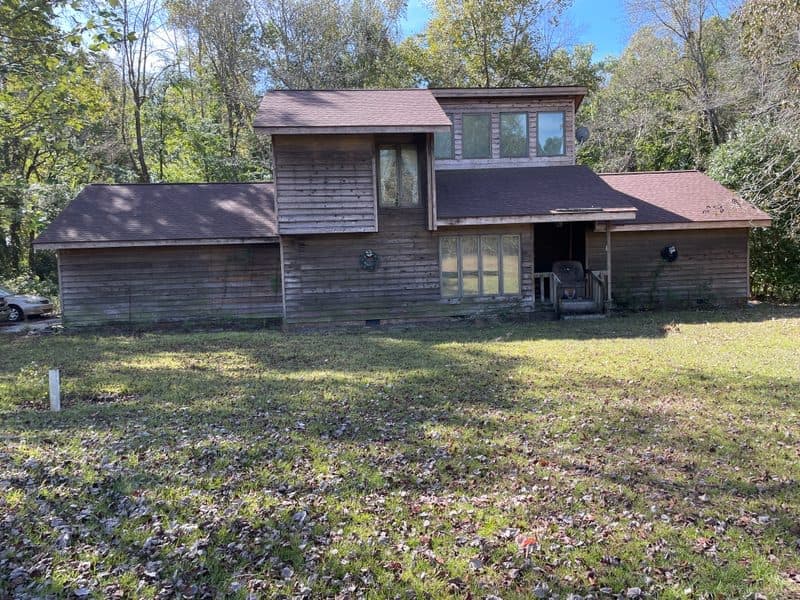
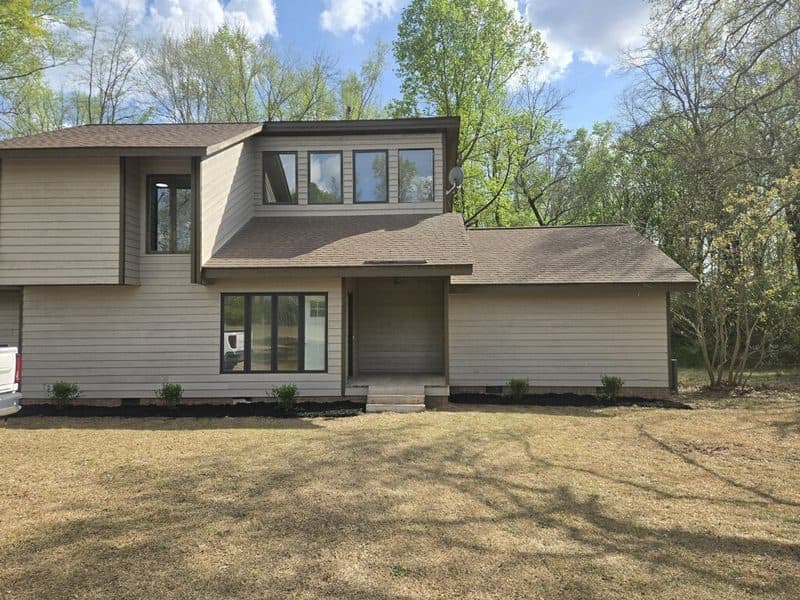
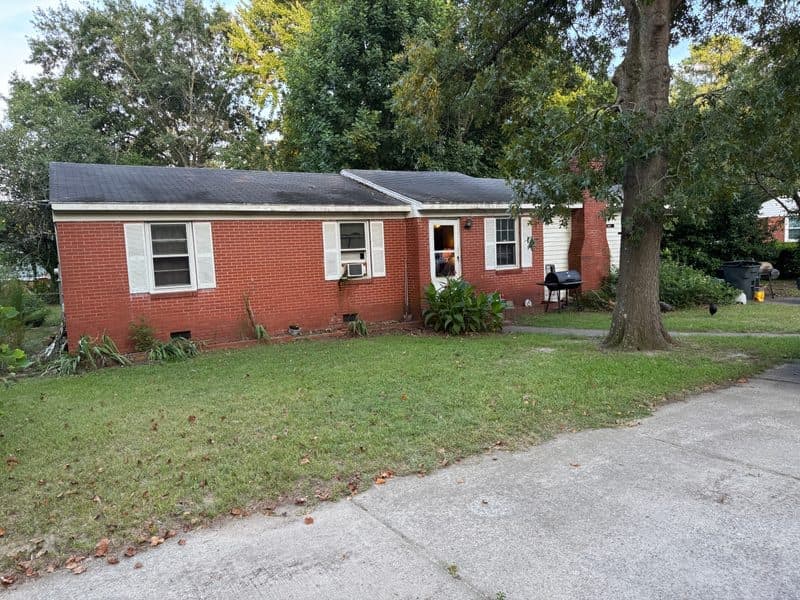
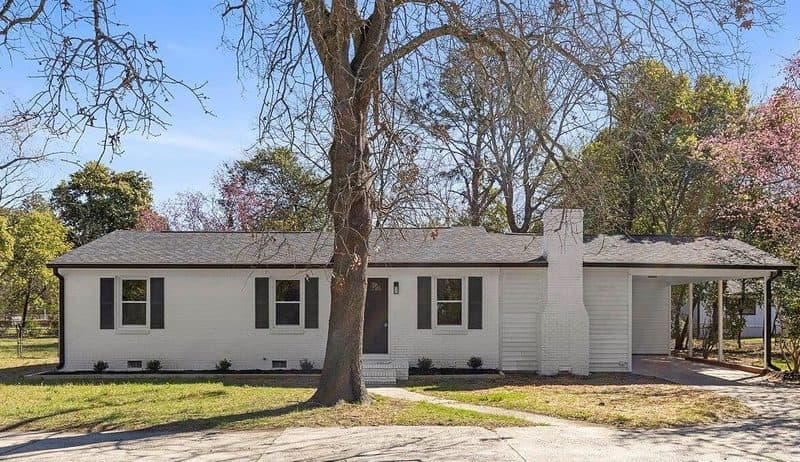
A homeowner in Garner discovered her septic system had failed when the inspector flagged it for the buyer she already had under contract. Her buyer’s lender pulled out the same week, banks won’t fund a house with a failed septic. The $25,000 quote to replace the system before re-listing wasn’t money she had. She’d already moved out, was paying mortgage and utilities on an empty house, and watched a path of buyers walk away as soon as they learned about the system.
We bought it as-is in eleven business days. Standard NC purchase contract, no financing contingency, no inspection contingency that could kill the deal. We replaced the septic ourselves post-closing as part of the renovation. From her perspective, the failure that had been blocking every other sale just stopped mattering.
Atlantis Homebuyers buys Raleigh houses in any condition for cash. Nothing fixed first, nothing cleaned out. You get a same-day offer and a close in as little as 7 days, and you walk away with no commissions and no fees. We’re family-owned and BBB-accredited, buying since 2018.
What does “sell house as-is” actually mean?
Selling as-is means the buyer takes the house in its current condition. You don’t repair anything before closing. You don’t deal with inspection-driven concessions. The price you sign in the contract is the price you receive at closing, minus only the closing costs that would normally come out of seller proceeds (and we usually pay those too).
“As-is” doesn’t make the sale any less legal or formal. The standard NC residential purchase contract has language for as-is sales. The deed transfer, the title insurance, the recording at the Wake County Register of Deeds all work the same way. The only thing that changes is that you’re not on the hook to fix anything between contract signing and closing day.
Critically, an as-is sale to a cash buyer doesn’t include a buyer-financing contingency. That matters because financing contingencies are how most as-is deals fall apart , the buyer’s lender does its own evaluation, finds the property doesn’t qualify (failed roof, missing HVAC, no operating kitchen), and pulls out. We don’t have a lender in the picture. The deal closes regardless of what FHA or conventional underwriting would say about your house.
Selling as-is in NC: what disclosure do you actually owe?
A common worry sellers have about as-is sales: “Don’t I have to legally disclose every problem the house has?” The honest answer is yes, and no.
Yes: North Carolina law (NCGS Chapter 47E) requires sellers of residential property to give the buyer a Residential Property Disclosure Statement before closing. There are limited exceptions (estate executors selling decedent property, foreclosure sales, certain transfers between family) but for most owner-sellers it applies.
No: the form itself has three answer choices for every question, Yes, No, and No Representation. “No Representation” is a fully legal answer and it’s what most as-is sellers use. It means you’re not making a claim one way or the other about the condition of that item. The buyer takes the property as-is and assumes the responsibility to inspect and evaluate.
When you sell to us, we accept the disclosure with whatever level of representation you’re comfortable making. We’re underwriting the property based on our own walk-through and condition assessment, not on your form answers.
Why do as-is properties fail on the open market?
If you’ve already tried to list your house and it fell through, or you’ve talked to an agent and walked away from the conversation feeling stuck, you’re not imagining the problem. As-is properties on the retail market face a structural mismatch. Most retail buyers are using a mortgage. Most mortgages won’t fund a house with major condition issues. The math doesn’t close.
You’re left with two paths and neither is great:
- Renovate before listing. Spend $20,000–$60,000+ on the repairs that block financing , roof, HVAC, foundation, septic, electrical, missing or damaged kitchen, open code violations. Then list at retail and pay 5–6% in agent commissions plus 1–3% in seller closing costs. Recoup what’s left after 30–60 days on market and another 30–45 days to close. The capital outlay alone is a hard stop for many sellers.
- List as-is to bargain hunters. Cash investors and 203(k) renovation-loan buyers will look, but they make deeply discounted offers (assuming the worst about every system) and renegotiate further after their own inspection. Days on market on visibly distressed properties typically run 60–120 days. Some Raleigh agents won’t even take the listing.
Selling to us bypasses the choice. We see the condition. We price it. We close on it. No 60–120 day listing cycle. No inspection-driven price drop. No financing fall-through. No repair-bid-out you have to coordinate while paying carrying costs on a house you’ve already moved out of.
What property conditions do we buy as-is in Raleigh?
The list of property conditions that lock owners out of traditional sales is long. Here’s what we see most often, organized by category:
Structural and major systems
- Failed or aging roof (active leaks, structural sagging, full replacement needed)
- Foundation movement, settling, or active cracking, pier-and-beam and slab issues both
- Missing, broken, or end-of-life HVAC systems
- Failed or non-permitted septic systems flagged by Wake County health
- Plumbing failures, main line, leach field, galvanized that needs replacement
- Electrical issues, knob-and-tube, ungrounded, undersized panel, aluminum wiring
Damage and disrepair
- Fire and smoke damage (partial or total loss)
- Water damage, mold, and post-flood properties
- Storm damage (tornado, wind, hail)
- Termite, carpenter ant, or rodent damage
- Long-term neglect or vacancy decay
City of Raleigh code and legal issues
- Open code violations (notices on file with the City of Raleigh)
- Condemnation orders or board-up notices
- Unpermitted additions or conversions
- Property tax delinquency or open county liens
Interior conditions
- Hoarder situations, even when the front door won’t fully open
- Unfinished renovations the previous owner started and abandoned
- Trashed or stripped rentals after problem tenants moved out
- Estate properties full of belongings the family doesn’t want to sort through
If your specific issue isn’t on this list, send us the address and a few photos. We’ll tell you on the call whether it fits.
What is the “we’ll cover repairs later” trap?
Some buyers, particularly the algorithmic national programs, make as-is offers that look strong on the surface, then quietly walk back the price after inspection. The pattern: an attractive headline number gets you to sign. The contract reserves a 14–21 day inspection period. The inspector reports findings the algorithm didn’t account for. The buyer comes back with a request for credits or a price reduction “to cover the repair work post-closing.” If you say no, they walk. By then you’ve spent two or three weeks under contract not entertaining other offers.
Our offer doesn’t work that way. We don’t renegotiate based on cosmetic findings or items we already accounted for in our walk-through. The only situations where we’d revisit price are major undisclosed issues we couldn’t have known about, failed septic that wasn’t on the disclosure, an active sinkhole, foundation movement that became visible only after access. Those are rare. For everything else, the contract price is the closing price.
How does an as-is cash sale compare to listing retail?
When sellers ask “why isn’t your offer the same as the Zillow estimate?” the answer is in what a Zillow number doesn’t reflect: a Zillow estimate is for a comparable house in normal condition, with normal financing, in a normal listing cycle. None of those apply when you’re selling as-is.
On a $300,000 Raleigh home in renovate-before-listing condition, the costs to actually net the Zillow number stack up like this:
- Pre-listing repairs: $20,000–$60,000+ to bring it to financeable condition (roof, HVAC, foundation, septic, electrical, kitchen, code)
- Agent commissions: $15,000–$18,000 (5–6%, split between listing and buyer’s agents)
- Seller closing costs: $3,000–$9,000 (attorney fees, transfer tax, title insurance, recording, prorated property taxes)
- Carrying costs while repairs and listing complete: $6,000–$15,000 (mortgage, taxes, insurance, utilities, maintenance, a renovate-then-list cycle on a Raleigh distressed property typically runs 90–180 days end-to-end)
- Inspection-driven concessions after the buyer’s inspection: another $3,000–$10,000+
- Total: $47,000–$112,000+ out of pocket before you receive a dollar of sale proceeds
A cash sale to us skips every line. We pay closing costs. We don’t bring repair concessions to the table. We close in days, not months. When you compare net proceeds, what actually lands in your bank account, and the timeline cost of a renovate-then-list cycle, the gap between a cash offer and a fully-renovated retail sale is usually much smaller than sellers expect. See our full cost-of-selling breakdown for the line-by-line math. For more on the mechanics of a cash sale itself, see our cash home buyers Raleigh page.
Which Raleigh neighborhoods do we buy houses as-is in?
We’ve bought as-is across the full Raleigh footprint. Each part of the city has its own pricing dynamics and its own stock of older properties that need work:
- North Raleigh, Bedford, Wakefield, Falls Lake area, Six Forks corridor
- Five Points / ITB, historic homes, craftsman bungalows, Cape Cods (condition issues common on 1920s–1950s stock)
- Southeast Raleigh, established neighborhoods, growing investor interest in condition deals
- Brier Creek + Northwest Raleigh, newer construction, but as-is properties exist (storm damage, deferred maintenance)
- Garner border (Wake County, south Raleigh)
- Wake Forest border (Wake County, north Raleigh)
- Knightdale border (Wake County, east Raleigh)
A 1950s ranch in Five Points has different repair work ahead than a 2010 build in Brier Creek. We price each property on its own facts. We also buy as-is in Cary, Durham, Wake Forest, Garner, Knightdale, and across Central NC. For more general context, see our we buy houses Raleigh page.
What happens at closing when you sell as-is for cash?
Closing in NC happens at a licensed title company or real estate attorney’s office. For an as-is cash sale, the flow looks like this:
- The title company schedules closing for the date you picked (often 7–14 days from contract signing if title is clean, sometimes longer if there are open liens, unpaid taxes, or estate issues to clear).
- They pull deed records, run a title search, and order title insurance. If there are liens or unpaid taxes, they coordinate the payoffs out of your sale proceeds at closing.
- We wire the full purchase price to the title company’s escrow account before signing.
- On closing day you sign the deed and a few standard documents. Total signing time: 15–30 minutes. The Residential Property Disclosure Statement (with whatever level of representation you marked) goes into the file.
- As soon as the deed records (typically the same business day), the title company releases proceeds to your account by wire.
If you’re selling from out of state, the title company can do mail-away signing, they FedEx documents to a notary near you, you sign, ship them back. No NC travel required.
Ready for an As-Is Cash Offer?
Send us the property details and we’ll get you a written cash offer same business day, no fees, no obligation, no inspection-driven walk-back later. Send photos if you have them, the worse the condition, the more they help us price accurately. We buy in any condition Raleigh sellers face.
Below are the questions Raleigh sellers most often ask before signing.