





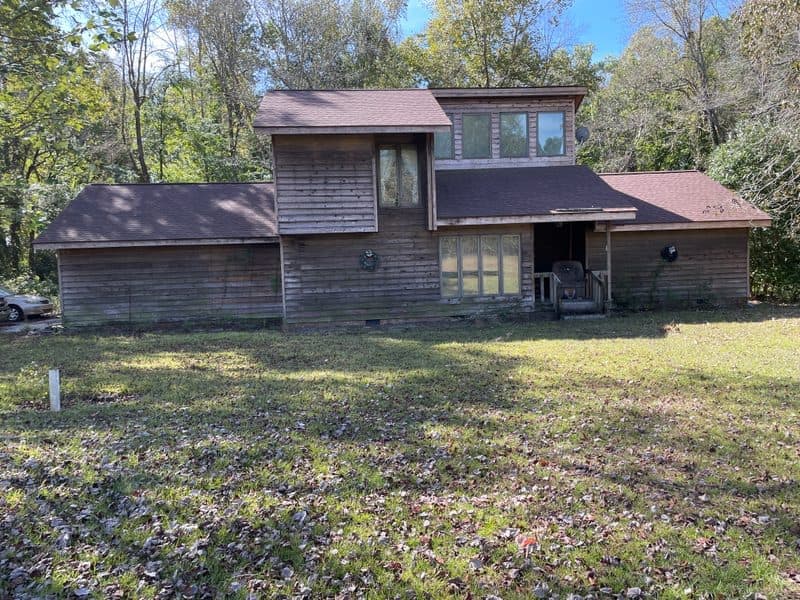
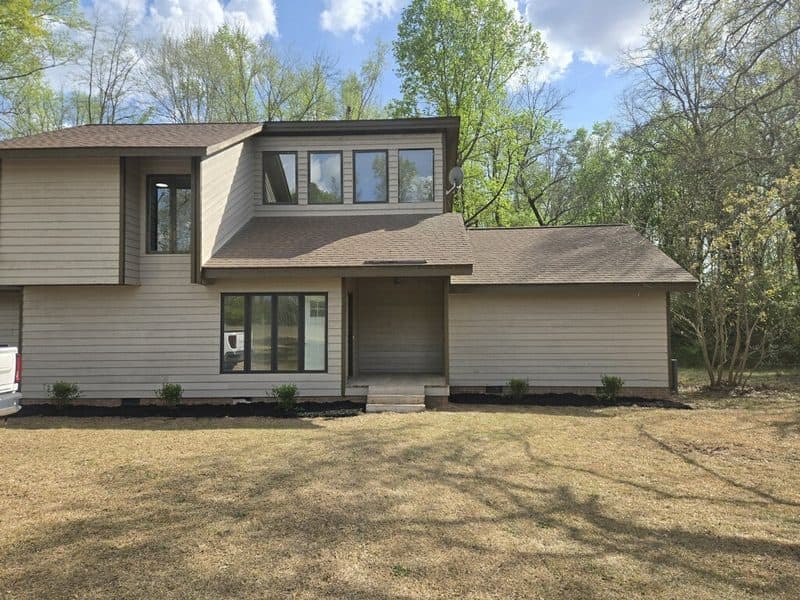
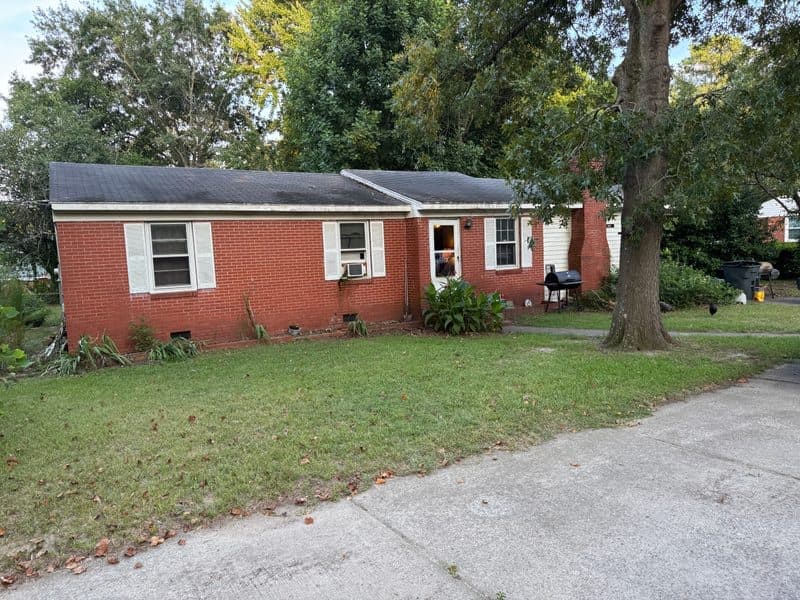
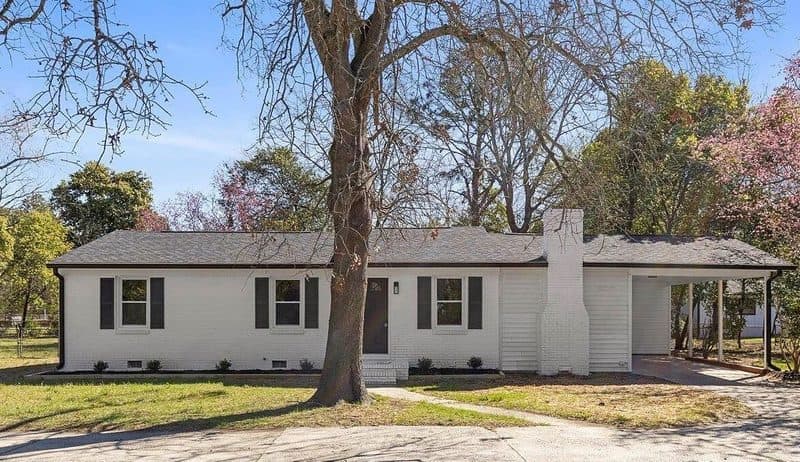
In Cary, Atlantis Homebuyers buys houses for cash with a same-day offer and a close whenever you’re ready, often inside a week. We take the home as-is, so dated systems, HOA paperwork, and deferred repairs become our problem, not yours. Family-owned, BBB-accredited, here since 2018.
Cary sellers usually have a specific reason for searching “we buy houses Cary NC” rather than just listing the property with an agent. School assignment shifting and a family move arriving on a school-year deadline. A 1990s home with polybutylene plumbing or EIFS moisture issues that has already killed two financed deals after inspection. A long-distance Cary rental that’s become more HOA-dues-and-management-headache than income. An inherited home in Lochmere or Kildaire Farms that an out-of-state family doesn’t want to maintain. The common thread is timing or condition complications that traditional listings struggle with.
At Atlantis Homebuyers we’re a local NC cash buyer, family-owned since 2018, BBB Accredited, and we’ve closed on Cary properties across most of the major communities, Preston, Lochmere, Carpenter Village, MacGregor Downs, Kildaire Farms, Stonewater, Amberly, Park West, Cary Park, Wessex, the older sections off Maynard and Walnut. The page below walks through what’s actually different about selling in Cary compared with the rest of the Triangle and where a cash sale beats a listing path on the math.
Why does selling a Cary home look different?
Cary’s seller market behaves differently from Raleigh’s and Durham’s for three concrete reasons that change what an offer should account for and how the timeline runs.
First, Cary is dominated by master-planned HOA communities. Most Cary properties sit inside an HOA whose covenants govern architectural changes, exterior maintenance, parking, paint colors, fence styles, and dozens of other property details. At closing, the HOA layer adds estoppel letters confirming dues are current, transfer fees, dues proration, and sometimes architectural-review sign-off if work was started but not completed. None of this prevents a sale; all of it adds 5 to 14 business days to the timeline depending on the management company’s response speed.
Second, Cary’s seller market runs on a school-year clock that’s tighter than other Triangle towns. Wake County Public Schools assignment changes happen on multi-year cycles and many Cary families plan their moves around them. The practical effect is that listing windows compress around late spring and early summer, with closings clustering in July–August so the new occupant can register kids before the first day. Sellers off-cycle with that calendar see longer DOM and more financing wobbles from buyers who can’t hit their target school-year date.
Third, Cary’s housing stock is mostly 1990 to 2010 build vintage, which carries its own concentrated set of condition issues that financed-buyer inspections regularly catch. EIFS (synthetic stucco) on early-to-mid 1990s builds, polybutylene plumbing on 1985–1995 builds, LP and Masonite hardboard siding on 1990s builds, builder-grade HVAC reaching end of life on 2000s builds, and improperly flashed HardiePlank on later builds. The condition list isn’t the same as Durham’s pre-1978 catalog, it’s newer and more localized , but it tanks financed deals just as effectively when the inspector calls it out.
These three factors don’t show up in a generic Cary listing pitch. They show up at week three of escrow when the HOA is slow to respond, the financed buyer’s lender pushes back on EIFS, and the school-year deadline is approaching.
How does closing through a Cary HOA community work?
Most Cary properties are governed by an HOA, and HOAs vary considerably in how organized and responsive their management companies are. The closing-side requirements are similar across most Cary HOAs even when the experience of getting them completed isn’t.
Estoppel letter. The HOA confirms in writing that dues are current, no special assessments are pending, no violations are open, and no architectural-review issues are unresolved. The title company requests it. Turnaround runs 3 to 14 business days depending on the management company; some Cary HOAs charge $200–$500 for the estoppel.
Transfer fee. Many Cary HOAs charge a one-time fee at change of ownership, often $200–$1,000. The fee attaches to the buyer at closing in most cases but the seller side of the contract specifies who pays.
Dues proration. HOA dues paid annually or quarterly get prorated at closing the same way property tax prorates. The seller credits the buyer for the unused portion of the period.
Architectural-review status. Any prior architectural application that was approved with conditions, or any modification made without approval that the HOA has flagged, surfaces in the estoppel. Resolution can be folded into the contract terms; we handle this routinely on Cary properties.
Document delivery. NC law requires the HOA to provide the buyer with a current copy of the declaration, bylaws, rules and regulations, and fee schedule. The package is delivered through the management company; the title company coordinates.
We close on Cary HOA properties as a regular matter, including in slower-responding communities. The contract terms account for the HOA timeline, and we don’t miss closing dates because of HOA paperwork delays, we schedule against realistic management-company turnaround.
What condition issues are common in 1990s and 2000s Cary homes?
Cary’s newer housing stock comes with its own concentrated condition catalog that financed buyers’ inspectors flag consistently. Knowing what’s on your property and how it prices into a cash offer is the practical question.
EIFS (synthetic stucco) moisture intrusion. Common on Cary homes built between roughly 1990 and 2000 with full-stucco or partial-stucco exteriors. EIFS systems installed without proper flashing trap moisture behind the cladding and produce sheathing rot, mold, and structural damage invisible from the exterior. FHA and many lenders require moisture-meter inspection of EIFS homes; failed readings require remediation before financing. Repair runs from $15,000 (small areas) to $80,000+ (full re-clad).
Polybutylene plumbing. Gray plastic supply pipes installed roughly 1985–1995 in Cary homes. They fail catastrophically over time and most homeowner insurers will not bind a policy on an active poly system. Listed sales with poly almost always require pre-closing repipe at seller cost; financed buyers walk if seller refuses. Repipe cost runs $4,000–$15,000 depending on home size and access.
LP and Masonite hardboard siding. 1990s Cary homes often have hardboard composite siding that swells and rots when water gets behind it, especially at trim joints and around windows. Inspectors photograph it; financed buyers require pre-closing repair or full replacement. Cost varies with extent of damage; full re-side runs $20,000–$50,000.
Improperly flashed HardiePlank. 2000s and 2010s Cary homes often have HardiePlank siding installed without proper window and door flashing. The siding itself is durable; the water intrusion behind isn’t. Damage shows up as soft sheathing, interior water marks, or visible bulging.
Builder-grade HVAC reaching year 18–22. Many 2000s Cary homes are now in the failure window for original HVAC systems. Inspectors flag age and condition; financed buyers’ lenders treat dead HVAC as a required pre-closing repair.
Crawlspace moisture. Cary’s mix of clay soil and seasonal water table produces crawlspace humidity problems that lead to wood rot, mold, and HVAC efficiency loss. Encapsulation runs $5,000–$15,000 depending on size and scope.
We buy Cary properties with any combination of these conditions in place. The repair work prices into the offer; we handle resolution post-closing through licensed contractors.
How do Wake County schools shape the Cary selling calendar?
Wake County Public Schools is consistently ranked among the strongest public school districts in NC and a meaningful percentage of Cary’s housing demand traces directly to school assignments. The same dynamic that brings buyers to Cary makes the school calendar a major timing variable for sellers.
Most Cary family-home sellers want to close before the new school year starts. The traditional listing path runs through late-spring listing, May or June contract, July or early-August closing. Sellers off that timeline (listing in fall or mid-school-year) face thinner buyer pools and longer days on market.
Sellers with a relocation deadline that doesn’t fit the spring-to-summer cycle often find cash sales solve the timing problem directly. We can close in 14 to 30 days at any point in the calendar, not because we’re forcing a timeline, but because we’re not subject to the same buyer-pool dynamics that make off-cycle listings slow.
Wake County base school assignment changes happen on multi-year cycles, and assignment shifts sometimes drive sellers to move even when their financial situation didn’t require it. If your reason for selling is a base assignment change you don’t want to absorb, the cash path lets you transact before the assignment effective date.
How do Town of Cary code and the tree preservation ordinance affect a sale?
The Town of Cary enforces some of the strictest property and development ordinances in the Triangle. The tree preservation ordinance specifically protects mature trees on residential lots; removing protected trees without a permit produces significant fines and can attach as a lien against the property. Sellers who removed trees without realizing the ordinance applied sometimes find the issue at closing.
Cary’s Unified Development Ordinance (UDO) covers building setbacks, lot coverage, parking, signs, accessory structures, and exterior maintenance. Open UDO violations attach as municipal liens recorded at the town level, separate from Wake County tax records. Title searches need to pull both to catch everything.
Common Cary code flags include unpermitted decks or accessory structures, fences in violation of setback or height limits, signage not approved by the Town, and exterior maintenance issues visible from the public right-of-way. We pull both the Town of Cary and Wake County lien searches as standard due diligence and price open cases into the offer. You don’t resolve anything pre-closing; we handle it after.
What does a real cash sale look like in Cary?
A real cash sale in Cary means a buyer with verified funds, no financing or appraisal contingency, contract under the actual entity name, and the entity name matching the proof of funds. As in Durham and the rest of the Triangle, several approaches get marketed as “cash” in Cary that operate differently in ways sellers benefit from knowing.
Lead-generation sites collect seller information and resell to whichever investor pays for the lead; the number you receive isn’t an offer from a specific buyer who has committed to closing. National algorithmic programs (Opendoor, Offerpad) operate in Cary, build in service fees of 5 percent or more, and re-trade their offers post-inspection, on Cary homes with EIFS, polybutylene, or aging HVAC, the walkback list is meaningful. Sale-leaseback operators pitch staying in the home as a renter; the long-term economics often favor the operator. Cash-advance lenders disguised as buyers don’t actually purchase the property; you stay on title and stay liable.
Verifying a real cash buyer takes 10 minutes. Written proof of funds dated within 30 days, in the entity name signing the contract, with available balance equal to or above contract price. A specific Wake County title company named in the contract that you can call to confirm. References from prior Cary closings. We pass all three; a real buyer should.
How does a cash sale compare to a traditional Cary listing?
On a Cary home with a $550,000 retail comparable value, the traditional-listing math typically runs: 5 to 6 percent in agent commissions ($27,500 to $33,000), 1 to 3 percent in seller closing costs ($5,500 to $16,500), pre-listing repairs to make the home show competitively (highly variable by condition , $5,000 cosmetic refresh at the low end, $40,000–$80,000 if EIFS or polybutylene work is needed), post-inspection concessions ($3,000–$15,000 typical), 2 to 4 months of carrying costs while the property is listed and under contract ($6,000–$14,000), and HOA dues for the carrying period.
On a Cary home with no major condition issues and good cosmetics, the traditional-listing path generally nets more dollars than a cash-as-is sale. The math tilts toward cash when the property has condition issues, when the seller can’t fund pre-listing repairs, when the timeline is tight, or when prior listings have produced fall-throughs. The honest answer for most Cary sellers is to run the math before deciding. See our NC selling-cost breakdown for the full numbers.
How does closing work for Cary properties in Wake County?
Wake County title work runs through any of several active title companies and attorney closing offices serving the county. Title pulls deed history, checks Wake County tax liens, checks Town of Cary municipal liens, confirms legal description, and clears any title issues. For a clean-title Cary property in an HOA community, title work plus HOA paperwork together typically run 10 to 18 business days. For properties without HOA complications or with simpler ownership, 7 to 10 days is realistic.
At closing, deed signing, deed recording at Wake County Register of Deeds, funds wired to seller account same business day. We pay all closing costs on the purchase side; the cash number you accept is the cash number you receive.
What are the most common reasons Cary sellers reach out?
The patterns we see on Cary cash sales:
Family relocation on a school-year deadline. Job change in another state, school registration deadline approaching, listing math doesn’t fit the timeline. Cash closes the date question.
Inherited Cary property. Out-of-state heirs, property in an HOA community with ongoing dues and maintenance obligations, no one wants to manage from a distance. See the inherited property hub for closing logistics.
Tired-landlord rental with HOA complications. Long-distance Cary rental where HOA dues, exterior maintenance violations, and tenant turnover have eaten the margin. See the landlord situation hub for related scenarios.
1990s home with EIFS or polybutylene. Prior listing fell through after inspection; second financed buyer unwilling to take it on without major repair credits. Cash-as-is prices the issue accurately.
Divorce with shared Cary residence. Both spouses want the property out of the marital estate quickly; listing timelines don’t fit. Cash makes the sale transactional rather than emotional.
Wake County property tax revaluation impact. Recent Wake County revaluation produced a higher assessment and the tax bill no longer fits the household budget.
What should you bring to a first conversation about selling your Cary house?
For a Cary property the call goes faster when you can share:
- Property address (and HOA community name if applicable, tells us the management company and typical estoppel turnaround)
- Year built and any condition headlines (EIFS exterior, polybutylene plumbing, HVAC age, roof age, siding type)
- HOA standing, dues current or behind, any open architectural-review or covenant matters, special assessments pending
- Open Town of Cary code cases or known Wake County health flags
- Active mortgage and approximate payoff balance
- Your timing constraint (school-year deadline, relocation date, no specific deadline)
We come back with a real cash number same business day in most cases, plus written proof of funds. The HOA paperwork timeline gets factored in so the closing date we propose is the date we can actually hit.
Ready for an Offer on Your Cary House?
Tell us about the property. We’ll send a written cash same-day offer. No fees, no obligation, no high-pressure sales calls. Most Cary sellers are surprised how short the gap is between our cash number and what they’d net listing traditionally on a 1990s or 2000s Cary home with concentrated condition issues, and the cash version closes weeks earlier with the HOA paperwork already accounted for.
Below are the questions Cary sellers most often ask before signing.