





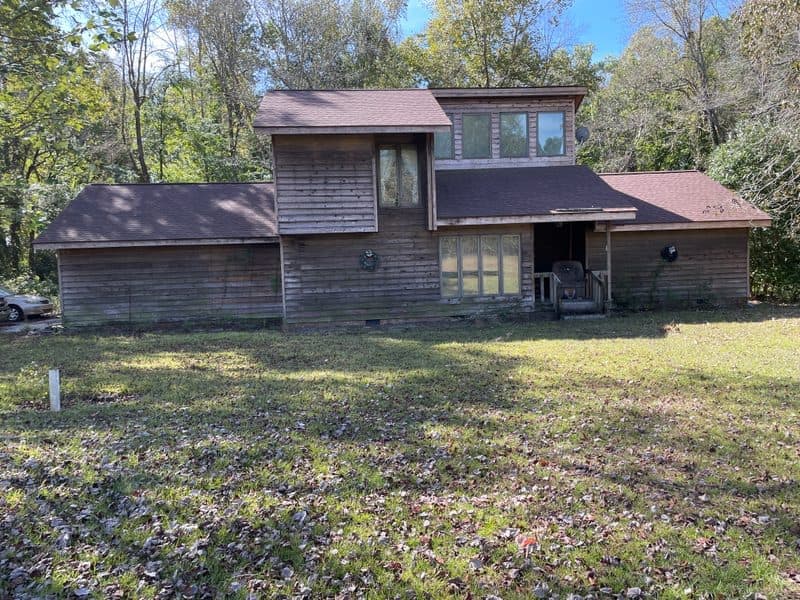
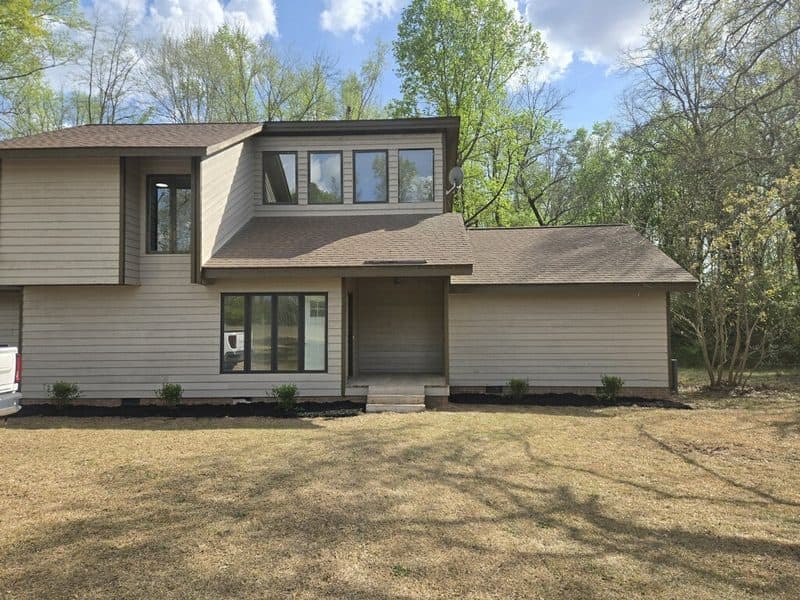
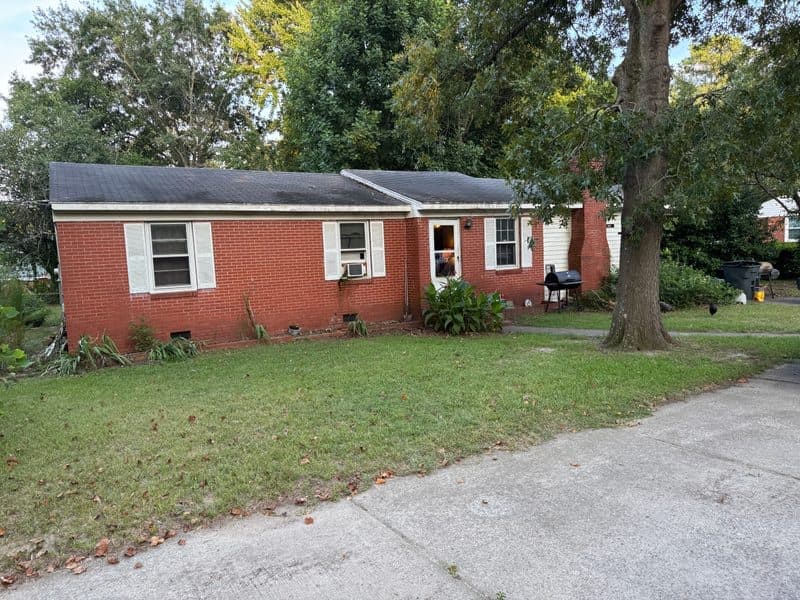
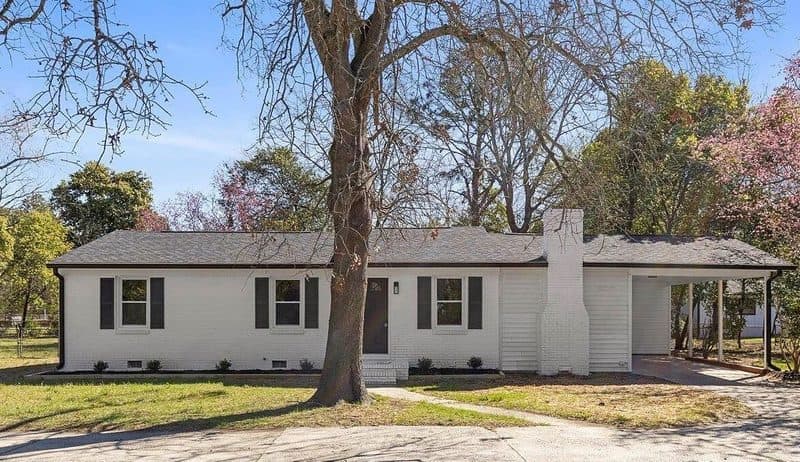
When someone in Greensboro searches “we buy houses Greensboro NC,” they’re usually carrying a specific situation. An older home in Fisher Park or Sunset Hills inherited from a parent or grandparent who lived there for forty years. A student rental near UNCG or NC A&T that’s drained patience and cash. A 1990s suburban build whose EIFS or polybutylene plumbing has now killed two financed deals after inspection. A property tax bill that landed bigger than expected after the most recent Guilford County revaluation. The common thread is timing or condition complications that traditional listings struggle with.
At Atlantis Homebuyers we’re a local NC cash buyer, family-owned since 2018, BBB Accredited, and we’ve closed on Greensboro properties across the city’s full housing spectrum: Fisher Park craftsman bungalows, Sunset Hills mid-century homes, Westerwood + College Hill near UNCG, Lindley Park cottages, Irving Park estates, Friendly Acres + Friendly Center suburban, Stokesdale + Summerfield outer-ring properties, Adams Farm + High Point Road newer subdivisions. The page below walks through what makes Greensboro’s seller market different from other NC cities and where a cash sale beats a listing path on the math.
Why Selling a Greensboro Home Looks Different
Greensboro’s seller market behaves differently from Raleigh’s, Durham’s, or Winston-Salem’s for three concrete reasons that shape what an offer should account for and how the timeline actually runs.
First, Greensboro carries a dual-tier housing market with unusually broad spread. Pre-1950 historic neighborhoods (Fisher Park, Sunset Hills, Westerwood, Irving Park, Lindley Park, College Hill) operate like older Durham housing stock, with the federal lead-paint disclosure layer + knob-and-tube + galvanized plumbing + foundation settlement issues that cause traditional listings to stall after the first inspection. The 1990s and 2000s suburban tier (Adams Farm, Friendly Acres, Friendly Center area, Reedy Fork, parts of west Greensboro toward Stokesdale and Summerfield) operates more like 1990s Cary, with EIFS moisture intrusion, polybutylene plumbing, LP and Masonite hardboard siding rot, and builder-grade HVAC reaching end of life on 2000s builds. Two very different condition catalogs in the same ZIP codes.
Second, three universities (UNCG, NC A&T, Guilford College) plus Greensboro College drive a meaningfully larger student-rental and faculty-housing market than most NC cities. A larger share of Greensboro sellers are tired landlords, faculty changing institutions, or out-of-town owners who bought a rental near campus a decade ago. Tenant-occupied sales, tenant turnover damage, and rental-property condition issues all show up at closing more often than in a non-college NC market.
Third, the City of Greensboro enforces its own minimum housing standards separately from Guilford County. Open code cases attach as municipal liens recorded at the city level, distinct from Guilford County tax records. Title searches that pull only county records miss city minimum-housing liens and can blow up a closing the day before funding. We pull both as standard due diligence on every Greensboro property.
These three factors don’t show up in a generic Greensboro listing pitch. They show up at the closing table when the financed buyer’s lender pushes back on EIFS, the appraiser flags structural concerns on a 1925 Fisher Park home, or a missed city code-enforcement deadline surfaces in the title search.
The Greensboro Older-Housing-Stock Condition Catalog
Greensboro’s older neighborhoods (Fisher Park, Sunset Hills, Westerwood, Lindley Park, Irving Park, College Hill, Glenwood) concentrate condition characteristics that financed-buyer inspections regularly catch on pre-1950 homes:
Knob-and-tube electrical wiring. Common in pre-1950 builds, often partially replaced over the decades but still present in attics and behind original plaster. Most homeowner insurance underwriters won’t bind a policy with active knob-and-tube. No insurance, no mortgage, no closing.
Lead-based paint. Pre-1978 homes carry federal lead-paint disclosure obligations under Title X. Peeling lead paint flagged on an FHA or VA inspection becomes a required repair before the loan can close. The cost falls on the seller, the timeline slips, and the buyer often walks during the delay.
Galvanized supply plumbing. Common in early-20th-century Greensboro homes. Internal corrosion produces low water pressure plus eventual catastrophic failure. Inspectors flag it; financed buyers re-trade; repipe quotes start around $8,000 and run higher on multi-bath layouts.
Foundation settlement. Many older Greensboro homes were built on rubble foundations or early concrete-block stem walls. Sloping floors, doors that don’t latch, drywall cracks at corners. Inspectors note “structural concerns: recommend further evaluation,” and that single sentence can kill a financed deal even when the actual settlement is decades old and stable.
Original boilers and asbestos siding. Fisher Park, Sunset Hills, and Westerwood have plenty of homes still running 1940s-era boilers and wearing original asbestos siding. Neither is dangerous in place, but both spook financed buyers and trigger inspection-driven price reductions.
We buy in any condition. The repair work prices into our offer and we handle resolution post-closing.
The Greensboro 1990s and 2000s Suburban Condition Catalog
Greensboro’s newer suburban tier (Adams Farm, Friendly Acres, Reedy Fork, parts of west Greensboro, Brassfield, properties toward Stokesdale and Summerfield) carries a different but equally problematic condition catalog tied to that era’s building practices:
EIFS (synthetic stucco) moisture intrusion. Common on Greensboro homes built between roughly 1990 and 2000 with full or partial stucco exteriors. EIFS systems installed without proper flashing trap moisture behind the cladding, producing sheathing rot, mold, and structural damage invisible from the exterior. Many lenders require moisture-meter inspection on EIFS homes; failed readings stop the loan. Remediation runs $15,000 to $80,000+.
Polybutylene plumbing. Gray plastic supply pipes installed approximately 1985 to 1995 in many Greensboro suburban builds. They fail catastrophically over time, and most homeowner insurers won’t bind a policy on active polybutylene, killing financed sales. Repipe runs $4,000 to $15,000 depending on home size.
LP and Masonite hardboard siding. 1990s Greensboro homes often have hardboard composite siding that swells and rots when water gets behind it, especially at trim joints and around windows. Spot repair $3,000 to $10,000; full re-side runs $20,000 to $50,000.
Builder-grade HVAC at year 18 to 22. Original HVAC on 2000s Greensboro builds is now in the failure window. Inspectors flag age and condition; financed buyers’ lenders treat dead HVAC as a required pre-closing repair.
Crawlspace moisture and active mold. Greensboro’s clay soil and seasonal water table produce crawlspace humidity problems on many properties. Active mold pauses financed loans pending remediation. Encapsulation runs $5,000 to $20,000.
Cash sales bypass all of these gates. The condition prices into the offer up front; we resolve post-closing.
UNCG, NC A&T, and the Greensboro Student-Rental Market
A meaningful share of Greensboro sellers are tired landlords whose rental property has reached the end of its profitable life cycle. Properties near UNCG (College Hill, Westerwood, Sunset Hills), near NC A&T (East Greensboro), and near Guilford College (west Greensboro) generated strong rental yields for years but now face common end-stage challenges: tenant damage from successive student turnover, deferred maintenance accumulating, ongoing HOA or municipal code complaints, vacancy stretching during summer months when student leases end.
Listing a tenant-occupied property to a financed buyer means the buyer has to underwrite the existing tenancy alongside the property condition. Many financed buyers simply won’t do it. Cash sales close around active tenancies as a regular matter. We honor existing leases or handle tenant transitions ourselves post-closing through cash-for-keys or NC Chapter 42 summary ejectment. Your obligations as landlord end at closing.
See our landlord situation guide for how the tenant transition runs and what to expect at closing.
City of Greensboro Code Enforcement and Municipal Liens
The City of Greensboro’s Code Compliance department enforces minimum housing standards through proactive inspections + complaint-driven cases. Common flags include peeling exterior paint (especially on pre-1978 homes), broken or missing windows, unsafe steps and railings, missing handrails, leaking roofs visible from the public right-of-way, accumulated debris, overgrown vegetation, and structural deficiencies visible from outside.
Violations get cited with a deadline. Missing the deadline produces fines that compound and attach as municipal liens recorded at the city level, separate from Guilford County tax records. A title search that only pulls Guilford County records misses city liens entirely and can blow up a closing the day before funding when the city lien surfaces.
We pull both City of Greensboro code/lien records and Guilford County tax records as standard due diligence on every Greensboro property. Open cases price into the offer; resolution becomes our responsibility post-closing, usually by working directly with Code Compliance to bring the property into compliance after we own it.
What a Real Cash Sale Looks Like in Greensboro
A real cash sale in Greensboro means a buyer with verified funds, no financing or appraisal contingency, and a written contract under the actual entity name. Several other approaches get marketed as “cash” in Greensboro that operate differently in ways sellers benefit from knowing.
Lead-generation sites collect contact information and resell to investors who pay for the lead. The number you receive isn’t a committed offer from a specific buyer.
National algorithmic programs (Opendoor, Offerpad) operate in Greensboro. The opening number looks competitive, but the structure includes a 5-percent-plus service fee and a post-inspection walkback that re-trades the offer based on whatever defects the inspector catalogs. On Greensboro’s mixed older + suburban housing stock, the walkback list runs long.
Sale-leaseback operators pitch staying in the home as a renter after sale. Sometimes the right fit; often a high-cost form of borrowing dressed up as a sale, with long-term economics favoring the operator.
Cash-advance lenders disguised as buyers offer immediate money against equity but don’t actually purchase the property. You stay on title and stay liable.
Verifying a real cash buyer in Greensboro is a 10-minute exercise. Written proof of funds dated within 30 days, in entity name signing the contract, with available balance equal to or above contract price. A specific Guilford County title company named in the contract that you can call to confirm. References from prior Greensboro closings. We pass all three; a real buyer should.
How a Cash Sale Compares to a Traditional Listing in Greensboro
On a Greensboro home with a $325,000 retail comparable value, the traditional listing math typically runs through 5 to 6 percent in agent commissions ($16,250 to $19,500), 1 to 3 percent in seller closing costs ($3,250 to $9,750), pre-listing repairs (highly variable: $5,000 cosmetic refresh on a well-maintained newer suburban home, $30,000 to $80,000 if Fisher Park condition catalog or 1990s EIFS/polybutylene work is needed), post-inspection concessions ($3,000 to $15,000 typical), and 2 to 4 months of carrying costs ($4,000 to $9,000 in Greensboro) while the property is listed and under contract.
Our cash number is lower than the $325,000 sticker but it’s also the actual amount you receive at closing, with no fees taken out, no repairs, no carrying costs added, and no risk of a fall-through sending you back to start. Greensboro sellers who run the math themselves often find the gap between net-net listing proceeds and cash-as-is is meaningfully smaller than the sticker comparison suggests. See our NC selling-cost breakdown for full numbers.
Guilford County Closing Mechanics for Greensboro Properties
A Greensboro cash close runs through a Guilford County title company or attorney closing office. Title work pulls deed history, checks for liens at both the City of Greensboro municipal lien register and the Guilford County Register of Deeds, confirms the legal description matches the property, and clears any title issues that surface. For a clean-title Greensboro property, that work runs 7 to 10 business days. For a property with open probate, unresolved liens, an old mortgage that wasn’t formally satisfied, or a boundary issue, expect 14 to 21 days.
At closing, you sign the deed and the closing statement (in person at the title company, or via mail-away if you’re out of state). Funds go into escrow, the deed records at the Guilford County Register of Deeds, and the wire goes to your account, usually the same business day the deed records. We pay all closing costs on the purchase side; the cash number you accept is the cash number you receive.
Common Reasons Greensboro Sellers Reach Out
The pattern of reasons we see repeats often enough to be worth listing:
Inherited Greensboro property. A parent or grandparent passed and left a home in Fisher Park, Sunset Hills, Westerwood, Lindley Park, or another older neighborhood. Out-of-state heirs, decades of belongings inside, carrying costs eating estate distribution. See our inherited property hub for closing logistics.
Tired-landlord rental near UNCG or NC A&T. End of a long landlord run, tenant damage accumulated, deferred maintenance piled up. See our landlord situation hub for related scenarios.
EIFS or polybutylene listing fall-through. Prior financed buyer walked after inspection on a 1990s suburban home; second financed buyer unwilling without major repair credits. Cash prices the issue accurately on the first pass.
Job relocation. New position in another city or state, hard report-by date, financed timelines unreliable.
Open Greensboro code violation case. Compliance deadline missed, fines compounding, lien attached or about to attach. We close around active cases.
Pre-foreclosure. Notice of Sale recorded, auction date approaching, listing traditionally won’t close in time.
Major condition issue with no repair budget. Roof gone, foundation needs work, HVAC died. See our major-repairs situation hub for how that prices.
What to Bring to a First Conversation
For a Greensboro property, the call goes faster with these specifics up front:
- Property address (and access situation: vacant, owner-occupied, tenant-occupied)
- Year built and condition headlines (older Fisher Park or Sunset Hills home with knob-and-tube + lead paint + galvanized plumbing? Newer suburban build with EIFS / polybutylene / aging HVAC?)
- Open code cases with City of Greensboro or known Guilford County flags
- Active mortgage and approximate payoff balance
- Whether the property is in probate, divorce, or any other situation that affects who can sign the deed
- Your timing constraint and what’s driving the sale
We come back with a real cash number same business day in most cases, plus written proof of funds and a realistic close-by date that accounts for the specific property’s closing layers.
Ready for an Offer on Your Greensboro House?
Tell us about the property. We’ll send a written cash offer same business day. No fees, no obligation, no high-pressure sales calls. Most Greensboro sellers are surprised how short the gap is between our cash number and what they’d net listing traditionally on an older Greensboro home or a 1990s suburban build with concentrated condition issues, and the cash version closes weeks earlier with no inspection-walkback risk.
Below are the questions Greensboro sellers most often ask before signing.