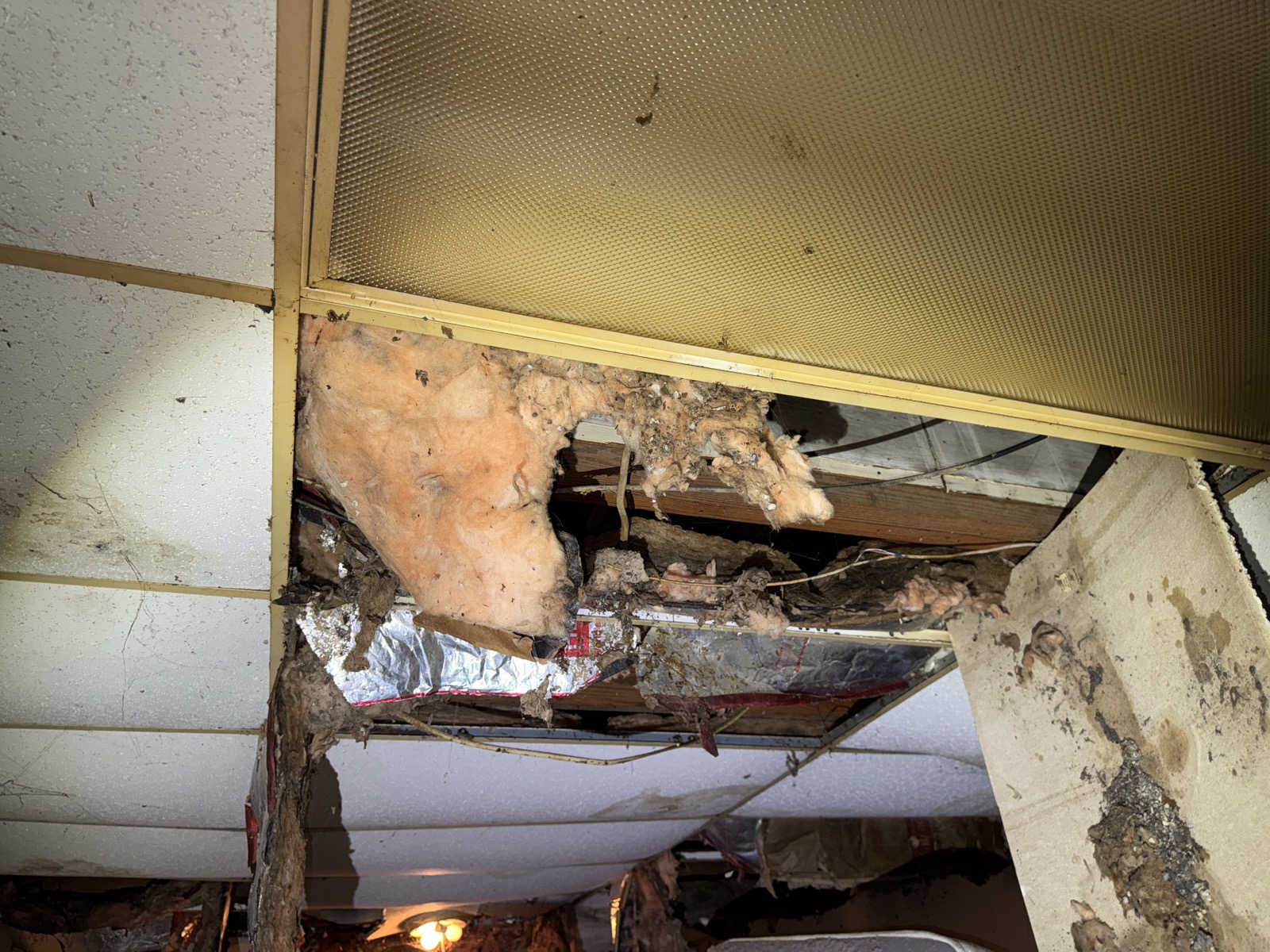
An NC home we bought with multiple open Minimum Housing Code citations. Powder post beetle damage in the crawlspace, electrical not to current code, holes in two of the floors.
A landlord from East Durham called me a couple of months back. She'd inherited a single-family rental from her dad when he passed, and she'd kept it as an income property because that's what her dad had done. The tenants she'd taken over from him had stopped paying about four months in. She didn't have the heart to evict, and when she finally got in to check on the place she found electrical that hadn't been to code since the Carter administration, holes punched through two of the floors, and powder post beetle damage in nearly every joist she could see in the crawlspace. The Neighborhood Improvement Services impact team had already cited the property twice. Under Durham's new October 2025 amendment to the housing code, she couldn't legally collect rent on a property in that condition either, so she was bleeding cash from both ends. We bought it as-is, took the violations with the property, and closed in 7 days.
If you've got a property in Durham with open code violations from Neighborhood Improvement Services, you have more options than the city's notice probably makes it sound like. Here's how the process actually works in Durham specifically, and why a cash sale to a buyer who takes the violations with the deed can be the cleanest exit.
What Counts as a Code Violation in Durham
The City of Durham enforces several different codes against residential property through the Neighborhood Improvement Services department (not the Inspections department, which handles permits). Each code has its own enforcement track:
Minimum Housing Code. The City of Durham's housing code (Chapter 10, Article VI of the city ordinances) covers heat, plumbing, electrical, structural integrity, water tightness, and sanitation. Most citations we see fall here, especially on older Durham rentals.
Nonresidential Code. Commercial property standards. Less common on what we buy.
Public Nuisance. Weedy lots, abandoned vehicles, accumulated junk, graffiti, illegal dumping. Durham's "impact team" specifically responds to these.
NC State unsafe building statute. NCGS § 160D-1129 lets the city declare a building unfit and order it vacated or demolished. Rare but real, and it's the worst-case escalation path.
"Imminently dangerous" designation. Added to the Durham housing code in October 2025. We'll cover this below because it's a significant change for Durham landlords specifically.
About AJ Jamal, Founder of Atlantis Homebuyers
Watch AJ's take · about 1 minute
Durham's Proactive Rental Inspection Program (PRIP) Is the Big Difference
This is the single most important thing to understand about how Durham enforces housing code differently from Raleigh and most other NC cities. Durham runs a Proactive Rental Inspection Program, abbreviated PRIP, that lets Neighborhood Improvement Services proactively inspect rental properties in designated areas, on a recurring cycle, without waiting for a tenant or neighbor complaint to trigger the visit.
In practical terms, this means:
You can get cited without anyone complaining. The PRIP inspector knocks on the door, makes contact with the tenant, walks the property, and writes up whatever they find. Many Durham landlords we've talked to had no idea they were cited until the notice showed up in the mail.
PRIP areas catch more violations. Durham's own data shows housing code enforcement cases are higher in PRIP-active census tracts than in non-PRIP areas. East Durham, parts of West End, and several northern Durham neighborhoods sit inside active PRIP zones.
The inspection schedule is independent of property condition. A landlord who's been keeping up gets inspected on the same cycle as a landlord who hasn't. If your unit has any deferred maintenance issues, PRIP will surface them.
Most of our recent Durham purchases from tired landlords involved at least one PRIP-triggered citation. PRIP is also why Durham rental property owners often face accelerated code-enforcement timelines compared to owners in cities like Raleigh, which is complaint-driven only.
Durham's New "Imminently Dangerous" Rule (October 2025)
In October 2025, the Durham City Council amended the housing code to add the "imminently dangerous" designation. The mechanics are sharp and worth understanding because they hit landlords the hardest:
If Neighborhood Improvement Services declares a rental property "imminently dangerous to health or safety," the landlord cannot legally collect rent for any period the violation remains open.
The landlord may also face misdemeanor charges for attempted rent collection during that window.
Tenants in an imminently dangerous unit are typically not displaced immediately. The owner is responsible for fixing the issues, and rent collection is on pause until compliance.
Owners risk total loss of rental income for the duration of the violation. On a $1,400/mo rental, four months of compliance work means $5,600 in lost rent on top of the repair cost itself.
This isn't a hypothetical. It's law now. The combination of a PRIP-triggered citation, the imminently dangerous designation, and the rent-collection ban turns what used to be a "fix it when I can afford it" problem into a "this property is bleeding money every day it stays in my name" problem. Selling becomes the path of least financial damage in a lot of cases.
The Trinity Park / Old North Durham / East Durham Housing Stock Problem
Durham's historic neighborhoods carry a lot of pre-1940 wood-frame housing stock. Trinity Park, Old North Durham, East Durham, Cleveland-Holloway, West End, parts of Walltown. These neighborhoods have houses built in the 1900s through 1930s that were built well for their era but were never built to the standards modern code requires.
The recurring issues we see on Durham purchases in this age range:
Electrical not to current code. Knob and tube wiring, two-prong outlets, 60-amp service panels, ungrounded circuits, aluminum branch wiring. Modern code requires grounded outlets in living spaces, GFCI protection in wet locations, 100-amp minimum service, and copper or properly handled aluminum.
Powder post beetle damage. Common in Durham's older crawlspaces because of the wood species used (yellow pine joists), the long-term moisture levels in unsealed crawlspaces, and the lack of vapor barriers in pre-war construction. Active infestation requires treatment plus structural reinforcement of compromised joists.
Foundation cracks and settling. Brick pier foundations from the 1920s shift over a century. Cracks in the perimeter walls, sloping floors, and gaps at the rim joist are common citations under structural integrity.
Holes in subfloors. Hard-living tenants, decades of leaks, untreated termite damage, or the accumulated effect of all three.
Lead paint and asbestos siding. Pre-1978 properties almost always have one or both. Not always cited, but they affect rehab cost significantly and the FHA/VA appraisal almost always flags them.
We bought a single-family from a family in Trinity Park last quarter where the owner had passed away and the house had been sitting empty about two years. 1920s build. We walked it on a Tuesday afternoon. The crawlspace had visible powder post beetle frass on every joist, the south foundation wall had a crack we could fit a finger into, the wiring was all original knob and tube, and there was active water intrusion at the back corner. Heirs were spread between four states and didn't want to deal with any of it. We closed in 14 days. The Neighborhood Improvement Services file came with the property.
Representative interior from one of our older NC purchases. Water intrusion, deteriorating wood paneling, the type of accumulated deferred maintenance Durham older-stock properties typically show.
How the City Finds Out About a Durham Code Violation
Durham triggers code enforcement four ways, in roughly this order of frequency:
PRIP cycle inspection. Covered above. Unique to Durham among Triangle cities. The single biggest source of citations on rental properties.
Tenant complaint. Tenants who can't get the landlord to respond often go directly to Neighborhood Improvement Services. Durham's tenant-rights culture is more active than Raleigh's.
Neighbor complaint. Yard condition, junk accumulation, illegal dumping, abandoned vehicles. Routed to the impact team.
Drive-by impact-team patrol. Durham's impact team does proactive sweeps in target neighborhoods, especially West End, East Durham, and parts of Cleveland-Holloway.
The Neighborhood Improvement Services Code Enforcement office is at 101 City Hall Plaza, Ground Floor Suite 0200, and the main intake number is 919-560-4570 (Monday through Friday, 8 to 5).
The Durham Enforcement Timeline
From a homeowner's perspective, a Durham code-violation case runs in three phases similar to Raleigh's but with PRIP-specific differences:
Notice of Violation. Inspector documents the issue and mails or hand-delivers a notice. You typically have 14 to 30 days to either cure or contact Neighborhood Improvement Services about a longer compliance plan.
Administrative Hearing. If the violation isn't cured by the deadline, the city schedules a hearing. You can attend, present evidence, request more time, or contest the citation. The hearing officer issues an order.
Compliance Period and Fines. After the hearing, the order gives you a compliance window. After that window, daily civil penalties accrue under NCGS Chapter 160D, and a lien attaches to the property. The lien is recorded at the Durham County Register of Deeds, accrues interest, and must be paid off at closing on any future sale.
If the violation is severe enough to trigger an "imminently dangerous" designation, the rent-collection ban kicks in immediately on top of the timeline above.
Your Three Real Options
If you've got a Durham house with open code violations, the math usually points to one of three paths:
Option 1: Cure the Violations, Then List
The conventional path looks clean on paper. The reality has more steps and more wait time than most owners realize on their first round:
Weeks 1-2. Hire contractors. The electrical, plumbing, structural, and pest-treatment contractors you need for a code-violation property typically schedule 1 to 3 weeks out in Durham. You're making calls during your work day. Get at least three bids per trade; expect them to vary widely.
Weeks 2-5. Pull permits with Durham's Inspections department. (Most owners don't realize this is a separate operation from Neighborhood Improvement Services, which cited you. Different counter at the planning office, different filing system, different fees.) Permit fees + review fees per trade. If structural work is required, you'll need stamped engineer's drawings, which adds $1,500 to $4,000 in engineer fees on top of the permit cost.
Weeks 5-16. The actual repair work. While work is in progress, you're carrying the property: mortgage + utilities + insurance + the city's continuing fines (typically $100 to $250 per day per violation under NCGS Chapter 160D) + any rent you're not collecting if the property has been declared imminently dangerous. Conservative estimate on a typical Durham older-stock property: $4,000 to $12,000 per month in pure carrying cost. On a 3-month repair window, that's $12,000 to $36,000 in carrying cost alone, before contractor invoices.
Weeks 16-18. Schedule the NIS re-inspection. Plan on the inspector being booked 1 to 2 weeks out. First-attempt failures are common; if anything misses, you fix that specific item and book the next re-inspection. Each cycle adds weeks.
Weeks 18-26. List with a Realtor. Showings, buyer inspections, offer negotiations, lender appraisal, inspection contingency renegotiation. NC average days-on-market hovers around 30 to 60.
Weeks 26-30. Close. Pay 5 to 6 percent in Realtor commissions, plus closing costs, plus the city's lien if it attached during your cure period. Net the rest.
Total time from start to close: 6 to 8 months on a typical case. Total cost: $40,000 to $120,000+ between contractors, engineer fees, permits, carrying costs, continuing fines, re-inspection cycles, and Realtor commissions.
This path works fine if you have the time, the budget, the contractor relationships in Durham, and the bandwidth to manage the sequence from wherever you live. It does not work fine if any one of those four things is missing. We've talked to a lot of Durham landlords who tried this path for six to nine months before deciding it wasn't the path they wanted to be on. Most of them eventually call us anyway. The most common thing they say afterward is they wish they'd had this conversation sooner.
Option 2: List the Property As-Is on the Open Market
You can list a Durham property with open code violations through a Realtor. The MLS allows the disclosure. But the buyer pool shrinks dramatically. FHA, VA, and USDA financing won't close on a property with active Minimum Housing Code citations because the lender requires a habitable property at closing. Conventional financing is sometimes possible but the appraisal usually comes back at a steep discount, and the buyer can usually back out under inspection. Most listings end up attracting only cash and hard-money investor buyers, often at 15 to 25 percent below what the property would fetch if cured. After 5 to 6 percent in agent commissions, closing costs, the city lien payoff, and months of additional fines accruing during the listing period, the math is often close to what a direct cash sale produces. The difference is mostly the timeline and the friction.
Option 3: Sell As-Is to a Cash Buyer Who Handles Neighborhood Improvement Services
This is what we do. We buy houses with open code violations across Durham, Raleigh, Cary, Fayetteville, and the surrounding Triangle counties. The violations transfer with the property at closing. We have the existing contractor relationships, the working relationship with Durham's NIS Code Enforcement, and the cash to fund the repairs without waiting on a lender's inspection cycle.
What you get: a written cash offer the same business day, a closing date you pick (our two most recent Durham code-violation closings were 7 and 14 days), and no further contact with NIS after the deed is signed. The lien gets paid off at closing out of sale proceeds, the same way a mortgage payoff works. We deal with the city afterward.
Why a Cash Buyer Can Take an Open Durham Violation (and a Retail Buyer Can't)
Four things change when a cash buyer enters the picture instead of a financed retail buyer:
No lender requiring habitability. FHA, VA, USDA, and most conventional lenders require habitability at closing. Open Minimum Housing Code violations kill that. Cash buyers don't have that step.
No appraisal walkback. When a lender's appraiser sees powder post beetle damage in the crawlspace or foundation cracks in the perimeter wall, the appraisal comes back low and the buyer walks or demands a price cut. Cash buyers price the property knowing the condition up front, no walkback.
Closing timeline measured in days, not months. Durham's compliance clock keeps ticking while a financed buyer waits on underwriting. And under the imminently dangerous rule, the rent meter stays off. A cash sale that closes in 7 to 14 days saves you most of those continuing fines plus several thousand in lost rent if you're a landlord.
Existing contractor relationships. Most cash buyers active in Durham have a stable of plumbers, electricians, structural framers, and pest-treatment contractors they work with weekly. Pulling a permit through Durham Inspections, scheduling an NIS re-inspection, and closing out a violation is a routine process for us, not a multi-month headache.
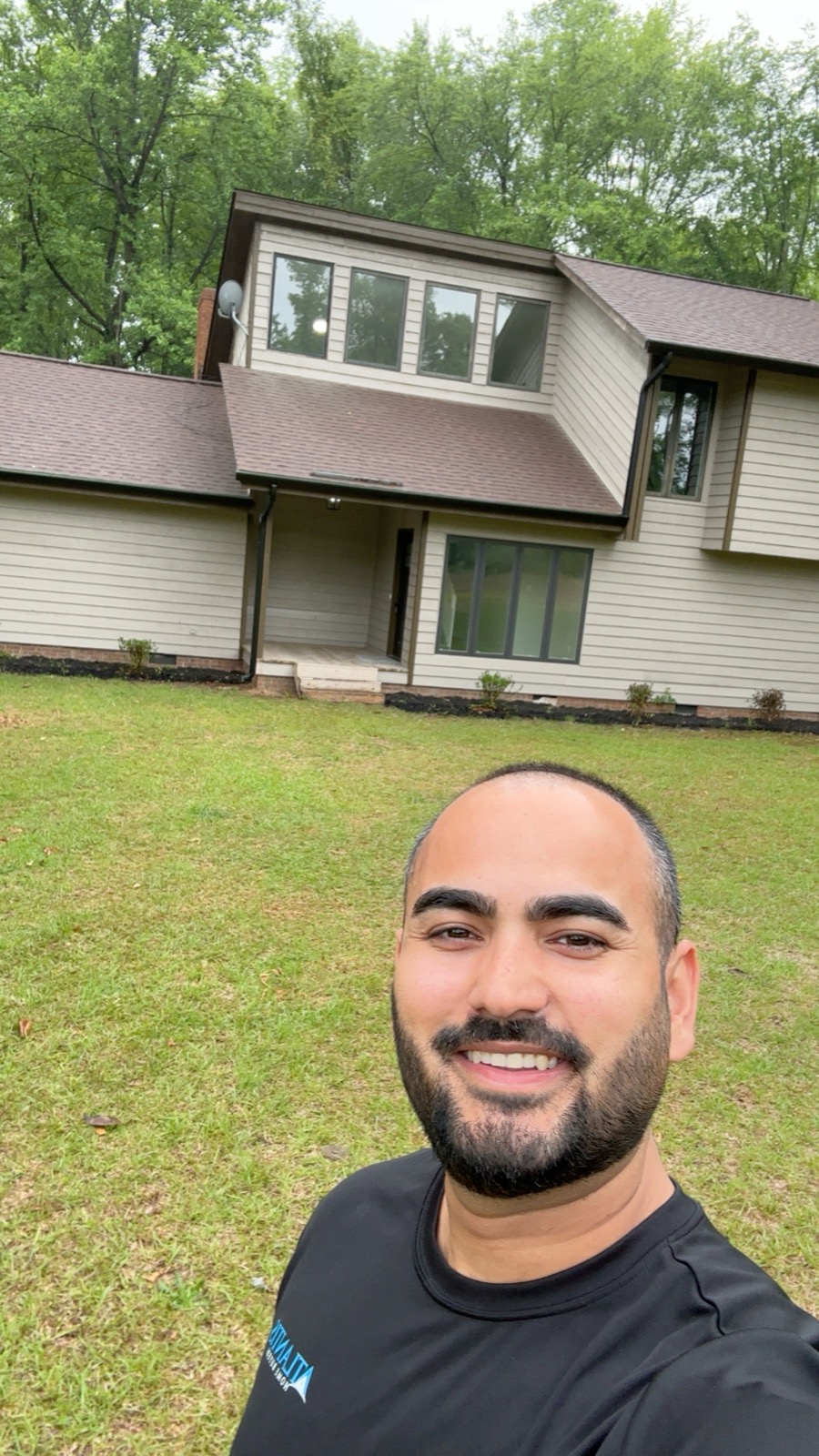
AJ on-site at a recently purchased NC property. We walk every property in person before making a final offer.
What We Provide on Every Atlantis Durham Code-Violation Sale
A written same-day cash offer with the NIS violation status factored in transparently. No verbal ballpark numbers that drop on closing day.
Proof of funds so you know the closing isn't contingent on us getting financing.
Durham County title company handling the closing, with the NIS lien payoff coordinated directly through the Durham County Register of Deeds.
References from past Durham code-violation sellers we've closed with in Durham, Wake, and Orange counties.
A closing date you pick. We've closed in as fast as 7 days. We've also closed in 60 when the seller needed time to coordinate with siblings spread across multiple states on an inherited property.
BBB Accredited. AJ and Isabel Jamal, family-owned, in NC since 2018.
What to Bring to a First Conversation
If you call us at (984) 205-6984 or fill out the form below, what speeds up the offer the most is having two or three things ready. None of these are required:
A copy of the most recent Notice of Violation from Neighborhood Improvement Services. A photo of the notice works fine.
Any contractor estimates you've already gotten for the repairs.
The address of the property and a rough sense of the timeline you'd want for closing.
If the property is rented, whether you've been served with an "imminently dangerous" declaration. That changes the financial math significantly.
Selling a House With Code Violations in Durham: FAQ
Can I legally sell a Durham house with active code violations?
Yes. North Carolina lets you sell a house with open code violations as-is. The Residential Property Disclosure (NCAR Form 410-T) requires you to disclose known material defects, including pending citations and known violations. We handle the disclosure language with you so it's accurate. Buyers who specialize in this kind of sale already know about the issues going in.
If my Durham rental was declared "imminently dangerous," can I still sell it?
Yes, and selling is often the cleanest exit precisely because of the rent-collection ban. The designation transfers with the property at closing, which means our team takes on the responsibility for clearing it after the sale. You stop bleeding rent and you stop accruing fines.
Do I have to clear the Durham NIS lien before I can sell?
No. The lien gets paid off at closing out of the sale proceeds, the same way a mortgage payoff works. The title company coordinates the exact payoff amount with Neighborhood Improvement Services and disburses it on closing day. Whatever's left after the lien and any mortgage payoff wires to you.
Can I sell before the administrative hearing date?
Yes, and it's often the cleanest exit. Selling before the hearing means you avoid the post-hearing daily fines entirely, the lien hasn't grown, and you don't have to attend the hearing. Several of our Durham closings have happened in the window between the initial NIS notice and the hearing date.
Will NIS come after me after I sell?
No. Once the deed is signed and recorded, the property is in our name and the violation is our responsibility. NIS's records get updated through the Durham County Register of Deeds, and any future contact from the city goes to us, not you.
How long does a cash sale with Durham code violations actually take?
We can close in 7 days if the title is clean and you can sign at the closing table that quickly. Most Durham code-violation sales close in 7 to 21 days because the title company needs time to pull the NIS lien payoff and confirm any other recorded encumbrances. Our two most recent Durham closings on properties with open violations were 7 days and 14 days. We close on your timeline.
What about powder post beetle damage or foundation issues that aren't formally cited yet?
Doesn't change anything from our side. We've bought Durham properties with active powder post beetle infestations, dropped joists, foundation cracks wide enough to fit your hand into, and crawlspaces with standing water. We price the property knowing the condition. If something later becomes a formal citation after we close, it's our problem.
AJ has been buying houses for cash in Raleigh and Central NC since 2018. He's personally involved in every transaction and can be reached at (984) 205-6984.