Sell a Rental Property With Bad Tenants or Squatters in Durham, NC
By AJ (Asad Jamal)
Representative interior from one of our NC rental purchases. The pattern is consistent: belongings abandoned, narrow path through, accumulated damage from months or years of unauthorized occupancy.
A woman called me a few months back about her father's rental house in East Durham. Her dad had bought it as an income property decades ago and rented it out to the same family for years. He passed away unexpectedly, and she stepped in to manage the property while the estate worked through probate. By the time she got out there to check on the house, the original tenants were gone and a group of squatters had moved in. No lease, no rent ever paid to her, no contact information. The property had deteriorated to the point that Neighborhood Improvement Services would have ruled it non-habitable on inspection. She wasn't a landlord, didn't want to become one, and the thought of going through eviction court while grieving her dad was more than she could take on. We met with her, walked the property without entering occupied spaces, made a written offer the same day, and closed in 14 days. She told me afterward that what meant the most to her wasn't the check; it was knowing her dad's house was going to be cared for instead of getting worse.
If you've got a rental property in Durham with squatters, non-paying tenants, or a tenant situation that's made the property uninhabitable, you have more options than you might think. Some of those options got significantly better in December 2025 with a new NC law. Here's a practical walkthrough.
Squatters vs Bad Tenants: A Legal Distinction That Changes Everything
This is the most important thing to understand if you're in this spot, and it's the thing most landlords get wrong on the first call.
A bad tenant is someone who had a valid lease or rental agreement with you (or whoever owned the property before you), then stopped paying, damaged the property, refused to leave at lease end, or otherwise breached the agreement. Removing them requires summary ejectment under NCGS Chapter 42. The court process typically takes 6 to 10 weeks from filing to sheriff lockout, longer if the tenant appeals or asserts a defense.
A squatter is someone who occupies the property without ever having had a lease or your permission. They didn't pay rent because they never had a rental agreement to begin with. Until December 2025, NC law did not have a clean process for removing squatters specifically. Landlords often had to use summary ejectment anyway, which felt absurd because the squatters weren't tenants. Some property owners tried to lean on criminal trespass (NCGS § 14-159.12), but that only works in the first day of occupancy; once a squatter establishes any form of residency, criminal trespass no longer applies and the matter becomes civil.
In our experience walking Durham rental properties over the past couple of years, about a third of the "bad tenant" calls we take are actually squatter situations the landlord didn't realize were legally distinct. The remedy is different. The timeline is different. The cost is different. Knowing which one you have is step one.
About AJ Jamal, Founder of Atlantis Homebuyers
Watch AJ's take · about 1 minute
NC's New Expedited Removal Law (Senate Bill 55, Effective Dec 1, 2025)
Governor Stein signed Senate Bill 55 (Session Law 2025-88) into law on August 6, 2025, and it took effect December 1, 2025. It created an entirely new legal track for removing unauthorized occupants from residential property. The mechanics are dramatically faster than summary ejectment:
Filing. The property owner (or authorized agent acting on behalf of an estate, an heir, etc.) files a complaint and summons with the Clerk of Superior Court in the county where the property sits. In our case that's the Durham County Courthouse at 510 South Dillard Street.
Service. The sheriff's office must serve the unauthorized occupant within one business day of receiving the summons.
Magistrate hearing. A magistrate hears the case no more than 48 hours after the occupant is served. Compare to traditional summary ejectment where the hearing is typically 7 to 10 days after filing.
Removal. If the magistrate rules in the property owner's favor, the sheriff removes the occupant within 4 hours of the court order.
Appeal bond. If the occupant tries to appeal, the law requires a $10,000 minimum appeal bond. That deters frivolous appeals that used to drag the process out.
Form. Use AOC-CVM-407 (Complaint for Expedited Removal of Unauthorized Occupant).
That's the statute. What it doesn't tell you is what the actual experience of using it looks like. We've watched estate-managed sellers go through this process. Here's the reality SB 55 doesn't put on paper:
You have to draft the complaint correctly the first time. SB 55 is procedurally different from regular summary ejectment. Get the form wrong and you start over. Most owners hire an attorney just to confirm they filed correctly, which runs $300-500 for a routine consultation and $750-1,500 for the attorney to file and appear on your behalf. Plus the $150-250 filing fee at the Clerk of Superior Court.
"Sheriff serves within one business day" is the statute. The calendar is real life. In practice, sheriff service often takes 3-5 business days to actually get on the calendar in Durham County. Each delay pushes the magistrate hearing further out.
"Magistrate hearing within 48 hours of service" is the statute. The hearing date is still subject to the magistrate's calendar. Plan on 5-10 business days, occasionally longer if the calendar is full. You attend in person. That's a half-day off work, minimum.
"Sheriff removes within 4 hours of court order" is the statute. The deputy availability is real life. In practice, scheduling the actual removal takes another 3-7 days. You need to be on-site to accept possession when it happens.
The $10,000 appeal bond cuts both ways. Yes, it deters frivolous appeals from the squatters. It also means if the squatters DO appeal (and some will, just to delay), you're stuck waiting on the appellate process before anything else moves.
Then you own a property you couldn't safely enter for months. The squatters are gone, but the cleanout is on you. Squatter cleanouts run $4,000 for a single dumpster pass up to $25,000 for hoarder-level accumulation with biohazard. Damage that accumulated during the unauthorized occupancy period is on you. Any code violations the City of Durham filed on the property are still open and accruing daily fines.
Realistic total time from SB 55 filing to "property is empty, cleaned out, and listable": 8-16 weeks, not 3-5 days. Realistic total out-of-pocket cost before you've collected a dollar from a buyer: $30,000-80,000 depending on the damage. Most heirs and out-of-state owners we talk to want to be done with all of that, not just step one of it.
Why Durham Squatter Situations Compound Faster Than Most NC Cities
Three things specific to Durham make rental properties with bad tenants or squatters deteriorate faster than the same situation in Raleigh or Cary:
PRIP (Proactive Rental Inspection Program). Durham's Neighborhood Improvement Services runs cycle-based inspections of rental properties in designated areas, without waiting for a complaint. East Durham, West End, and parts of Cleveland-Holloway sit inside active PRIP zones. A rental with squatters or tenants the landlord can't access often surfaces during the next PRIP cycle, generating a Notice of Violation that adds to the financial pressure on the landlord.
The October 2025 "imminently dangerous" amendment. Durham's housing code was amended in October 2025 to make it unlawful for a landlord to collect rent on a property declared imminently dangerous to health or safety. If the squatters or bad tenants have left the property in a deteriorated state, the property is at risk of an imminently dangerous designation, which freezes any rental income the landlord might otherwise have collected during the cure period. Combined with daily code-violation fines under NCGS Chapter 160D, the landlord can be losing money on both sides.
Durham's tenant rights culture. Durham has a more organized tenant advocacy infrastructure than the rest of the Triangle. Tenants who feel unheard often go directly to Neighborhood Improvement Services or to local advocacy groups, accelerating code-enforcement involvement. Squatters who learn this can sometimes use it to delay removal further, even though most of those rights protections were designed for legitimate tenants.
If you're already feeling the compounding pressure (PRIP cycle approaching, code violations stacking, rent collection blocked under the imminently-dangerous rule), call (984) 205-6984 or fill out the form on this page for a same-day cash offer. We'll factor the entire situation into the number transparently. No hearings to attend, no contractor estimates to gather first, no eviction proceedings to file.
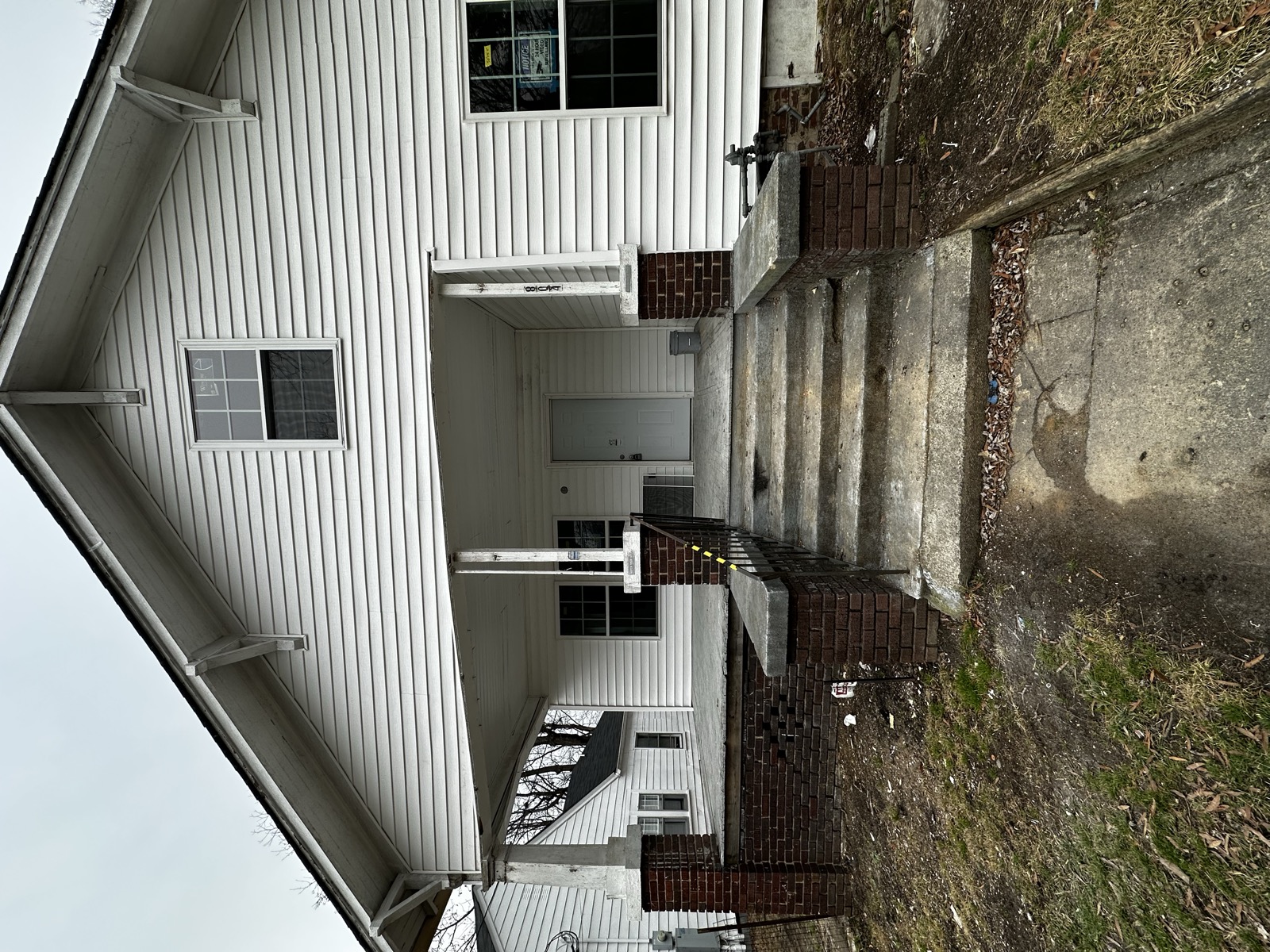
Representative exterior from one of our older NC rental purchases. Long-term unauthorized occupancy accelerates the kind of exterior deterioration Durham older-stock rentals show.
What Squatters and Bad Tenants Usually Leave Behind
The recurring patterns we see when we walk a Durham rental that's been dealing with squatters or extended non-payment:
Accumulated belongings and trash that the occupants treat the property as a storage unit for, abandoned in place when they leave.
Electrical issues caused by improper use (running multiple loads off extension cords, tampering with the panel, missing outlet covers).
Plumbing damage from clogged drains that went unrepaired, leaks that turned into mold, fixtures pulled out.
Holes in floors and walls from neglect or active damage.
Pets unaccounted for in the lease (or no lease at all), urine and feces damage to subfloors, carpet, and drywall.
Hoarding-level accumulation that has to be hauled out before any repair work can start.
Structural damage from water intrusion that compounded during the period the landlord couldn't access the property.
None of this is exotic. We see most of it on most squatter properties we walk in Durham. The retail buyer pool can't absorb any of it; FHA, VA, and USDA underwriters won't fund a property in this condition, and even most cash buyers want to walk the property before locking a number. We've walked properties with squatters still on-site, made offers from the curb when we couldn't safely enter, and closed regardless. That's the cash-buyer skill set.
Your Three Real Options
Option 1: File for Removal Yourself, Clean Up, Then List
This is the path on paper. Here's what it actually looks like, week by week, for an owner who's never done it before:
Week 1. File the paperwork. For squatters, that's Form AOC-CVM-407 at the Clerk of Superior Court. For bad tenants with a lease, it's summary ejectment in Durham County Magistrate Court (different form, different counter). Filing fees + court costs run $150 to $250. Attorney consultation just to confirm you filed correctly: $300 to $500. Attorney to represent you start-to-finish: $750 to $1,500. Plan on a full day of phone calls, paperwork, and trips to the courthouse.
Weeks 2-3. Wait on the sheriff to serve. The statute says one business day; the actual Durham County sheriff calendar is usually 3 to 5. Then wait on the magistrate hearing. The statute says 48 hours from service; the calendar reality is 5 to 10 business days. You attend in person, on a workday, possibly twice if the squatters request a continuance.
Weeks 3-4. Removal. If the magistrate rules in your favor, the sheriff schedules deputy availability. Plan on 3 to 7 more days. You need to be on-site to accept possession the day it happens, change the locks, secure broken doors and windows, and stop the property from being re-occupied while you're not there.
Weeks 4-10. Cleanout. Squatter and bad-tenant cleanouts run $4,000 for a single dumpster pass up to $25,000 when there's hoarder-level accumulation, biohazard waste, pet damage to subfloors, or abandoned vehicles. Hauling fees, dump fees, biohazard handling, the time you spend coordinating it all from wherever you live.
Weeks 10-20. Repair the damage. The conditions that made the property non-habitable are still there, plus whatever accumulated during the unauthorized occupancy. Electrical, plumbing, holes in floors, water damage that turned into mold, structural issues. Plan on $15,000 to $50,000 for a typical Durham older-stock rental, more if structural work is required. Pull permits with Durham's Inspections department, schedule contractor trades that book 2 to 4 weeks out, manage the work from wherever you live.
Weeks 20-24. Re-inspection by Neighborhood Improvement Services if any code violations attached during the unauthorized occupancy period (very common). NIS books 1 to 2 weeks out. If anything fails, you fix that specific item and book the next re-inspection.
Weeks 24-30. List with a Realtor. Showings, buyer inspections, offer negotiations, appraisal contingency. Pay 5-6% in commissions at closing. Pay any liens that attached to the property at closing. Net the rest.
Total time from filing to closing in your bank account: 5 to 8 months. Total out-of-pocket through the process: $35,000 to $100,000+ between attorney, cleanout, repairs, permits, contractor coordination, mortgage and utilities you're carrying that whole time, lost rent under the imminently-dangerous rule, and Realtor commissions.
This works fine if you have the time, the budget, the local contractor relationships, and the bandwidth to manage the sequence. Each week depends on the previous one finishing on schedule. A hiccup in week 3 shifts every week after. Most heirs we talk to do not have one or more of those four things. Usually they're managing the property from out of state, navigating probate at the same time, still grieving, and trying to hold down a job while doing all of it.
Option 2: List the Property With the Occupants Still There
You can list a Durham property with squatters or non-paying tenants still on-site. Some investor buyers are willing to take the situation on. The MLS allows the listing. But the buyer pool shrinks dramatically. Owner-occupant buyers can't close on a property they can't move into. Most lenders won't fund a property with occupants whose status is unresolved. You typically end up with cash and hard-money investor buyers competing for the listing at 25 to 35 percent below what the property would fetch if vacant and repaired. After commissions, closing costs, and the listing-period delay, the math often nets out close to a direct cash sale, with more friction.
Option 3: Sell As-Is to a Cash Buyer Who Takes the Tenant Situation
This is what we do at Atlantis Homebuyers. We buy houses in Durham and across the Triangle with squatters in place, non-paying tenants, hoarder accumulation, open code violations, and the whole package. The situation transfers with the property at closing. After we close, the new SB 55 expedited removal is on our timeline, not yours. The cleanout, the repairs, the code-enforcement negotiation with Neighborhood Improvement Services, all of it.
What you get: a written cash offer the same business day, a closing date you pick, no need to enter the property if you can't safely do so, no attorney to hire, and no further contact with the occupants after the deed is signed. The proceeds wire to you. We deal with whoever is still on the property.
Why a Cash Buyer Can Take a Durham Squatter Situation a Retail Buyer Can't
No lender requiring vacant possession at closing. Conventional, FHA, VA, and USDA loans all require the property to be vacant (or have the seller's tenants under a lease that survives the sale) at closing. Squatter situations break that. Cash buyers don't have the requirement.
No habitability appraisal. Even if a financed buyer accepted the situation, the lender's appraiser would walk a property in this condition and the appraisal would come back rejected or steeply discounted. Cash buyers underwrite the condition up front.
Timeline measured in days, not months. The Durham code-enforcement and imminently-dangerous clocks keep ticking while a financed sale waits on underwriting. The squatters can be running up additional damage during that window. A cash sale that closes in 7 to 14 days caps your exposure.
Existing legal + contractor relationships. We've taken SB 55 actions on properties we own. We've worked with Durham County deputies on the removal process. We have cleanout crews, structural framers, electricians, plumbers, and pest treatment contractors on standing call. Each of these is a learning curve for a one-time landlord. They're routine for us.
What We Provide on Every Durham Squatter or Bad-Tenant Sale
A written same-day cash offer with the occupant situation factored in transparently. No verbal numbers that drop on closing day.
Proof of funds so you know the closing isn't contingent on us getting financing.
Durham County title company handling the closing.
References from past Durham bad-tenant and squatter sellers we've closed with. We've handled estate-managed rentals, out-of-state heir situations, and properties where the seller couldn't or wouldn't enter the building.
A closing date you pick. 7 days, 14 days, or 60 if you need time to coordinate with siblings or work through probate.
No requirement that you handle the occupants first. They stay on-site until closing. We file SB 55 or coordinate the removal after we own the property.
BBB Accredited. AJ and Isabel Jamal, family-owned, in NC since 2018.
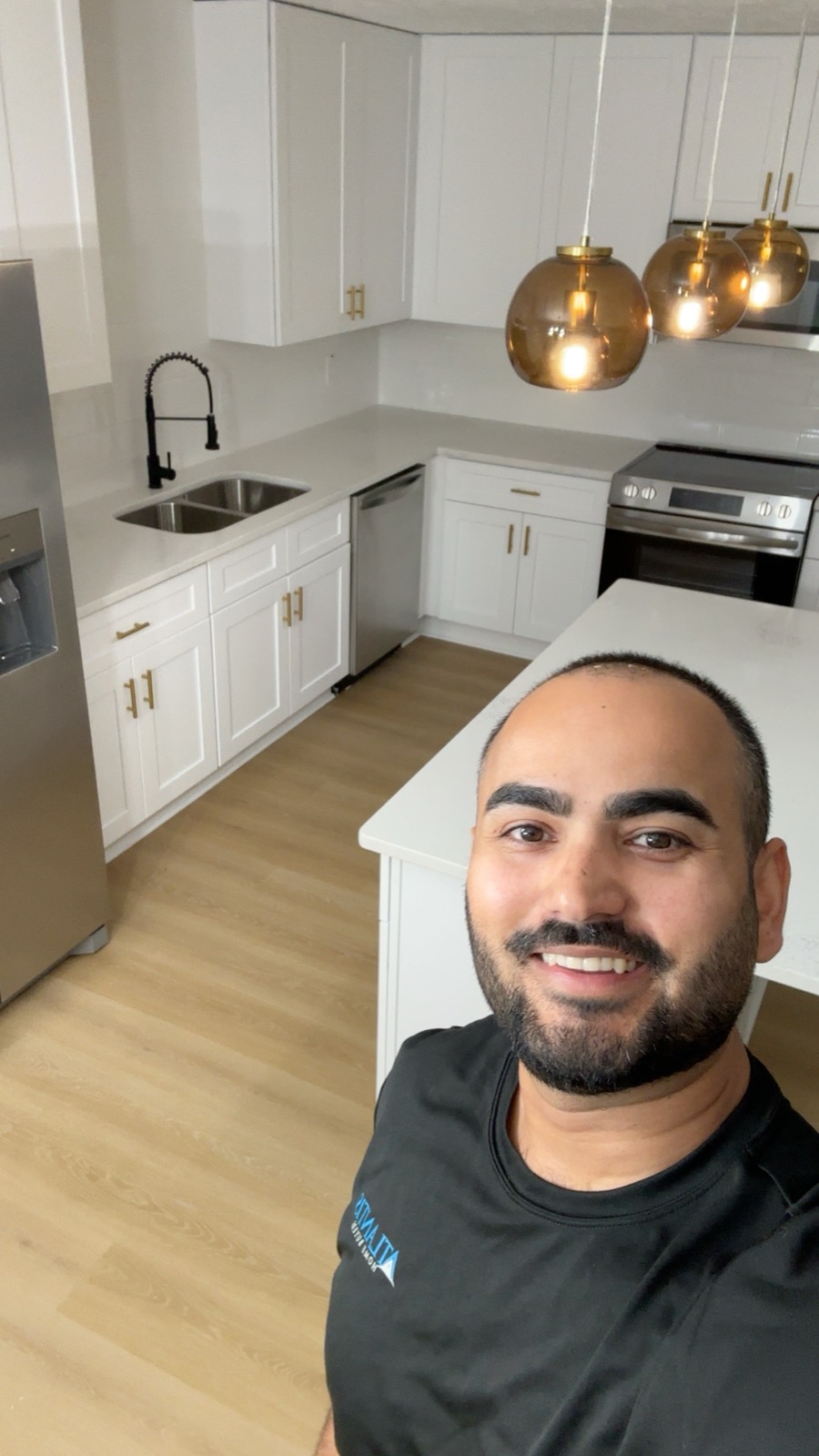
AJ on-site at a recently purchased NC rental. After we close, the property goes into our cleanout and repair cycle. The seller is done.
What to Bring to a First Conversation
If you call (984) 205-6984 or fill out the form, what speeds up the offer is having two or three things ready:
The property address and a rough description of the occupant situation (squatters with no lease, former tenants holding over after non-payment, tenants you inherited from a previous owner, etc.).
Any documentation you have on the original lease (or lack thereof). Estate papers if you're managing the property as an heir or executor.
Any Notice of Violation from Neighborhood Improvement Services if PRIP has been out or a complaint has been filed.
Your rough timeline for closing.
None of this is required. It just makes the first conversation faster.
Selling a Durham Rental With Bad Tenants or Squatters: FAQ
Can I legally sell a property in Durham with squatters still on-site?
Yes. North Carolina allows the sale of a property with unauthorized occupants in place. The Residential Property Disclosure (NCAR Form 410-T) requires you to disclose what you know about the occupant situation. We handle the disclosure language with you so it's accurate. Buyers like us who specialize in these sales know what they're walking into.
What if I'm managing the property as an heir or executor and the original landlord passed away?
Common situation. You can sell as an authorized representative of the estate, with the closing attorney coordinating the necessary probate steps. We've closed several Durham rentals where the original owner had passed, the heir was managing the property informally while probate was still open, and the tenant situation had spiraled. The probate side is workable; the title company will tell us exactly what authority you need to demonstrate at closing.
Do I have to remove the squatters before I sell?
No. They stay on-site until the deed transfers. After closing, the property is in our name and the SB 55 expedited removal is our process to manage. That's specifically what makes a cash sale to us cleaner than option 1 for an heir or out-of-state seller who doesn't want to deal with the court appearance.
What if Neighborhood Improvement Services has already cited the property?
Doesn't change anything from our side. The code-violation file transfers with the property. We have the working relationship with NIS in Durham to negotiate the cure plan after we own the property. The lien gets paid off at closing out of sale proceeds, same as a mortgage payoff.
How long does a cash sale with squatters or bad tenants in place actually take?
We can close in 7 days if the title is clean and you can sign at the closing table that quickly. Most Durham bad-tenant sales close in 7 to 21 days because the title company needs time to pull any city liens and confirm the probate authority if the owner passed away. Our most recent East Durham closing on a squatter situation was 14 days.
I haven't been able to enter the property safely. Can you still make an offer?
Yes. We walk what we can safely walk from the exterior, run the comparables, factor in a range to account for what we can't see, and make a written offer. If we're able to enter at any point before closing (whether the occupants leave voluntarily, an SB 55 removal happens, or you're able to coordinate access), we'll do a final walkthrough and confirm the offer. If we can't, we close anyway.
Will I owe back taxes, water bills, or other charges at closing?
If they exist, yes. The Durham County tax office, Durham Water Department, and any other utility with unpaid balances all get paid off at closing out of the sale proceeds before the remainder wires to you. The title company runs the full payoff report so there are no surprises.
What about adverse possession? Have the squatters been there long enough to claim the property?
Almost certainly not. North Carolina's adverse possession standard requires 20 consecutive years of open, notorious, hostile, and continuous occupancy under NCGS § 1-40 (or 7 years if the squatter has color of title under NCGS § 1-38, which essentially never applies to actual squatters). The squatters we see in Durham have typically been on a property for weeks or months, not decades. Adverse possession isn't a real concern.
AJ has been buying houses for cash in Raleigh and Central NC since 2018. He's personally involved in every transaction and can be reached at (984) 205-6984.